Trending Topics

 Trending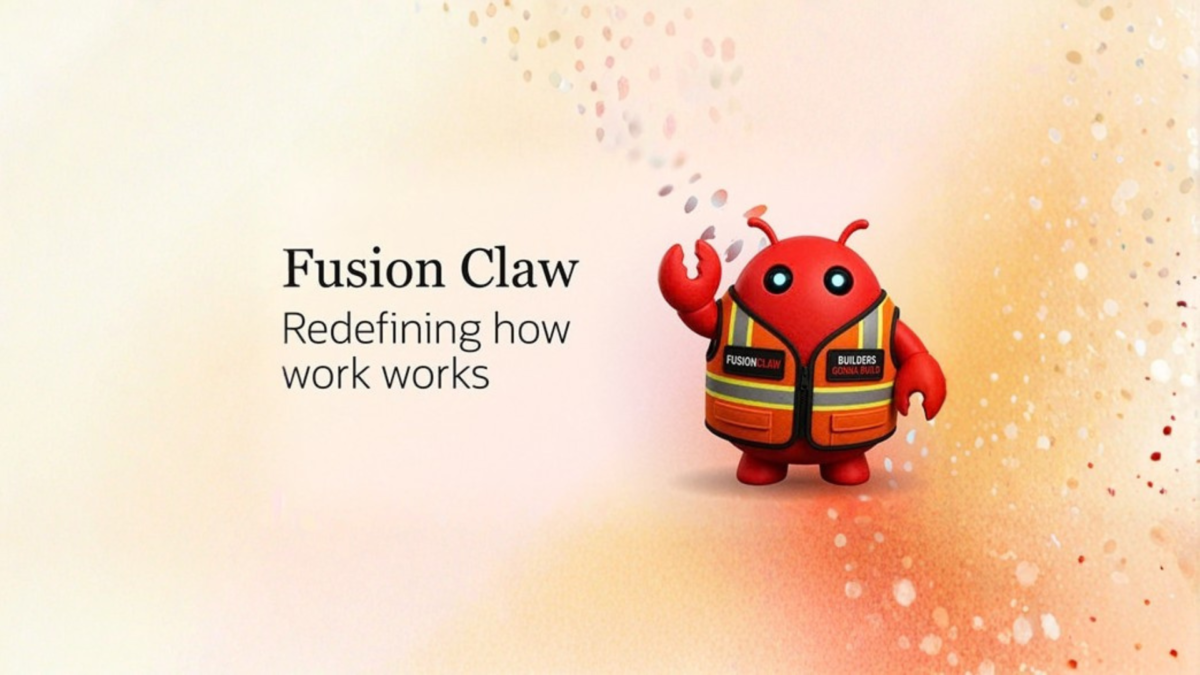
Oracle expands AI applications with new execution runtime

Oracle has announced Oracle Fusion Claw, a new AI execution runtime for Oracle Fusion Agentic applications that’s touted to help enterprises complete highly complex work more autonomously at scale, including deep research, computation, simulation, modelling and continuous replanning.
Running on Oracle Cloud Infrastructure and powered by AI models including Gemini and OpenAI, each claw outcome begins with a frontier model that reasons, plans, learns, and adapts, according to Oracle. Fusion Claw then uses deterministic enterprise computation to execute precisely and at scale.
“Every organisation is looking at AI and asking the same question: how can we use it to create measurable value for our business?” Oracle CEO Mike Sicilia said.
“Fusion Claw helps answer that question by moving from AI assistance to execution, enabling customers to automate increasingly complex work across their most important business processes, with enterprise-grade governance.”
Enterprise governance and automation controls
To ensure that organisations still retain control, Oracle said customers can decide what level of automation they want a process to have.
According to Oracle, Fusion Claw applies an enterprise operating envelope, which includes an organisation’s objectives, standard operating procedures, policies, constraints, permissions, risk thresholds, decision rights, approval requirements, and escalation boundaries.
“The operating envelope is enforced across all outcomes through an Outcome Trust Harness that applies specific governing authority and controls to each outcome run, including identity, capabilities, data, and actions,” Oracle said.
The company added that an outcome receipt is also provided, so that enterprises have an auditable record of exactly what happened, including the authority applied, evidence used, decisions made, actions and transactions executed, and the result.
New applications and industry use cases
Fusion Claw is available through 25 new Fusion applications, taking the company’s total number of AI applications that can coordinate and execute end-to-end business processes to 75.
Some of those new applications include Ledger, designed to help financial firms resolve account exceptions faster by reconciling information, investigating exceptions and anomalies; and Workforce Staffing that can create staffing plans while considering employee skills and accreditations, availability, schedules, labour rules, costs and coverage requirements.
Other applications include Shipping Consolidation, which can model different shipping options against cost, capacity and service requirements, and Account Territory Growth Plan, which can compare different territory configurations and optimise allocation against business constraints.
“By letting AI take on more of the work, while people set the objectives and guardrails, organisations can unlock tremendous capacity for their teams to focus more on driving growth, innovation, and serving customers.”
More of our Oracle coverage
About The Author