Trending Topics

 Trending

The AI ROI reality check: When automation creates a second workload

Imagine you are a project manager and one of your reportees finishes their task in a few minutes. But, you need to be sure they did the right thing so you spend another two hours checking their facts, fixing their mistakes, and figuring out where they got their information. Sure, they were fast, but did they actually save you any time?
This is the AI ROI reality check in a nutshell.
An AI system often finishes its assignment in seconds. Then, an employee spends a considerable amount of extra time checking its reasoning, correcting omissions and confirming the source data.
So while the automation looks impressive, the economics are often less convincing.
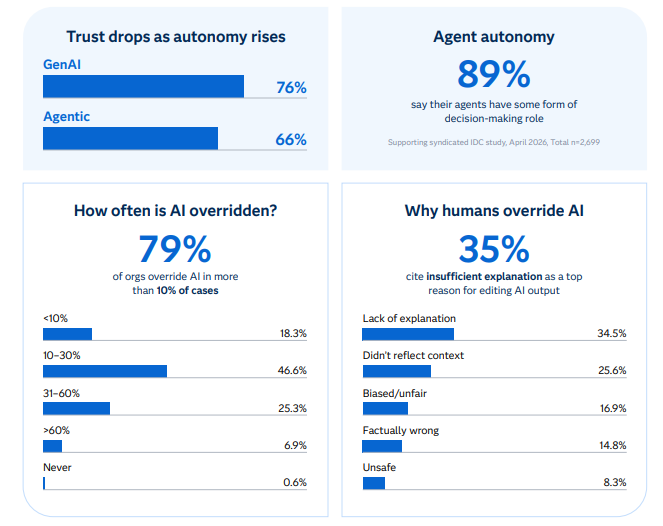
That hidden workload offers one explanation for uneven AI returns in SAS’s September Data and AI Impact Report: The New Economics of Trust. Drawing on 2,699 decision-makers across 28 countries, the research found that 79% override AI recommendations in more than 10% of cases. Insufficient explanation was the leading reason, cited by 34.5%.
Human intervention is not automatically wasteful. In consequential decisions, it can be essential. But the cost belongs in the business case.
AI ROI depends on what happens after the answer
Our examination of the AI productivity trap distinguished faster tasks from financial value. The SAS findings add another question: how much work does the output create downstream?
Consider a hypothetical procurement assistant recommending a cheaper supplier. If staff must reconstruct delivery history, check contractual restrictions and verify prices, the apparent saving may shrink before a purchase order exists.
This is where data quality becomes a commercial issue.
Messy Data = Messy AI.
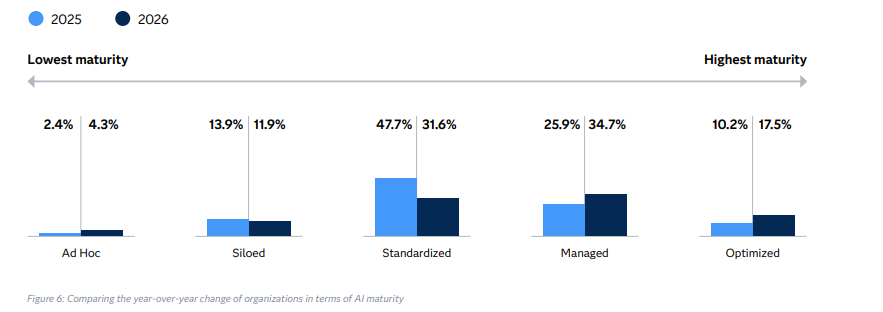
AI needs clean, organized data to give good answers. Right now, only 17.5% of companies surveyed actually have their data in good enough shape. If you feed an AI messy information, you get untrustworthy results.
As our coverage of NetApp’s AI infrastructure push explored, production value depends on discoverable, governed data and infrastructure capable of supporting the workload, not simply access to a capable model.
Measure the whole workflow
SAS reports that 62% of organisations with high trustworthiness scores reported strong or high AI returns, compared with 4% of low-scoring organisations.
The more useful takeaway concerns measurement. The report says leaders assess AI at the workflow level using finance-validated models, tracked targets, and an accountable owner.
Businesses should follow that logic: establish a baseline, include integration and operating costs, count review and rework, then measure the commercial outcome.
Before buying more intelligence, businesses should calculate what it costs to make the intelligence usable.
About The Author

Kihara Kimachia
NEXT UP