Trending Topics

 Trending
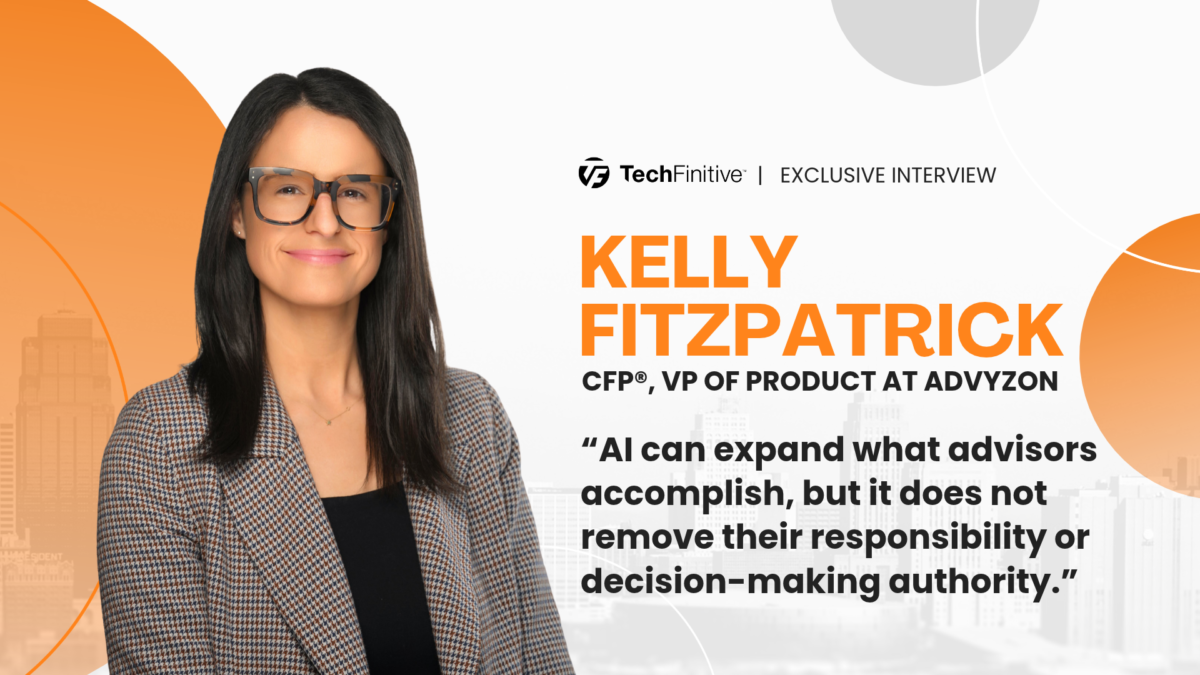
Kelly Fitzpatrick, CFP®, Vice President of Product at Advyzon: “AI can expand what advisors accomplish, but it does not remove their responsibility or decision-making authority”

Wealth management firms are increasingly looking to AI to reduce administrative work and give advisers more time with clients. But adding copilots and automated tools to an existing technology stack can create as many problems as it solves, particularly when those systems lack access to the wider picture of a client’s financial circumstances. For AI to do more than handle isolated tasks, it needs to understand how the different parts of an advisory practice fit together.
Kelly Fitzpatrick, CFP®, Vice President of Product at Advyzon, believes this is where unified platforms have an advantage. Advyzon’s “All-in AI” strategy is built around a single codebase and data model spanning CRM, portfolio management, financial planning, billing, reporting and workflows. The idea is to give AI access to the information and operational context it needs to help advisers move from gathering information to taking action.
The potential applications range from preparing for client meetings and reviewing documents to identifying portfolio risks, spotting planning opportunities and coordinating follow-up tasks. But bringing these capabilities into wealth management also raises important questions about accuracy, security and accountability. Fitzpatrick argues that AI should work within established permissions and structured workflows, with deterministic systems handling critical financial calculations and advisers retaining control over consequential decisions.
That distinction is particularly important in an industry dealing with sensitive financial information and significant regulatory obligations. Automating routine work may be relatively straightforward; deciding when an AI system can act independently, when it needs approval and how its actions can be audited requires a more considered approach.
In this interview, Fitzpatrick discusses why context matters more than clever prompts, how agentic AI could change the day-to-day work of financial advisers, and what will separate platforms that genuinely improve client relationships from those that simply automate existing processes.
Advyzon describes its approach as “All-in AI,” built around a unified platform rather than disconnected copilots and integrations. What limitations have you seen with the latter approach, and what becomes possible when AI has access to a firm’s wider operational context?
The biggest limitation of disconnected AI tools is limited context. Individual copilots may improve a task, but they often work inside separate applications and rely on fragmented data and integrations. That can create inconsistencies, duplicate effort, and more complexity for the advisor.
Advyzon takes a different approach. Our All-in AI strategy builds on a single codebase and unified data model spanning CRM, portfolio management, planning, billing, reporting, documents, and workflows. That gives AI a more complete view of the practice and the client relationship. It can bring together portfolio activity, communications, open tasks, and planning information before a meeting, then help draft follow-ups and guide the advisor into the right workflow.
That foundation also reflects years of human experience building technology for advisors and solving real operational challenges. The result is AI designed around how advisory firms actually work. And as it learns a firm’s preferences, service rhythms, and workflows, it can become more relevant over time. The goal is not another assistant beside the workflow, but a natural extension of it that helps advisors move from information to action and spend more time with clients.
You argue that AI needs to understand more than the wording of a prompt. How does Advyzon AI use information such as client relationships, workflow history, and operational patterns to produce more relevant recommendations, and how do you guard against incorrect or incomplete context leading to poor advice?
Advyzon AI starts with context already available in the platform, so advisors do not have to explain the client, the practice, or the task with every prompt. It can draw from relationships, portfolios, CRM activity, financial plans, documents, communications, and workflow history to produce a response grounded in the work at hand. For meeting preparation, for example, it can surface recent activity, open tasks, and relevant discussion topics instead of returning a generic checklist.
That intelligence is informed by years of human expertise across advisor workflows, planning, operations, compliance, and practice management. It starts by understanding advisory work, then becomes more useful as it learns how a particular firm operates, including team preferences, service patterns, and recurring workflows.
More context requires strong safeguards. Purpose-built agents operate with defined capabilities, existing user permissions, and structured workflows. Deterministic engines continue to perform planning and portfolio calculations, while AI helps interpret information and guide the work. Advisors remain in control: AI can flag missing data, surface potential issues, and recommend next steps, but users can review and validate the information before making decisions or taking consequential action.
The platform can support everything from meeting preparation and document processing to portfolio optimization, tax strategy evaluation, and workflow execution. Where do you expect advisors to see the greatest practical benefits first, and which tasks still require significant human judgement?
Advisors should see the earliest benefits in frequent, time-consuming work that does not require their highest level of judgment. Meeting preparation is a clear example. AI can assemble client notes, portfolio activity, planning information, and outstanding follow-ups in seconds, helping advisors enter conversations better prepared. It can also support document review, practice intelligence, and portfolio analysis by surfacing clients with large cash positions, upcoming RMDs, potential risks, or other needs that may otherwise be missed.
The next opportunity is execution: creating follow-up activities, updating records, preparing communications, and coordinating multi-step workflows. Because Advyzon AI is built on years of human experience solving advisor challenges, these capabilities are designed around practical wealth-management work. As the system learns a firm’s preferences and operating rhythm, it can make those workflows increasingly relevant and useful.
Human judgment remains essential for advice, trade-offs, client communication, and consequential decisions. AI can prepare, investigate, and coordinate, but advisors must apply their expertise and understanding of each client’s goals. The objective is not to replace that judgment. It is to give advisors more capacity to use it where it creates the most value: delivering advice, strengthening relationships, and making better-informed decisions.
Advyzon AI is designed to orchestrate workflows and execute tasks while keeping advisors in control. How do you decide which actions AI can take autonomously, which require approval, and how responsibility is maintained when an AI-driven action produces an unintended outcome?
Our approach is to balance automation with advisor oversight. AI should handle routine, lower-risk work, while actions that could materially affect a client, account, or financial decision require human review and approval. The goal is to remove unnecessary manual work without taking control away from the advisor.
Those boundaries should reflect the risk and potential impact of an action, as well as each firm’s policies and comfort with automation. Purpose-built agents, defined permissions, and structured workflows help limit what AI can access and do. As the experience learns a firm’s workflows and preferences, it can become more helpful within those established boundaries, not operate outside them.
Transparency is equally important. Firms need visibility into what actions were taken, when they occurred, and what approvals were involved, along with clear processes to review and correct unintended outcomes. Human experience also informs this design: Advyzon has spent years building for the realities of advisor operations, where efficiency must be balanced with accountability.
AI can expand what advisors accomplish, but it does not remove their responsibility or decision-making authority. As AI becomes more capable, keeping advisors informed, empowered, and in control becomes even more important.
Wealth management involves sensitive financial information and significant regulatory obligations. How do permission-based access, human review, and auditability work together to make agentic AI safe to use, particularly when it draws on information from multiple parts of a client’s financial life?
Agentic AI can connect information across a client’s financial life and help move work forward, but it must operate within clear security and governance boundaries. Advyzon AI runs inside our managed platform, building on established user permissions, data protection, and firm-level administrative controls. Agents can access only the information a user is authorized to see, and firms can control which AI capabilities are available to their teams.
We also do not rely on agents to enforce their own security. Purpose-built agents have defined capabilities, while the underlying platform independently governs what they can access and do. Human review adds another layer: advisors can evaluate AI-generated communications, proposed record changes, and recommended actions before proceeding. For critical financial calculations, deterministic engines produce repeatable, verifiable results rather than relying on the AI model itself.
Keeping AI-assisted activity within established platform workflows also supports visibility and accountability. These controls allow the experience to become more relevant to a firm’s workflows while preserving the confidentiality, oversight, and advisor control essential to wealth management.
Advyzon argues that a unified architecture gives it an advantage over firms assembling AI tools around fragmented systems. As agentic AI becomes more common across wealth management, what will distinguish platforms that genuinely improve the advisor-client relationship from those that simply automate existing tasks?
The biggest differentiator will be whether AI helps advisors become more proactive and personal, not simply faster. Automating a disconnected task has value, but the larger opportunity is AI that understands the client relationship, recognizes what matters, and helps the advisor act.
A unified platform makes that possible. When CRM, portfolio management, planning, billing, documents, and workflows share a common foundation, AI can surface recent activity, upcoming life events, outstanding commitments, or planning opportunities, then help move from insight to the next reviewable step. That creates more timely, relevant client engagement without forcing the advisor to reconstruct context across systems.
Human experience will matter as much as technology. Advyzon built wealth-management technology first, shaped by years of solving advisor challenges, then applied AI to that foundation. The experience starts with an understanding of advisory work and becomes more relevant as it learns each firm’s preferences, service model, and operating rhythm.
The winning platforms will also make AI intuitive. Advisors should not need to master prompt engineering or manage another point solution. The platforms that stand out will be those that help advisors deliver better service, deepen relationships, and spend more time providing personalized advice while keeping data, permissions, workflows, and control grounded in the platform.
You might also be interested
- Matt Polak, Founder and CEO of VanishId: “Our buyers are CISOs and CSOs. Almost all of them already assume their people’s personal data is exposed.”
- Con Raso, Managing Director and Co-Founder of Tuned Global: “Although some regard AI music as fraudulent, I’m reluctant to do so”
- Chris Lynch, CEO of AtScale: “Your CFO doesn’t care how smart the model is. They care whether the number is right.”
About The Author

Ricardo Oliveira
NEXT UP