Trending Topics

 Trending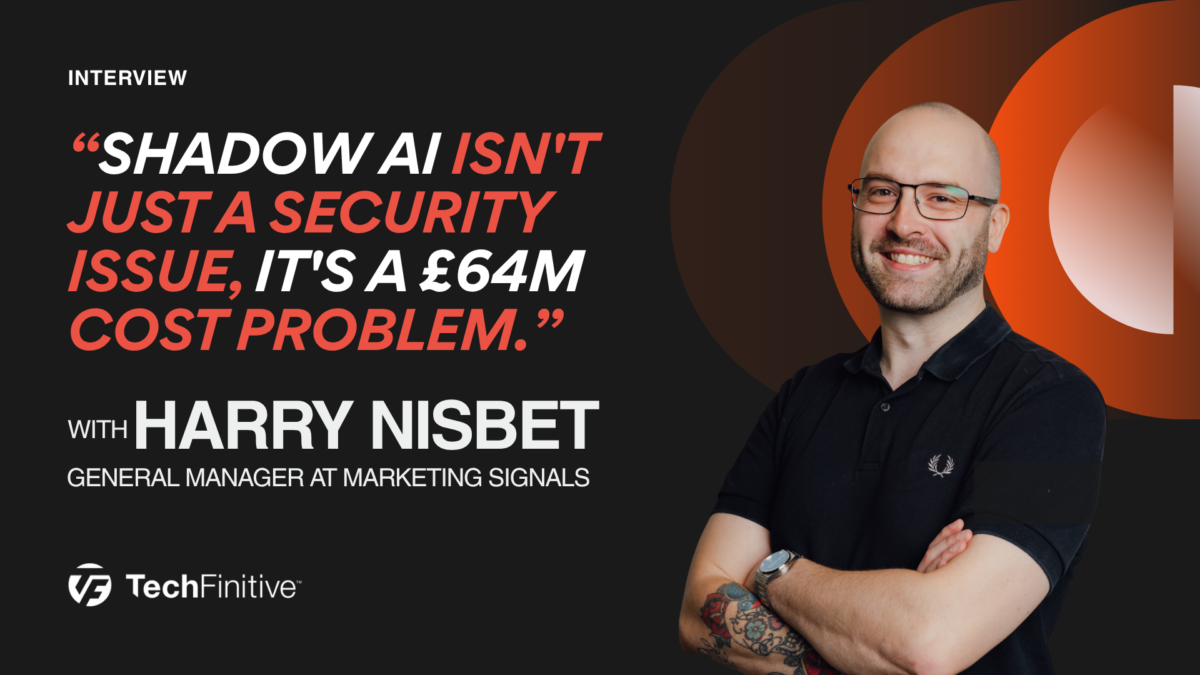
Harry Nisbet, General Manager at Marketing Signals: “Shadow AI isn’t just a security issue, it’s a £64m cost problem”

Shadow AI usually gets talked about as a security problem, whether that’s tools that IT doesn’t know exist or data moving through channels that nobody is actively monitoring. However, new modelling from Marketing Signals’ Subscription Creep Report suggests that it’s just as much a cost problem.
Individually expensed AI tools, covering everything from copywriting assistants to transcription tools, are up 108% year-on-year, and UK marketing departments alone are estimated to be losing £63.7m a year to subscriptions nobody remembers signing up to.
We spoke to Harry Nisbet, General Manager at Marketing Signals, who also led an internal review of the agency’s own software expenditure before the report went out:
Shadow AI usually gets covered as a security issue, tools that IT doesn’t know exist, for example. Marketing Signals’ modelling suggests it’s just as much about cost. What did you find?
The security side is an issue and tends to get most of the attention, but the cost side is pretty significant too. These tools are cheap enough individually that nobody questions them at the time of signing up, but the cost adds up quickly when many people buy multiple subscriptions over time and across the business.
The issue is that spending creeps higher because often there isn’t one big purchasing decision to review, and the costs of each tool aren’t often looked at all together. Nobody signs off on shadow AI spend the way that they’d sign off on a new piece of enterprise software, so it just accumulates.
Individually expensed AI subscriptions, copywriting assistants, image generators, and transcription tools are up 108% year-on-year. Why is this category growing so much faster than software spend generally, and why does it stay invisible to whoever’s meant to be tracking it?
It’s because AI tools are so easy to buy. Someone finds a tool, signs up and starts using it within minutes, without needing the same level of scrutiny or approval that a normal software purchase would go through. One £20 subscription doesn’t look like a problem on its own, and it’s small enough to go largely unnoticed. However, lots of them across an entire business can become a huge problem, and that’s what we wanted to highlight.
It also doesn’t sit on anyone’s usual radar. Our modelling found that 64% of marketing leaders admit that they struggle to keep track of everything that the department is paying for, so a subscription bought on a personal card, or expensed through a general software line, just gets absorbed and forgotten about, as it’s usually nobody’s job to notice it.
Between 50% and 71% of employees say they use AI tools their employer hasn’t approved, and separately, 98% of executives admit to bypassing IT to buy technology themselves. What does that gap tell you about how these purchases actually happen inside a business?
This tells you that it’s not really an employee compliance problem. There’s always an incentive to solve a problem quickly, and that pushes people at every level, including the 98% of executives who admit to going around IT themselves, to bypass the usual process. Most of the time, they’re not trying to break the rules; they’ve found a tool that helps them do their job, and the easiest route is to just buy and get the job done. That’s why businesses need enough control to manage cost and risk without making it harder for people to experiment.
Your data identifies ChatGPT as the single most expensive individual software purchase in the dataset, ahead of any traditional SaaS tool. How does a $20-a-month subscription end up outspending enterprise software?
An enterprise contract usually sits on one line, with one invoice and one person responsible for renewing it. Plus, the cost is usually so large that it needs to be signed off by the Senior Leadership Team. But tools such as ChatGPT aren’t paid for in that way by most businesses. It will often be bought again and again, by multiple teams with one person and one card each time. This is because it’s useful enough that dozens of employees each decide independently that they need it, and if you add all those subscriptions together across an entire workforce, the total usually overtakes what most businesses would pay for one single enterprise tool. Simply because nobody is adding them up as one purchase, and keeping track of them and their payments.
You’ve put the cost of forgotten AI subscriptions in UK marketing departments alone at £63.7m a year. Why is marketing particularly exposed to this, and how does it sit alongside the wider trend? Vertice’s research has shown that SaaS waste is climbing from 62% to 65% of all licences in a year.
Marketing is probably one of the easiest places for this to happen because there’s a tool for almost everything now, especially when it comes to AI. There is also pressure to remain dynamic, stay on top of trends and keep ahead of the competition. So this naturally encourages experimentation and drives people to use a variety of tools to not only save time, but also help them do their job better. Someone may try a tool for one project, then another tool may replace it later, or they’ll set up a new one for a different campaign, but the original subscription often just keeps running without anybody keeping track.
That £63.7m figure sits alongside a much wider pattern too. Vertice’s own research shows that SaaS waste is climbing from 62% to 65% of all licenses in a year, so marketing isn’t really an outlier here. It’s actually an accelerated version of something happening across every department that buys software.
You reviewed your own team’s subscriptions before publishing this and found £1,100 a month in savings. What did that process actually involve, and what would you tell another business trying to do the same thing?
We reviewed what we were paying for by listing every tool and asking simple questions for each, such as who uses it, how often it’s used, what it actually does, whether we already pay for something else that does the same job, whether we need that level of subscription, and whether there’s a tool on the market that consolidates these functions for less.
This identified two tools we no longer needed at all, and three more doing a job that a cheaper tool could cover just as well. Between them, those five tools had cost £1,875 a month. After the changes, that came down to £713 a month, a saving of around £1,100 a month, or £13,200 across a year.
My main advice for other businesses looking to save money would be to start with visibility and getting one clear list of absolutely everything that you’re paying for. Then give every tool an owner, and review it regularly. It needs to be someone’s job to review the tools; otherwise, they’ll just continue at renewal without any questions being asked.
Here are my five main tips for getting on top of subscription creep:
- Run a quarterly software audit – List every tool the business pays for, who owns it, and whether anyone has logged in during the last 90 days.
- Put one person in charge of renewals – A single named owner reviewing every renewal before it auto-renews catches most of the waste before it repeats.
- Get visibility on personal-card AI tools – Ask the team directly what they’re already paying for out of their own pocket to do their job.
- Consolidate before you renew – Check whether a tool already in the stack does the job before buying another one.
- Check whether AI can help – When running your audits, ask yourself whether AI could help replace the need for a specific tool. If you pay for a media monitoring tool, could you build an agency within Claude, for example, to help instead?
More great interviews
- Interview with Andy Rhodes, Lenovo UK & Ireland MD: “Many customers don’t know the second-hand value of their assets…we’re really trying to help”
- Anshuman Singh, CEO of HGS Europe: “Real value comes from improving the customer’s experience, not from inserting AI wherever it will fit”
- Bart Wadley, Head of Solutions at Annexa: “Organisations are beginning to move towards a single intelligence layer above the whole stack”
- Protect
- Exclusive interview with Cindy Cohn: “The idea that the Big Tech companies are going to stand up for us against the government seems laughable”
About The Author

Ricardo Oliveira
NEXT UP