Trending Topics

 Trending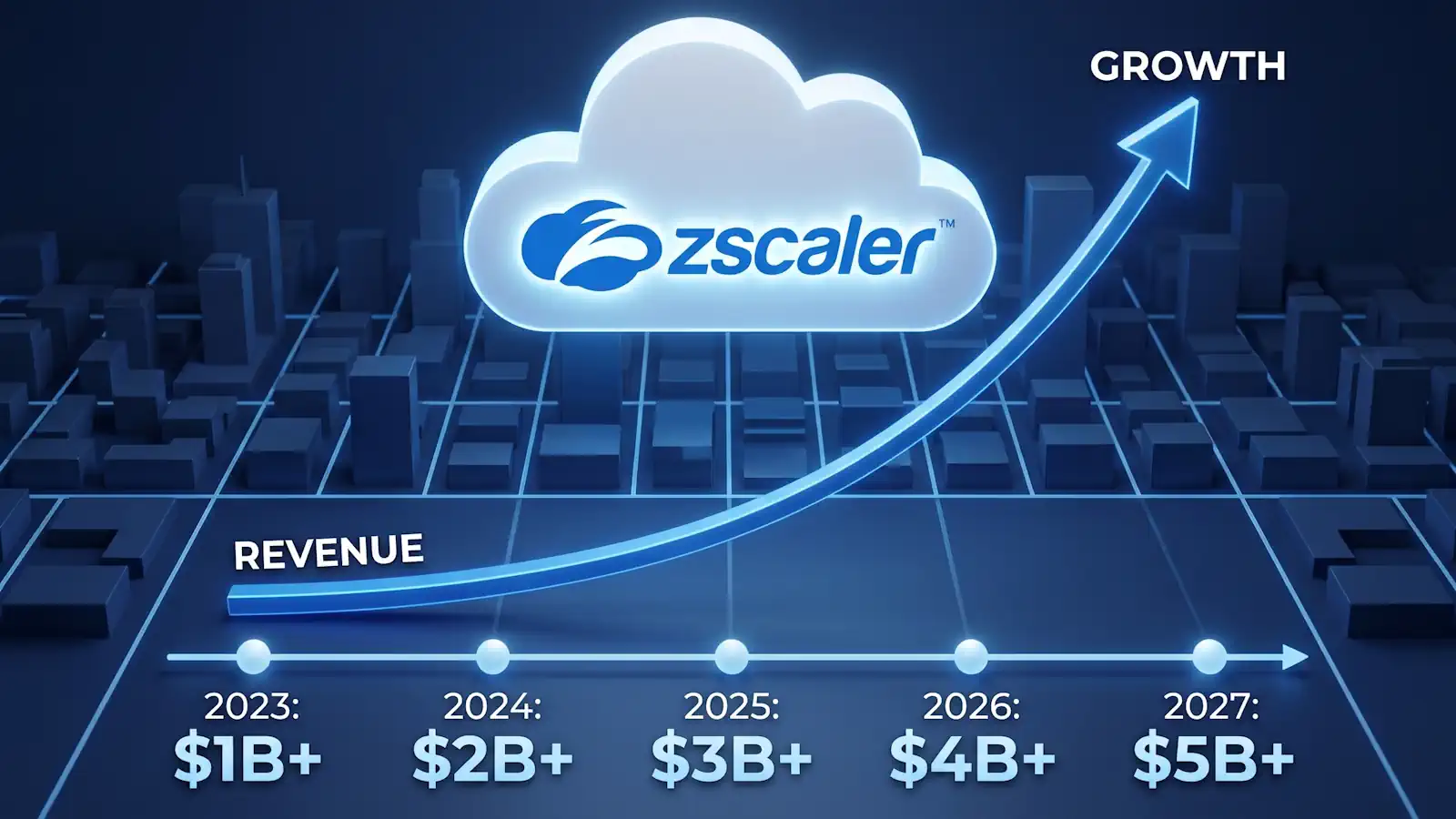
Zscaler’s investor circuit puts Zero Trust’s growth story under the spotlight

A few days ago, Zscaler announced that it will present at two investor conferences on 9 September. It will be sending Chief Financial Officer Kevin Rubin to Goldman Sachs’ Communacopia + Technology Conference and Chief Executive Jay Chaudhry to Citi’s Global TMT Conference. On the surface, these appear to be routine investor relations conferences, yet they arrive just after a strong quarter that puts Zscaler’s zero trust growth story under a brighter spotlight.
There is no question that zero trust is a sensible security architecture; that argument has already been won. The focus is now on whether vendors can turn zero trust from a high-level security ambition into a durable platform business that delivers measurable outcomes.
Zscaler has given investors a reason to believe it can do just this, and the proof is in the numbers.
Growth is no longer theoretical
Zscaler reported revenue of $898m for its fiscal fourth quarter that ended 31 July 2026. This was a 25% increase year-on-year. Meanwhile, annual recurring revenue (ARR) expanded by 25% to hit $3.77bn, pushing total annual top-line revenue to $3.35bn. The business also recorded a milestone non-GAAP operating margin of 24% for the quarter. These financial metrics demonstrate robust ongoing expansion alongside an increasingly persuasive case for operational efficiency.
Even if you remove the contribution from the Red Canary acquisition, an important caveat, quarterly ARR still grew 20%, a healthy number.
This organic-growth figure will be closely watched by investors because it offers a clearer measure of Zscaler’s underlying momentum. The company is no longer simply selling secure web access; it is positioning its zero trust platform across data security, security operations, and AI security, which is a larger opportunity but a harder proposition to sustain.
Zero trust must show its workings
Zero trust has a straightforward appeal. Users, devices, and workloads should be verified before they access applications, rather than trusted simply because they are inside a corporate network.
Unfortunately, the practical appeal is rarely straightforward.
Organisations have to untangle old network assumptions, identity controls, applications, data permissions and remote-working arrangements. They also have to decide where zero trust ends and adjacent technologies, such as endpoint security, identity security and data protection, begin.
This maze is the challenge.
Zscaler’s results suggest that more customers are willing to consolidate security services around a cloud-delivered zero trust platform. The company said non-seat-based products, its Z-Flex commercial model, and large deals all contributed to momentum. However, its fiscal 2027 guidance also points to slower growth, with revenue expected to increase by roughly 16.6% to 17.5% for the full year.
This raises the bar for execution.
Practical AI security is the logical next step
Chief executive Chaudhry argues that AI creates both a major opportunity and a major security challenge. Zscaler’s strategy is to secure not only users and applications, but also workloads and AI agents.
This is a logical extension of zero trust. AI agents will access applications and data, take actions, and potentially introduce new identity and governance risks. However, the market will need more than broad platform claims. Customers will want evidence that security products can control agent access, protect sensitive data, and reduce operational complexity.
That last point is critical, particularly outside the largest enterprises. As we previously explored in our look at Zscaler and Carahsoft’s channel strategy, zero trust has to become easier to consume if it is to reach mid-market organisations rather than remain an enterprise-only architecture.
The investor conferences will not settle that question. But they will show whether Zscaler can keep converting zero trust’s architectural promise into a scalable business model.
For now, the numbers suggest momentum. The next phase will demand proof.
About The Author

Kihara Kimachia
NEXT UP