Trending Topics

 Trending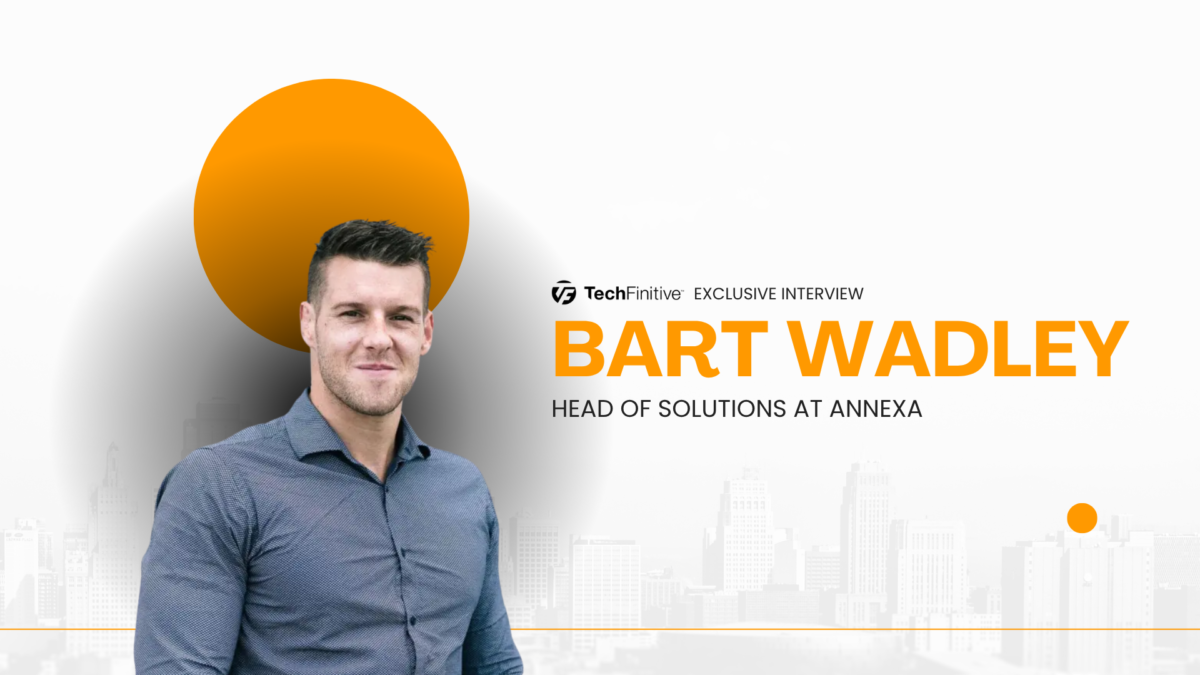
Bart Wadley, Head of Solutions at Annexa: “Organisations are beginning to move towards a single intelligence layer above the whole stack”

For retailers, Black Friday is more than a test of consumer demand. It is a stress test for the technology underpinning the business, exposing weaknesses in systems, integrations and processes that can remain hidden during normal trading.
That challenge becomes considerably more complex as retailers expand across countries, sales channels, currencies and fulfilment partners. Australian sustainable apparel brand Boody experienced that first-hand as its international growth left it managing a fragmented technology environment across regions. Working with Annexa, the company implemented NetSuite as a global ERP backbone, connecting its Shopify stores, 3PLs, EDI providers and other systems while retaining best-of-breed platforms where they made sense.
The resulting platform was put to an early test when Boody’s first Black Friday arrived just months after go-live, with tens of thousands of orders moving through the new architecture without performance issues.
But, according to Bart Wadley, Head of Solutions at Annexa, the lessons from the project extend well beyond surviving a busy trading weekend. From deciding which systems should sit inside the ERP and which should remain separate, to designing integration architecture that can adapt to extreme demand, Wadley argues that successful retail technology is ultimately about building for change rather than simply building for today’s requirements.
In this interview, Wadley discusses the challenges behind Boody’s global ERP transformation, why retailers should think carefully about “real-time everything”, the technology mistakes that can undermine international expansion, and how cloud ERP, integration platforms and AI could reshape retail operations over the next three to five years.
From a technology perspective, what made Boody’s ERP transformation particularly challenging?
From the initial conversations, it was evident that Boody needed every region and channel in scope for phase one. The moment you have a cross-jurisdiction project across multiple selling channels, different technology platforms, different localisation demands and different time zones, it’s going to have challenges. For Boody, that meant multiple sales platforms, multiple 3PLs globally, EDI providers, separate demand forecasting and different banks around the world. There were a lot of platforms to consolidate, with NetSuite providing the single source of truth underneath them, so there were a lot of moving pieces to bring together.
The other thing about a project this size is that the business does not stand still for it. Across our customer base that is normal. There might be an acquisition in play, a new jurisdiction, a new sales channel. Boody had recently acquired its distributor operations in the US and the UK, so two new operations joined the business partway through the build. Because the technology is there to support the decisions a business makes, building the design to absorb change is central to how we manage these implementations.
Many retailers still rely on a patchwork of legacy systems as they grow. How do you decide what should be replaced by the ERP versus what should remain as best-of-breed applications connected through integrations?
The thinking on this has shifted in the last five years. Customers want the best-in-class option for every application they are putting time and money into. It used to be the opposite. Everyone tried to get as many modules and as much functionality out of the ERP as they could, everyone was wary of customisation and they were willing to compromise on capability to keep it all in one place.
When we walk into an engagement and there are third-party platforms already in the architecture, we evaluate what each one does for the organisation, what value it brings, what challenges it solves and whether there are pain points in that product that can be evaluated. We then evaluate that against what already exists in Oracle NetSuite as the core, whether that is a module, a function, a configuration or an application we have used before that could do the same job. Then we make our recommendation. We are not in this game to come in and upset other systems in an architecture that is already providing real value to our customers.
Shopify is the obvious example. They are clearly best-in-class, they are delivering real value to our customers globally and opening up ways of reaching customers that were not there before. We are not going up against a platform like that and recommend a NetSuite module to replace it. We are going to integrate tightly so the customer gets the best out of both systems, which is what happened on Boody’s architecture. There are legacy platforms hanging around in a lot of businesses that are outdated and not providing the value they need to, and those are the ones on the chopping block for review.
Black Friday and Cyber Monday place enormous pressure on retail technology stacks. How important is integration architecture in ensuring systems continue to perform when transaction volumes increase five or even tenfold?
Real time has become the default expectation, so most customers come to us wanting every integration running that way, and that is their starting position. What happens then is you arrive at Cyber Monday and Black Friday with everything set to real time, and that puts a lot of stress on the architecture at exactly the wrong moment.
Realistically, a lot of those flows do not need to run in real time. Getting sales in is critical across Black Friday. There are always other systems in the architecture during that sales period that don’t need to be utilised in a heavy capacity, and you can pull their concurrency and throughput back for the trading window and give it to the flows carrying the orders. That is how you preserve the throughput of the account when volume goes up five or tenfold. Boody’s first Black Friday came only a few months after go-live, and tens of thousands of orders moved from the storefronts through NetSuite and into fulfilment without a performance problem.
The alternative I have seen is organisations going in heavy and investing in an architecture that is ready for Black Friday all year round. That is a lot of money sitting in the infrastructure for a couple of periods a year. If you are smart about it and review your integrations in the lead up to the high-stress periods, you do not need to overinvest for something that lasts a weekend.
Boody completed a global ERP implementation in around nine and a half months with a relatively lean internal team. What were the critical success factors that enabled the project to stay on schedule while minimising business disruption?
It started with executive alignment on what the project was for. Nobody at Boody thought they were buying replacement software. They understood they were building a platform that could support global growth and that came with a single operating model and real discipline about common processes across regions.
The internal decision making that happens before we arrive is what makes the difference. If a business comes to us starting from scratch on alignment across its regions and teams, we end up in the middle of the politics, with the US needing to be different from the UK, and that is where projects slow down. Boody had done that thinking already, so we came in designing with one model in front of us.
As retailers expand internationally, what are the biggest technology mistakes you see organisations make when trying to scale operations across multiple countries, currencies and fulfilment partners?
We tend to see two kinds of customers. Some have already expanded into new regions and found themselves stuck. Others come to us to get onto the right technology first and expand afterwards, with the regions on the roadmap. The ones who have already broken into those markets usually did it without the technology to support them there, and that creates a pile of manual work and off-system processes. Those regions end up operating differently from the rest of the business, which is an outcome the technology drove rather than a decision anyone made. Unwinding it later is harder than the platform work itself, because now you have increased change management problems sitting on top of a technology project.
The other mistake is treating integration as something to work out later. It is easier when you have a global ERP that understands multiple jurisdictions, localisation and currencies. You still have to decide how the stack of products connect, through an integration layer such as an iPaaS, or through pre-built connectors. In most environments we go into, it ends up being a hybrid of both, even where an organisation would like to centralise everything through one iPaaS. Pre-built connectors can be quick to stand up, so that can drive the technology decision itself. If a platform you are considering for a new jurisdiction has a connector ready, you have a faster path to integrating that region’s technology, and then you can concentrate on localisation and how it all reports back to the global ERP.
Looking ahead, how do you see cloud ERP, integration platforms and AI changing the way high-growth retailers manage increasingly complex global operations over the next three to five years?
Cloud ERP and integration platforms have largely solved the problem of collecting operational data and moving it around a business. The next phase is using data you can trust to make better decisions with it, across forecasting, inventory optimisation, replenishment planning and customer experience. Cloud ERP will still be the source system underneath all of it, because you have to be compliant and able to audit your data.
What I see changing is where the AI itself sits. Organisations are beginning to move towards a single intelligence layer above the whole stack, driven by an LLM of some kind, rather than individual agents inside each application providing that extended value customers are looking for. An agent inside the warehouse system only ever sees the warehouse, where a layer above everything can look at inventory, orders and finance together, so the answers it gives you are better or more importantly the operations that can be automated via an agent are more advanced.
What that does not change is the plumbing. The connections into 3PLs and eCommerce channels still need a reliable integration layer, and I cannot see an intelligence layer taking that over in the next three to five years, or doing it as cost effectively.
Potentially, we will see more of a change on how we operate the ERP and drive our day to day tasks. We will see more external/internal communications being picked up by an agent, more chat-based task generation, more agent approvals post an automation,, which in turn, means we will be doing less manual creation of records in the ERP.
About The Author

Ricardo Oliveira
NEXT UP


