Trending Topics

 Trending
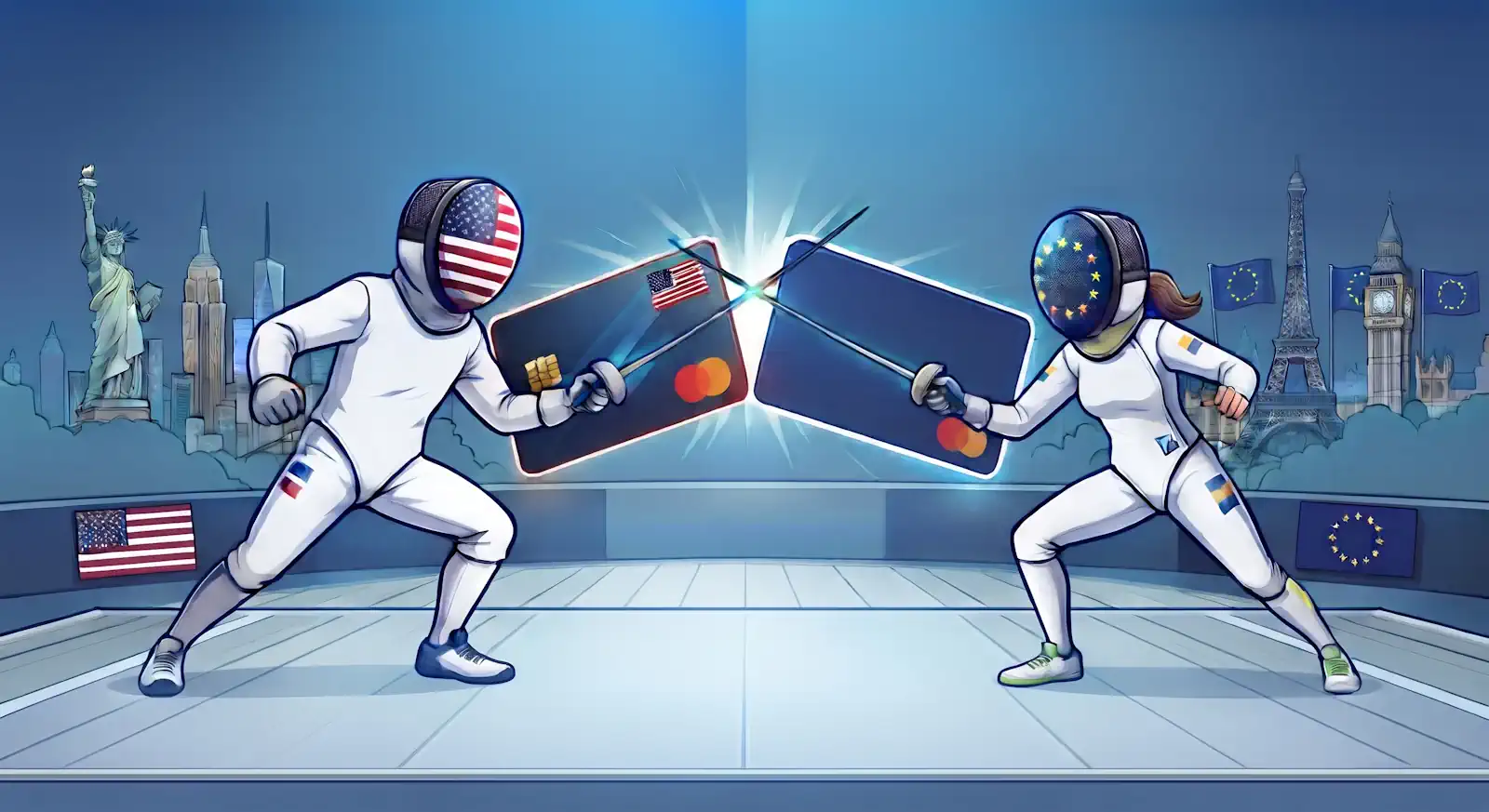
US and European banking: Who pays when a customer does not recognise a payment?

This article is part of our Opinions section, where we invite industry professionals to share their views on the most pressing technology questions of our time.
Here, Ivan Dovica, CEO of Tapix (Dateio), compares the US and European banking markets to explore how differences in regulation, card fees and digital banking shape the customer experience. He examines why unrecognised payments are handled differently on either side of the Atlantic, and how better transaction data could help banks reduce disputes and costs.
Card payments in the US and in Europe run largely on the same networks. The rules around them differ, and so does what a bank earns on each payment. That gap is behind how banks on each side compete for customers, what their apps look like and who pays when a customer does not recognise a transaction. Europe settles that question up front, with rules. The US settles it afterwards, case by case. Below, I compare the two markets based on the latest available data.
What a card payment earns the bank
Every card payment carries a fee that the merchant pays. The largest part of it, the interchange fee, goes to the bank that issued the card. The US and Europe differ in how high that fee is allowed to go.
Neither market runs on Visa and Mastercard alone. In the US, Visa carried 61% of 2024 card purchase volume and Mastercard 26%. American Express took 11% of cards it mostly issues itself. Capital One bought Discover in 2025 and moved its debit cards onto that network. In the euro area, international schemes carry about two-thirds of card payments. Eight of 21 countries also run domestic schemes such as girocard, Cartes Bancaires and Bancomat.
In the US, merchants pay on average 2.35% of each Visa and Mastercard payment. Credit cards carry 54% of US card spending. Their fees have no cap. Debit fees are capped only for banks above $10bn in assets, at about 0.47% of an average payment. Smaller banks and credit unions are exempt and earn about 1.2% on debit. That exemption is why most US neobanks run on small partner banks. Chime says it earns the substantial majority of its revenue from these fees.
In the EU, the Interchange Fee Regulation caps the fee on consumer cards at 0.2% of a debit payment and 0.3% of a credit payment. The cap applies to every bank, whatever its size.
The difference shows up in what banks offer their customers. On a 2% cash back card, every merchant pays through the card fee, and the bank decides how much of it to hand back. A 0.2% fee cannot pay for 2% cash back. A US credit card can. Cards such as Citi Double Cash pay 2% on every purchase. Rewards cards carry 92% of US credit card spending. A European bank has no comparable margin to hand back. It competes on the app the customer opens every day.
Merchant-funded offers are a different model. A single merchant pays for its own promotion to the bank’s customers. The bank does not need card fee income to fund it, so the model works in both markets.
Banks, challengers and the main account
JPMorgan Chase, Bank of America, Citi and Wells Fargo are the four largest US banks. Together they held 40.2% of US bank assets in June 2026.
Europe’s largest banks are spread across many markets. Santander has 182m customers in Spain, the UK, Brazil, Mexico, the US and elsewhere. Inside each EU country, a few banks dominate. The five largest hold on average 69.3% of national banking assets. BNP Paribas, HSBC and Crédit Agricole each hold about three quarters of JPMorgan’s assets, while JPMorgan is worth almost three times HSBC, Europe’s most valuable bank.
The US also keeps a long tail of local institutions: 3,818 community banks and 4,214 credit unions with 146.1m members. Most of them buy their technology from a few core providers and digital banking platforms.
Customers on both sides now hold more than one account. The contest is over which one gets the salary and the everyday spending. The average US checking customer already holds deposit accounts at three institutions. US neobanks go straight for the paycheck. Chime says most of its 9.5m active members use it as their main financial relationship.
In Europe, challengers are widely used and less often the main account. In Ireland, 43% use Revolut at least occasionally. Only 3% use it as their main current account, while AIB and Bank of Ireland hold most main accounts. Deposit leakage to foreign fintechs is a common problem among incumbents. In the UK, the challengers are moving further. Digital banks hold 9% of primary debit cards. Monzo says 49% of its monthly active users treat it as their main bank.
Both sides now meet as banks. Revolut received its full UK banking licence in March 2026. Monzo and Starling are profitable. Incumbents answer with digital brands of their own, such as Société Générale’s BoursoBank with about 9.1m clients. The main account matters because the salary arrives there and the everyday payments run through it. The bank that holds it sees the customer’s whole payment history. A second app sees a slice.
Crossing the Atlantic
European challengers have struggled in the US. N26 left in 2022, and Monzo closed its last US accounts in June 2026. Bunq and Wise were both refused US charters this summer. Only Revolut has conditional approval for a US national bank, with a 2027 launch planned. The Europeans that grew there brought price or credit: Klarna with interest-free instalments, Santander with Openbank’s savings rates and then Webster Bank.
Traffic the other way is lighter. JPMorgan alone is building European retail banking. Chase UK turned a profit in 2025 with over 3m customers. Chase Germany followed in May 2026.
What the apps do
Forrester reviews banking apps on both sides with the same method. It scores each app on 25 to 26 everyday customer tasks. In its 2025 North American review of seven banks, U.S. Bank led, followed by Bank of America. Even the leaders only partially met customer expectations. In its 2025 European review of 11 banks, BBVA led, followed by PKO Bank Polski and Intesa Sanpaolo. Most European customers rated their app as merely OK. Sia’s 2026 benchmark of 146 apps in 20 countries also covers both markets. KBC, Revolut and BoursoBank lead it. For the first time, no US bank is in its leading group. Set side by side, the apps differ in three places:
- Digital sales: Bank of America made 69% of its consumer sales digitally at the end of 2025. KBC sold 57% of its banking products digitally in 2025.
- AI assistants: US banks report volume. Bank of America’s Erica had 20.6m users and about 700m interactions in 2025. KBC reports outcomes. Its assistant Kate has 6.2m users and resolved 82% of cases on its own in Belgium in 2025. J.D. Power found US assistants fall short on disputes and fraud.
- Recurring payments: Chase and Capital One built subscription tools for credit cards only. In Europe, the tools sit on the current account. Revolut tracks direct debits and recurring payments. ING Belgium cancels subscriptions for the customer for free.
In these examples, US apps are built around the card: rewards, offers and credit card tools. European apps are built around the current account: transfers, direct debits and servicing inside the app.
How people pay
Americans pay with cards and send money to each other through apps. Zelle moved $1.2tn in 2025. Cash App had 59m monthly transacting users in June 2026. Venmo had 67m monthly active accounts at the end of 2025. Europeans pay with debit cards and local apps such as Bizum in Spain, iDEAL in the Netherlands and Swish in Sweden. Instant transfers reached a quarter of euro area credit transfers in late 2025.
Europe now wants to depend less on non-European card schemes. In a June 2026 speech, ECB President Christine Lagarde said international schemes handle more than 60% of euro area card payments. She called ownership of payment infrastructure “an instrument of power”. Banks are building their own network. Wero has 60m users in five countries. In September 2026, it agreed with Bizum, Bancomat, MB WAY and Vipps MobilePay to connect their networks.
Payments that leave the card networks also leave card protection. A card chargeback covers shops and online purchases in every country where the card works. Wero’s dispute rules cover online purchases only, from merchants whose payment provider takes part. Most French accounts cannot use them yet.
When a customer does not recognise a payment
A dispute usually starts with a payment the customer cannot recognise. Mastercard’s own research says that when shoppers buy through a booking app, it “can make it harder for consumers to recognise their own transactions, leading to the potential for disputes”. In a 2026 survey for Mastercard, 44% of consumers said they struggle to recognise their own purchases.
Europe answers this with rules. Since October 2023, Mastercard has required issuers in about 50 European countries to show the merchant’s name, address, contact details and logo in the app. Since April 2026, Visa has required European issuers to let customers see, pause and cancel subscriptions in the app. Both rules make enrichment an obligation. A European bank has to turn the raw payment record into a merchant the customer recognises.
The US has no such rules. The federal click-to-cancel rule was vacated in July 2025. U.S. Bank added subscription management for its credit cards in October 2025, by its own choice. Instead, US law acts after the confusion. A card charge the customer cannot identify counts as a billing error the bank must investigate. On debit, it must decide within 10 business days or return the money while it looks. A call costs the bank $7 or more, and processing a dispute costs the issuer $9 to $10.
The volumes reflect the difference. Research for Mastercard forecasts 141.1m chargebacks in North America and 29.2m in Europe in 2029. Its growth rates put 2026 at about 121m and 24m. By my calculation, that is about 380 chargebacks per 1,000 adults in the US and Canada and about 53 in Europe. Part of the gap is that Americans pay by card more often. Per card payment, a US payment is still about twice as likely to end in a chargeback. About a quarter of Mastercard’s chargebacks come from recurring payments.
The display rules are not the only difference. US law turns an unrecognised charge into a formal case, which makes disputes easier to start. Still, the market that requires banks to show who was paid records half as many chargebacks per card payment. The data cannot show how much of that gap the display rules explain.
Data access and foundation models
Access to payment data works differently too. In Europe, a licensed provider can read a customer’s account data at another bank for free. The new Payment Services Regulation keeps it free and lets banks charge only for premium services. The argument is that the data belongs to the customer and that fees would block new competitors. The US wrote a free rule in 2024. It never took effect. JPMorgan now charges aggregators under contracts covering more than 95% of data pulls on its systems. A US customer holds accounts at three institutions, so a bank that wants the full picture often has to fetch it from another bank. That fetch has a price. It matters more now that banks are training models on payment history.
We began working with transaction data through cashback. To pay cashback on a card payment, you have to know which merchant was paid. That meant cleaning up the raw payment record: the merchant’s name, category and location. Once clean, the same record could answer other questions: which payments are subscriptions, and which charges a customer is about to dispute. Models can now be trained on that record.
Revolut has shown what one model trained on a whole customer base can do. PRAGMA was published with NVIDIA in April 2026. It learned from 24bn events in 26m customer records across 111 countries. The events cover card payments, transfers, app activity, trades and messages. The largest version has 1bn parameters.
Revolut compared PRAGMA with models built for every single task, on historical data. It reports:
- Credit default risk: 2.3 times better at identifying it
- Fraud: 65% more cases caught, with 17% more precise alerts
- Product recommendations: 41% more relevant
- Marketing messages: 79% better at predicting who responds
- Recurring payments: about 6% better at finding them
Merchant descriptions alone improved credit risk prediction by 16.1%, according to NVIDIA. Revolut published only relative gains and has not said PRAGMA runs in production.
Nubank sits between the two markets. It runs its nuFormer model in its Brazilian credit business and won conditional approval for a US national bank in January 2026. In the US, the models so far come from the companies around the banks, such as Stripe, card networks and data aggregators. I found no public model from a US bank.
Where the two systems are heading
Both systems answer the same question differently: who pays when a customer cannot read a payment. Europe settles it up front. Scheme rules require merchant details and subscription controls in the app. The law keeps data access free. The US settles it afterwards, case by case, in calls and disputes. Increasingly, it also pays for data.
Each side is moving into the other’s territory. Europe is moving payments off cards and has to rebuild the protections cards gave, as Wero’s dispute rules show. US banks are adding subscription controls without a rule, one bank at a time.
For a bank, the practical question is the same on both sides: whether it can turn a raw payment record into a merchant the customer recognises. A bank that can has fewer calls and disputes to pay for and a cleaner record to train models on.
Related stories
About The Author

Ricardo Oliveira
NEXT UP