Trending Topics

 Trending
Sébastien Faure, Head of Customer Service at Devialet: “Brands will have to prove they are legitimate when contacting customers”

Whether you work in customer service or – like most of the world – only contact a company when things go wrong, this interview is well worth reading. Sébastien Faure is Head of Customer Service at Devialet, an innovative French manufacturer of audio equipment, and as you will soon discover he thinks deeply about customer service.
One part of his “origins” story that we love is that Sébastien started his working life in a call centre. So, from day one, he has been dealing with customers. “I think from my experience, empathy is important, understanding, reading customers’ complaints and looking back on what happened,” he replied when we asked him about his core values.
But we were also fascinated to hear what Sébastien had to say about the role of technology. As ever, AI is never far from the surface, whether it’s helping to summarise calls or cutting down mundane tasks. Keep reading to discover more.
Related reading: Omotenashi in digital customer engagement: openness and sincerity through first-party data
Could you please introduce yourself to our audience? What motivated you to pursue a career in customer experience, and how did you embark on your journey in this field?
I describe myself as a self-taught and curious person. I remember a time when I thought I was not supposed to be here and do customer experience for a brand. Fortunately, I got a taste for customer relationships when I worked as a consumer advisor in a call centre, followed by running operations and constantly thinking about improving experience and services. When I started working with Devialet, the job was to write everything on a blank page. That’s so exciting.
What are your thoughts on the escalating integration of AI in customer experience and its potential influence on the future of customer service at large?
I have a strong belief in AI in customer service and its progressive impact in this domain. However, I see its progression mainly and at first dedicated to improving agent or brand ambassadorship. This can be a major change in the way we are going to train our people and recruit them because they will have to learn to play with AI and perform [in a way] more focused on listening to the customer.
How do you ready yourself for an AI-driven landscape as a customer experience leader? What new skills do you need?
AI will mean new tools for our team members which must smoothly be integrated with an existing – and important – set of tools that most of our customers service use on a daily basis.
My role will be to orchestrate these tools and determine which scenario AI should be offered to brand ambassadors. And pilot the test and learn based on what is effectively well perceived by customers. Taming AI requires new talent in my organisation.
Do you anticipate any significant disruptions in customer experience technology for 2024? If so, what are those disruptions and why?
I believe that consumers will expect more security of their data in the future. That’s not a strong change, but a more structuring trend for brands to consider when choosing tools, in the way we will connect with customers, etc. We are all overwhelmed with information, emails, or phone calls – brands will probably have to prove they are legitimate when contacting customers. That’s the side effect of the way we are using social media.
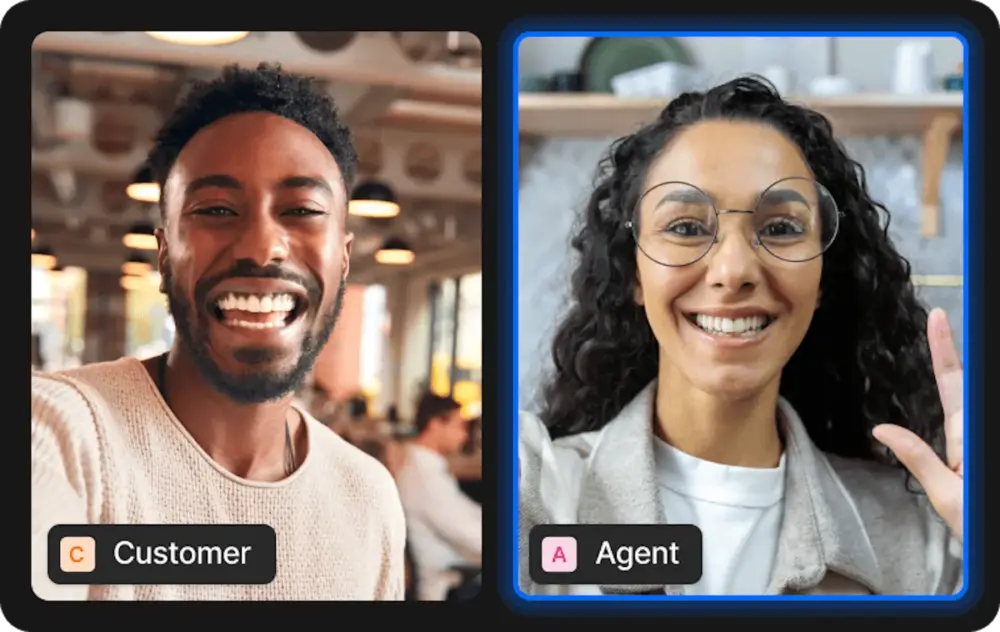
Secondly, not a trend but something I would like to see popping more in our day-to-day connection with customers as a brand, [is the use of] video rather than a phone call or an email. Not only videos as a face-to-face communication channel such as the one used every day in B2B business but more as a way to report a situation to our CS team. We are working with Snapcall, which combined with AI can quickly become a strong tool to improve efficiency!
Could you share some of your most noteworthy accomplishments that you take particular pride in?
There is a lot of personal pride I can get when people from our CS team take over responsibility in other brands’ customer services or into a satellite job of customer experience. This means that I have managed to plant the seeds of an exciting job.
Of course, consumers’ or partners’ appraisals are always welcome. Also being in touch with TechFinitive and sharing my experience has a true meaning to me and it stamps recognition!
Looking back at what we have done with Devialet for years – and not only on the customer service side – I can say is a great engine for what lies ahead.
What core values have played a pivotal role in shaping your approach to customer experience?
I think from my experience, empathy is important, understanding, reading customers’ complaints and looking back on what happened are some of the most important core values to better approach the customer experience.
Not anticipating any barriers too quickly when building a process, working on a mechanism, or adjusting a customer journey is key too.
How do you ensure you’re up to date with the latest customer experience trends and technologies, and how do you integrate them into your strategies?
I’m spending time with professionals in this area to hear what they hear, what technologies they are trying, what they have in mind, and what they believe are new trends on the rise. I try as much as I can to participate in events and read materials, magazines and online blogs.
Then I try to transpose emerging technologies or trends in my business area. During the whole process, I consult and involve my team to catch their point of view on this change or application.
What piece of advice would you offer to fellow customer experience professionals that has been particularly beneficial to you personally?
I would say as personal advice, think like your customers, and look at your product and service with the same eyes as them. Then data will help you define top priorities on areas to address that improve the customer’s perception and your customer service performance. Finally, make things as simple as possible – not all customers going through the journey are the same.
Are there any startups in the customer experience industry that have piqued your interest lately?
There are two startups I really like working with, because of the value they are offering and their capability to think out of the blue tools.
Snapcall which is a French startup, provides a channel to simplify some of our complex processes. We are using Snapcall for example for after-sales services and to identify products damaged and quote the repair based on it. Customers can take pictures or make a video. Video is so useful as a customer will use its own wording to explain and show the problem – we do not force customers to learn our technical jargon. Then Snapcall uses AI to summarize the customer’s explanation. Very simple for our CS team
Stonly which is a tool to design guides for customers or for our CS team members. This is helpful for example to concentrate all information (including some confidential) into one single place for all agents, to reduce drastically the training required for a product launch and can be very useful for customers on a very specific scenario. It’s also a French startup! Simple to use and very efficient.
About The Author

Tim Danton
NEXT UP


