Trending Topics

 Trending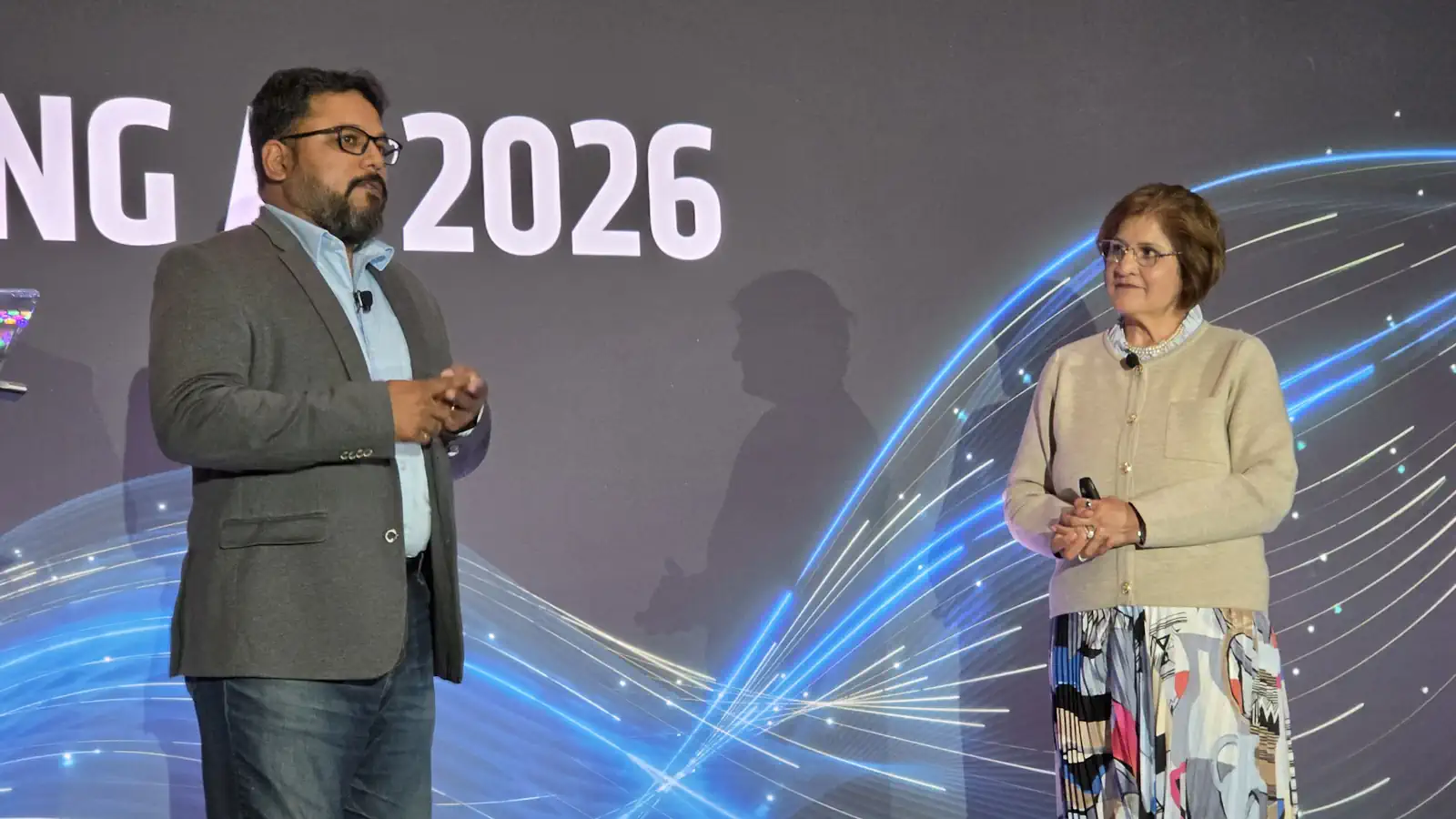
When two giants collide: How AMD and Oracle created breakthrough AI networking technology together

Sometimes you can tell when people just get along. That seemed very much the case at AMD’s Advancing AI 2026 event in San Francisco, when AMD’s Soni Jiandani chatted on-stage with Raj Subramaniyan from Oracle Cloud Infrastructure.
Usually these interviews are staged, awkward affairs, but not here. Perhaps because both know their subjects so well. Jiandani was a Co-Founder of Pensando Systems, which AMD acquired in 2022 on the strength of its DPUs. That is, a dedicated processor – DPU stands for data processing unit – that offloads networking-related tasks from the CPU. And a whole lot more, as we are about to discover.
Subramaniyan joined Oracle from AWS back in 2019 as Senior Director of Engineering, rising to become Senior Vice President for Oracle’s Cloud Infrastructure five years later.
When AMD interviewed Oracle
“Let’s talk about what has Oracle done to deploy the AMD DPUs across multiple generations of OCI’s infrastructure,” said Jiandani, having welcomed Subramaniyan to the stage at AMD Advancing AI 2026.
“As AI is evolving towards agentic, how has the role of the DPU evolved within your infrastructure?” she asked.
The Oracle man began his answer by emphasising that DPUs aren’t just “foundational for networking” but also for “things like security, storage acceleration”, Plus software-defined networking (SDN), with AMD’s DPUs helping to improve OCI’s performance by 500%.
“Now, as AI workloads have come in, infrastructure efficiency becomes super key. So, we want to be able to offload as many functionalities off from the CPU down to the DPU because DPUs have a lot of power,” Subramaniyan added.
This is only becoming more critical with the rise of agentic AI and the pressure it’s placing on data movement. “Now we are seeing a lot of storage access required, disaggregated storage access… and so it becomes even more important for us to keep loading on to the DPUs as many functionalities as we can.”
Oracle’s Accleron SmartNIC
Jiandani’s next question was about the Oracle Acceleron SmartNIC, which the two companies worked on together.
“When we started out this overall network virtualization as a plan… we had a separate hosting service on the customer side, the host side, and then the actual virtualization stack or the OCI stack was running on a separate DPE [database policy enforcement],” said Subramaniyan. “So they were literally isolated from each other because that gave the right security model for us.”
Then AI workloads happened, by necessity breaking down the neat barriers between databases.
“We said, okay, we need to be able… to offload most of these functionalities from the host down onto the TPUs [tensor processing units] themselves, and that’s where we partnered with you.”
Security was a key factor, but Subramaniyan said that the new approach is “actually more secure right now, with just the TPUs providing both the functionalities. It’s a converged architecture with storage, security, network acceleration, all of it, all on the TPU.”
As a result it has produced “better storage performance, storage access performance, as well as better security, encryption standards, better network performance”. And, he added, “the journey continues”.
Growing importance of networking to server AI
“One other question,” said Jiandani. “OCI has deployed AMD networking technologies, as you said, for multiple generations, from DPUs to AI NICs in your Zettascale AI infrastructure. Now, as AI clusters continue to scale, what capabilities are becoming most important in your network?”
Subramaniyan began his reply by echoing a point Jiandani had earlier made in a presentation to journalists and analysts in a closed-doors briefing: that networking is now just as important to AI factories as the GPUs.
“If the network is not rock solid in terms of the performance it offers and how it connects the GPUs, many of the AI workloads actually start tanking in terms of overall utilisation of the cluster itself. So that’s where… scale-out networking, purpose-built networking is actually super important.”
It means OCI must route around any congestion in the network instantly. And that means a deep level of understanding about how the different GPUs are communicating.
“That’s where… we’ve deployed [AMD] Vulcano NICs,” he said. Crucially, he added, Oracle has also partnered with AMD on MRC, the Multipath Reliable Connection specification to aid AI training at scale.
MRC has given OCI the “ability to actually deploy multi-planar networks, so denser but lesser number of tiers in terms of each of the planes, and actually go spray the packets. It helps us in overall infrastructure efficiency because we don’t have to deploy that many number of cables or switches in the fabric, but still be able to narrow down congestion and all of that.
“So that partnership has been fantastic as well for us. So I think MRC has been a breakthrough for our partnership.”
About The Author

Tim Danton
NEXT UP


