Trending Topics

 Trending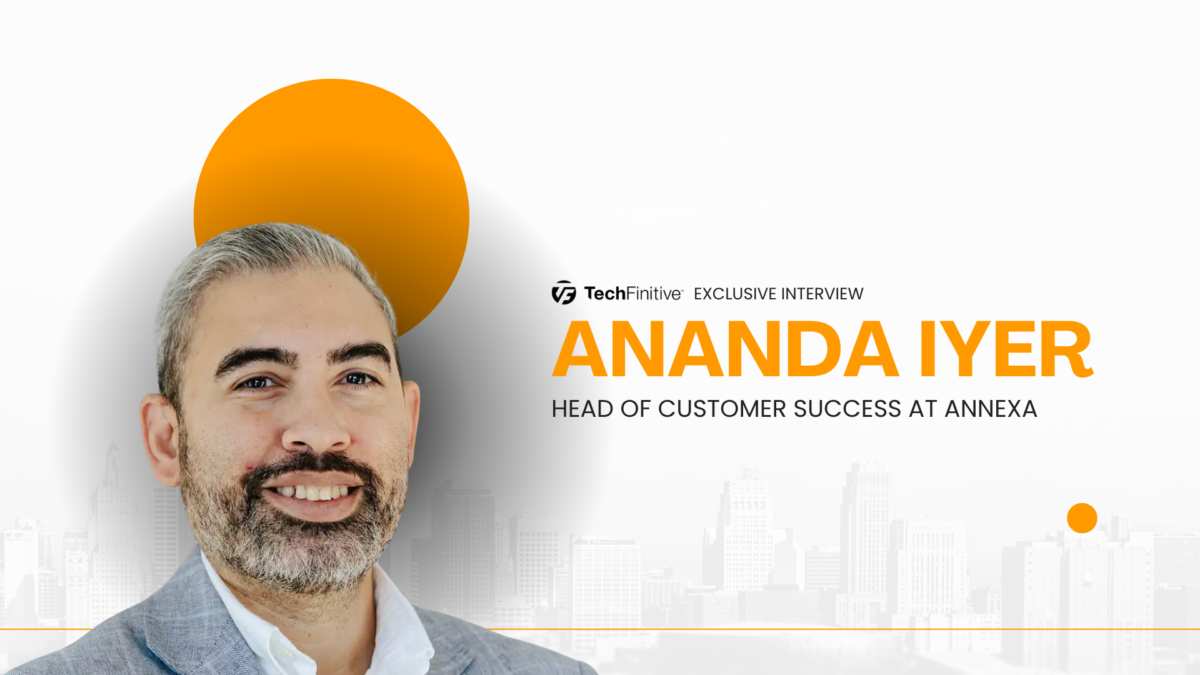
Ananda Iyer, Head of Customer Success at Annexa: “The technology has to be built for change”

Retailers are under constant pressure to evolve. New sales channels emerge, customer expectations shift, fulfilment models become more complex and technologies that seemed cutting-edge just a few years ago can quickly become outdated. Yet while digital transformation often focuses on adopting the latest platforms, many organisations discover that long-term success depends less on the technologies they choose and more on the foundations they build beneath them.
Increasingly, retailers are rethinking sprawling technology estates in favour of simpler, more connected architectures built around a single source of truth. With clean data, integrated systems and reliable inventory visibility, businesses are better positioned to introduce new commerce platforms, automate processes and embrace AI without adding unnecessary complexity.
As Head of Customer Success at Annexa, Ananda Iyer works with retailers and enterprise organisations to modernise their ERP environments and build technology ecosystems that can evolve alongside changing business priorities. Drawing on Annexa’s long-standing partnership with premium tea retailer T2, he has seen first-hand how a stable core platform can support more than a decade of continuous transformation.
In this interview with TechFinitive, Iyer discusses why simplifying technology stacks often delivers greater value than adding new systems, how retailers can create a trusted, real-time view of inventory, what businesses should consider before embarking on major re-platforming projects, and why getting the data foundations right is essential before introducing AI into retail operations.
T2 has been through significant change over the past decade, from evolving its retail footprint to re-platforming e-commerce and reshaping fulfillment. Looking back, what have been the biggest lessons about building a technology foundation that can support constant business transformation?
If there’s one thing a decade with a business like T2 teaches you, it’s that the technology has to be built for change. T2 has been through ownership changes, market expansion and retraction, commerce platform migrations – and the businesses that come through all of that intact are the ones that built reusable architecture early rather than rebuilding from scratch every time something shifted. For us, that meant things like a queue and mapping framework that could be applied again and again, so when the ecommerce platform changed, that same framework carried across rather than starting over.
The other piece, and probably the most important one, is that a stable core system as the single source of truth is what actually makes all that change manageable. For T2, the constant throughout all that change has been NetSuite as the transaction of record, with the integration layer built to translate everything back to that one place cleanly. That’s what lets the business keep transforming on top without the whole thing becoming chaos. Get that right, and constant change becomes something the business can absorb rather than something it has to survive.
Many retailers are struggling with increasingly complex technology stacks. T2 has instead focused on simplification and consolidation. Why was that the right strategy for the business, and what benefits has it delivered beyond reducing technical complexity?
Every extra system in the stack is another point of translation – another place where data gets reinterpreted or delayed as it moves between platforms. For a business like T2, operating across multiple channels, currencies and payment methods, that adds up fast in cost, in time, and in visibility. So when a business of this size and complexity decides to consolidate, what you’re really doing is getting everyone speaking the same language and looking at the same numbers. One source of truth to make decisions on, rather than something that’s been translated three times before it reaches you.
The benefit goes well beyond fewer systems to manage. Teams spend less time reconciling what one system says against another and more time running the business. And it sets up everything that comes next – automation and AI tools only work well sitting on a bedrock of clean, unified data, so simplifying first is what makes the bigger payoff possible.
A consistent, trusted view of inventory is becoming essential for modern retail. How important is accurate, real-time inventory visibility in delivering experiences such as click and collect, ship-from-store and endless aisle, and what challenges did T2 have to overcome to achieve it?
Real-time inventory visibility isn’t optional anymore; it’s the whole thing. If there’s a gap between what the system says you’ve got and what’s actually sitting in a warehouse or on a shelf, you’re either overselling and disappointing someone, or sitting on stock you didn’t even know you had and losing the sale anyway. Inventory has to be one number, updated in real time, no matter what channel or location it’s sitting behind.
For T2, getting there was about the unglamorous integration work. They’re running across multiple entities, multiple channels, multiple fulfilment partners, ship-from-store included, so the hard part was making sure every one of those systems was actually talking back to the same source of truth, cleanly and consistently. NetSuite sitting there as that source of truth for inventory across POS and online is what lets those channels trust the numbers they’re looking at, instead of working off something stale or half-connected.
You’ve migrated from Salesforce Commerce Cloud to Shopify Plus while keeping NetSuite at the centre of your operations. What factors drove that decision, and what advice would you give retailers considering a similar re-platforming project?
For T2, it really came down to omnichannel. Before this, T2 had commerce spread across a few different systems – the website on one platform, marketplace selling handled separately – each with its own view of stock and orders. Shopify pulls that onto one platform, so instead of reconciling between systems to keep things consistent, it’s one data model doing the job across channels.
My advice to any retailer looking at something similar is don’t confuse the platform you sell through with the system that runs your business. If your core is solid and your integration layer is doing its job properly, you can swap out the commerce front end without really touching the foundation underneath, and that’s a much lower-risk way to modernise than trying to replatform everything at once.
The partnership between T2 and Annexa has now lasted more than ten years, which is unusual in enterprise technology. What has made that relationship successful, and how important are continuity and institutional knowledge when delivering long-term digital transformation?
What’s made it work is that we never treated it like a project that ends. The original implementation was six months, but from there the relationship just kept growing alongside the business – warehouse work, payment reconciliation, marketplace connectors, platform migrations and everything else that’s come up over the years. At some point, we became the custodian of T2’s whole NetSuite ecosystem, and the resourcing adapted to match that.
We’ve got people who’ve been on the account for over a decade, and they hold institutional knowledge about systems and decisions that predate a lot of the current T2 staff. That said, continuity can’t sit with one or two people forever, so we’ve been deliberate about rotating more consultants through the account over time, so that knowledge is shared across a broader group rather than being with a few individuals.
The next phase of your roadmap includes greater automation and AI capabilities. As retailers explore AI across their operations, where do you see the greatest opportunities to deliver measurable business value, and what foundations need to be in place before organisations can take advantage of those technologies?
I see huge potential in AI-driven personalisation — using generative AI for product discovery and recommendations across channels. The data’s already sitting there, purchase history, browsing behaviour, inventory, and the tools have gotten good enough that you don’t need a research team to actually use them. Think of a shopping assistant that gets what you’re actually after, “something for a beach wedding under $200,” rather than just a search bar. And it shows up in the numbers people already care about, conversion, average order value, repeat purchase.
But none of that works if the foundations aren’t right first. AI is only ever going to be as good as the data it’s looking at, so it always comes back to the same thing: get your core system sitting as that single transaction of record, get your business rules, your structure, and your connectivity right, before you start chasing the shiny AI tools. Otherwise, you’re just automating chaos faster.
Also from our interviews section
- Chris Hosking, AI & Cloud Security Evangelist at SentinelOne: “Lots of security teams can’t see what’s going in or coming out of AI across their employees”
- Manoj Bhatt, CEO and Founder, Cyberhash: “As an industry, we can’t afford to be stuck in our ways”
- Sean Yu, Vice President of Commercial for APAC at EBANX: “Stop thinking about LATAM as a region you enter when your core markets are saturated”
About The Author

Ricardo Oliveira
NEXT UP


