Trending Topics

 Trending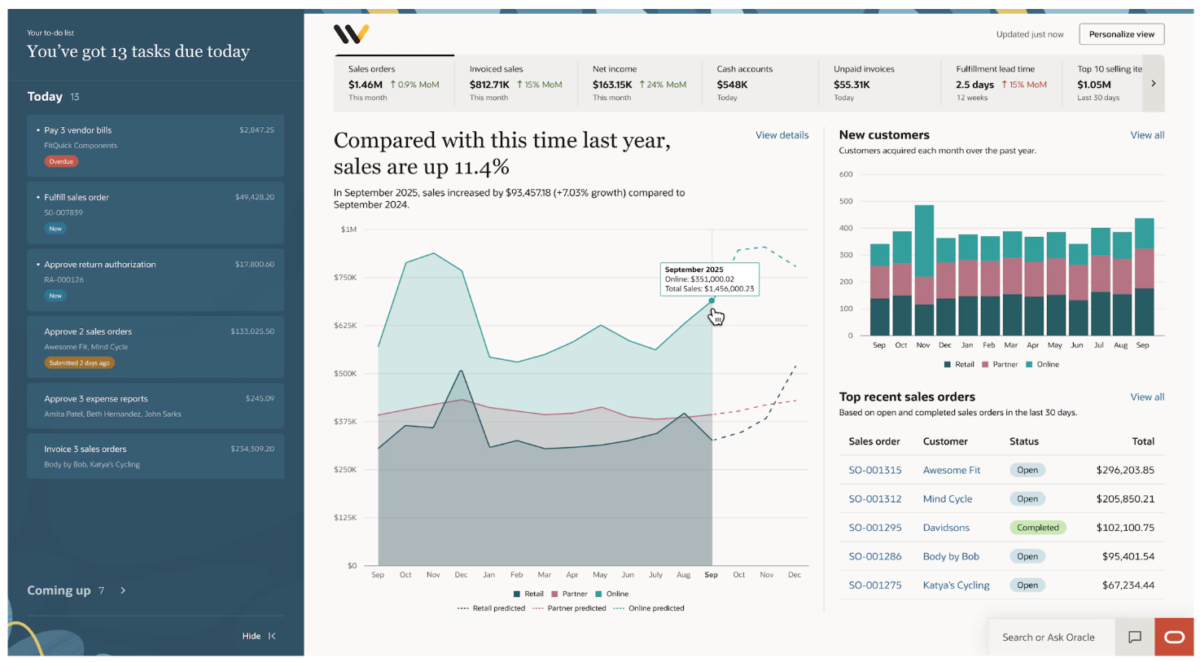
NetSuite Next puts AI into the approval chain, but can ERP governance keep pace?

NetSuite Next is Oracle’s effort to transform ERP into a system that users can talk to instead of just navigating. As artificial intelligence shifts from reporting transactions to recommending and possibly starting actions, the approval chain will be a key test. Its new platform combines natural-language interaction, AI agents, and understandable outputs with existing business permissions and controls.
This is significant. Why? Because ERP isn’t merely just another productivity tool. It is the financial record, the supply-chain control center, and, for many companies, the place where a poorly managed action can lead to audit headaches.
From answers to action
The Ask Oracle interface allows employees to search for data, examine results, and complete tasks using natural-language prompts. Further, the platform also introduces AI-driven workflows that bring information, suggestions, and actions into a shared workspace thus helping teams avoid the back-and-forth between dashboards, spreadsheets, and approval emails.
To a discerning eye, the potential is obvious.
A finance manager can easily spot an unusual variance, investigate its cause, and submit a corrective action for approval without leaving the ERP. A procurement team can quickly take notice of an overdue supplier commitment and prepare the next step with the relevant records already at hand.
And, this is where the real value lies. AI can lessen the administrative burden surrounding decisions.
Ironically, this is also where risks take on a new form.
The governance gap
Traditional ERP controls expect that people will carry out defined actions through set screens and workflows. However, agentic AI complicates this model. It can interpret a request, pull conclusions from various data points, and suggest a course of action at a speed humans may struggle to match. For example, agentic AI could spot that stock is running low, compare supplier prices and delivery times, and the budget, and then draft a purchase order for manager approval.
Such a scenario creates potential governance gaps. The governance question is whether the system used the correct supplier data, applied the right purchasing policy, respected segregation-of-duties rules and left an auditable explanation for why a specific supplier was selected.
Existing role-based access controls are still necessary, but they are not enough on their own. AI compounds existing security gaps because it works much faster and at a larger scale than humans. A minor permissions mistake that might be manageable with a human but can quickly become a massive problem when an AI agent exploits it.
The question isn’t whether an AI agent can approve a payment or update a supplier record. It’s about whether the organization can explain why it was allowed to suggest, prepare, or initiate that action in the first place.
This is why process intelligence is critical. Businesses must understand how work actually flows across finance, procurement, and operations before assigning an agent any role in that process.
Controls before convenience
NetSuite’s focus on explainability and user control is promising.
Finance teams must be able see the evidence behind a recommendation, know what information an agent accessed, and retain authority over high-risk decisions. In a recent whitepaper, KPMG warns that AI-driven ERP introduces new risk categories in addition to the benefits of automation, forecasting, and real-time reporting.
A practical approach should start with limited, low-risk use cases, such as explaining variances, supporting reconciliation, and triaging exceptions. Organizations should then set monetary thresholds, escalation paths, immutable activity logs, and a clear “stop” mechanism before allowing agents to handle transactions.
The approval chain cannot be an afterthought. As we have pointed out in the past in our coverage of AI governance and enterprise architecture, scalable AI relies on controls that connect technology choices to real business processes.
NetSuite Next simplifies ERP, but at the end of the day effective governance will determine whether it also makes the business safer.
About The Author

Kihara Kimachia
NEXT UP