Trending Topics

 Trending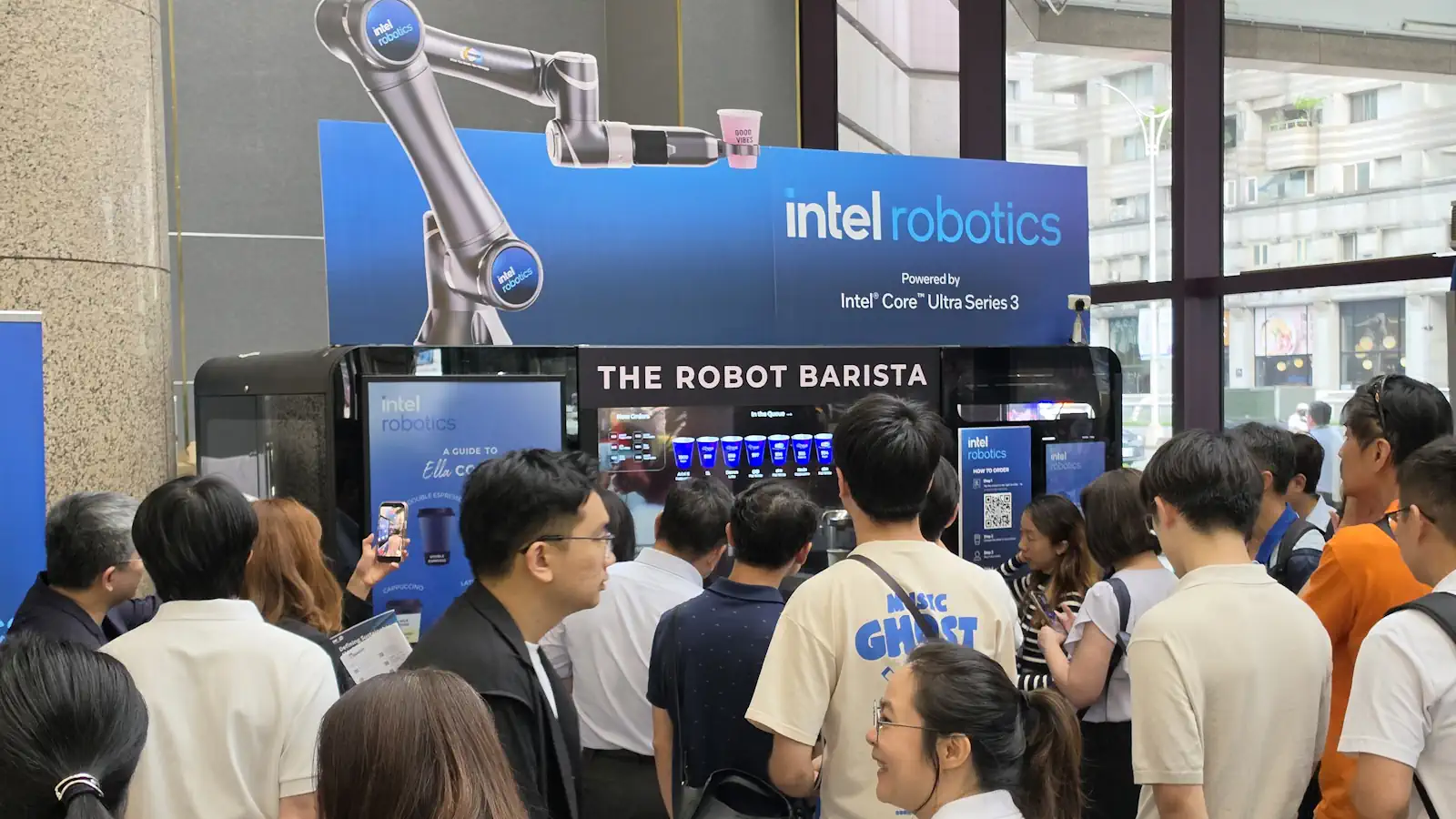
The story behind the surprise hit of Computex 2026: a robot barista with Intel inside

Crowds surrounded her for four days. Regulars grew to love her, to depend on her. But Ella is no modern-day influencer with immaculate skin and a ready smile, but a robot with one arm and an incredibly clever brain. And her father, the person without whom Ella “The Robot Barista” would not exist, used to run a coffee shop.
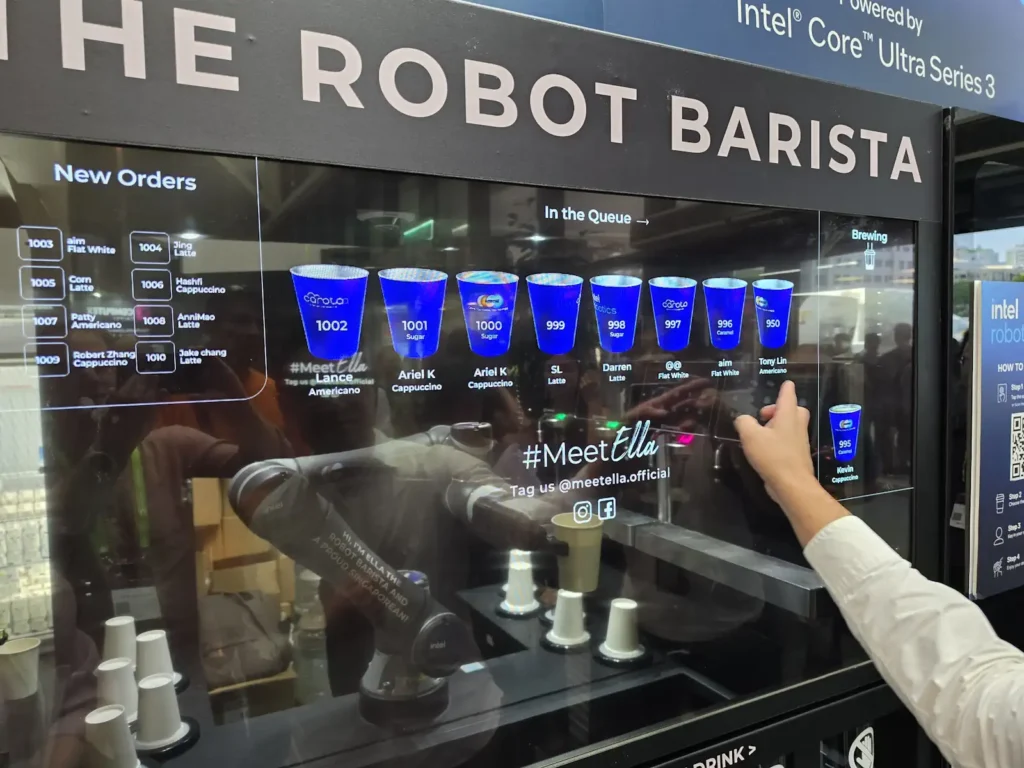
“Look,” said a smiling Keith Tan, who is now CEO of Sensory AI, “these are all our customers. Jeannie, Darren. They all ordered through the QR code [on the side of the machine], adding sugar, or caramel, whatever, and Ella is running their orders simultaneously. She’s picking up the syrup right now!”
It’s hard not to be swept away by Keith’s excitement, with his grin wider than that of Jeannie as she takes away her syrup-sweetened coffee from the dispenser. “I mean, this is Physical AI being deployed in the real world.”
Sweet physical AI
Our meeting wasn’t by accident. I’d been keen to see Ella in person since interviewing John Healy, head of Intel’s industrial robotics business, the previous day. “If you have the chance to visit the robotics pavilion [at Computex],” he said, casually, “you’ll see the robotic barista they’ve set up at the front, which is an example of integrated agentic AI and physical AI, all in a single platform.”
If you’ve been following the world of robotic baristas, chefs and bartenders over the past few years, then you’ll know that robotic baristas are nothing new. In fact, this is the sixth generation of The Robot Barista – the official name of Sensory AI’s solution – with all of them powered by an Intel chip of some description.
The challenge isn’t about programming a robotic arm to complete pre-set movements with a limited number of ingredients. (Although it’s fascinating to see Ella, and other robotic chefs, at work.) It’s what’s happening behind the scenes.
What’s new here is what’s happening while Ella simultaneously brews up four cups of coffee. One low-power chip, designed for laptops, is running an AI language model, monitoring the output of seven different cameras, running a payment system and controlling all of Ella’s movements.
Rather than think of The Robot Barista as a coffee maker, it’s effectively performing the functions of a whole coffee shop. The person taking your order, the barista, the server, the security team, the payment service that underpins it and, just for good measure, a customer satisfaction specialist.
“I’m so excited about how LLMs the last two years have really brought intelligence,” said Keith, “and now we’re combining that with physical robots, and I think there’s just so much opportunities to grow in this space, which is right at the beginning.”
You can read more in the BCA’s open letter to Microsoft.
The chip inside
Back to Intel’s John Healy. “[The Robot Barista] gets to one of the underpinnings of what Physical AI actually is,” he said. “It is a genuine extension and evolution from computer vision or machine learning in the past, because it’s now interacting with the physical world.
“Most of the outcomes from most of our AI forms in the past, generative AI included, provided a digital outcome. What’s different is this takes action based on what it has discerned. So it senses, decides and then acts.”
This all ties into one of Intel’s big announcements at Computex, the OpenVINO Physical AI framework to help simplify the process of turning concepts into “production-grade robots”, to quote Dan Rodriguez, Corporate Vice President, Edge Computing Group, Intel.
Keith Tan is certainly a fan. “OpenVINO was easy. So once we had [developed] a local model, it was Qwen3.5, we were up and running very quickly.”
That’s an understatement: Intel only started production of the Intel Core Series 3 chips in October last year, and while I’m sure Sensory AI received an early sample the fact that it had this production-ready model ready for Computex in June is quite an achievement. Especially when you bear in mind everything that it’s doing.
Behind the curtain
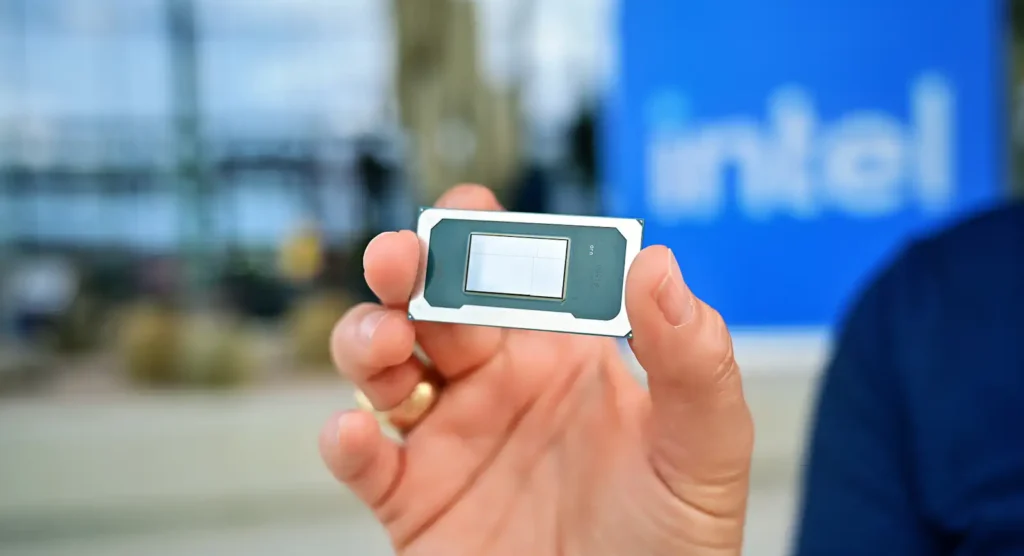
Let’s try and break down all the things happening on that little Core Ultra Series 3 chip.
Most obviously, it’s controlling Ella. In the first generation of The Robot Barista, that job alone was taken by a heavyweight Intel Xeon chip. And she has to make a lot of coffee: well over a thousand cups per day at Computex.
Then we come to the “sense” part of the equation mentioned by John Healy. Here, that includes monitoring eight different cameras: most are inside the mechanism, checking for problems such as blockages, but another is aimed outwards at the customers. This checks for facial expressions such as frustration and happiness, to make sure The Robot Barista is delivering good customer service.
The Core Ultra Series 3 chip is also powering the interface through which people order their coffee. This can be done via an app or directly on the screen (Intel’s silicon powers this too). For good measure, behind Ella sits another screen that can effectively serve as billboard advertising.
To show that this wasn’t all magic, Keith took me behind the scenes in a Wizard of Oz moment. There, looking exceptionally tired, sat a woman surrounded by dozens of empty water bottles – the kind used in office water coolers – who had to manually feed The Robot Barista.
That’s because this is a trade show floor, without access to a direct water supply. It’s very different in commercial deployments, where Sensory AI will set up everything that the host organisation and customers need.
Secret AI agents
Water replenishment aside, that’s a lot of pressure to place on chip. However, John Healy believes the Core Series 3 Ultra is perfect for the job – in part because it integrates the CPU, GPU and NPU in one “heterogenous architecture”.
“The real-time controls are then are assigned to each of those different compute complexes appropriate to the needs of their application,” he said. So a classic role is assigned to the CPU, agentic work might run on the GPU, while “the inference and the interpretation and the response to it – and the ingestion of the sensor information – go through the NPU”, said John Healy.
His key point being that a single chip (in this case Intel’s) handles the aggregation of all of those workloads onto one platform. And one with “a consistent software environment to programme it and manage it within a power footprint” he added.
Keith explained that they used Claude benchmarking to work out the most efficient places for each of their AI agents: Ella for the day-to-day business of making coffee, Avatar for customer interaction, and the Guardian agent for higher-level reasoning. So if there’s a problem, Ella finds out, Avatar informs the customer and Guardian tries to find a solution.
There’s one other key point: “Once those machines are on, we need five years of support,” said Keith. “That’s Intel’s territory. And we are not just robots, we are retail, all the retail touch points.” In short, customer service is everything, and programming robots is just the beginning.
What’s coming next?
The next steps for Intel are clear: to take advantage of its leading position. “In robotics, we have been a provider of the control motion control side of robotics for decades,” said Healy. “Now with physical AI, it’s really building on that premise… and the market is growing at a dramatic rate. It’s a tremendous opportunity as it continues to grow out into the future.”
He believes we’re moving closer to humanoid robots too. “The challenge has been in moving out of the lab and into deployment in the real world,” he said. “Accelerating that cycle time is a process of fine tuning and learning… and improving that cycle time is a big part of why we’ve invested in the software assets that we have.”
For now, Sensory AI is keen to ramp up production of the sixth generation Robot Barista, so don’t be surprised if you encounter it in airports, company HQs and sports arenas around the world in the coming years.
But Keith also has a longer-term ambition. “I mean, it sounds clichéd, but I want to make everyone happy. I want to solve problems in the world.”
That ambition goes beyond barista robots. “So, our next generation robot is collaborative, and not just a collaborative robot, but a robot that works with humans. So we have an agent where you can just talk to her, and she will do it, just like a companion.”
Since returning from Computex, I’ve spoken to representatives from Boston Robotics, Synopsys and Qualcomm, who all echo the positivity from Intel and Sensory AI. It feels like we are on the cusp of something big in the world of robotics, and I wouldn’t rule out Keith and his team being among the first to create a humanoid robot that lives up to our dreams.
In the meantime, I recommend any UK residents to watch the new BBC comedy series from Diane Morgan (famous for Philomena Cunk) called Ann Droid. In a strange kind of way, it does show what humanoid robots could be capable of.
Related articles
About The Author

Tim Danton
NEXT UP