Trending Topics

 Trending
4 reasons to be cheerful if you own Intel shares

I’ve never bought technology shares, considering it a conflict of interest: I’ve been paid to write about technology since 1999 and don’t want my thoughts to be affected by my own finances. Which is a shame, as I would have made a fortune by buying Apple, Google and Nvidia stocks along the way. And probably have lost it again by investing in AOL, Yahoo and Pets.com.
So I’m not a tech investor, but I am fascinated by what shifts the market. Most recently, we saw a leap in faith for Intel, which just posted adjusted earnings of $0.23 per share for Q3 2025 (analyst expectations were set at $0.02!!) while revenue rose by 3% year on year. All of which means the market now believes in “new” CEO Lip-Bu Tan.
I spent a few days with Intel earlier this month and have chatted on and off with its execs throughout this year. They always, always, present a united, upbeat view on the world. Even at what felt like Intel’s nadir in January, execs really only had positive words when I spoke to them at CES.
But it isn’t words that matter but results. Results like those adjusted earnings and revenue increases. Increased cashflow thanks to Nvidia’s $5 billion investment and the US government’s 10% stake in the company earlier this year.
I can’t influence Intel’s actions but I do have some thoughts to share for any investors on what to look for in the coming months. And why I’d still buy Intel shares if I was in the market.
Intel shares at a historic low
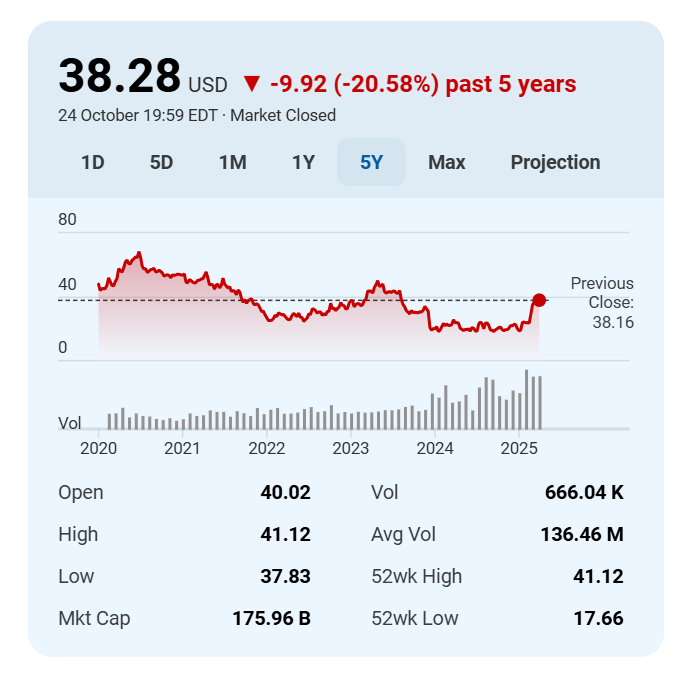
Now, historic prices aren’t always a great guide to future value. All I’m really saying here is that there’s room to grow. And if you look at AMD’s recent deal with OpenAI, where it talks about the aim of quadrupling its share price in a handful of years, there’s evidently belief for plenty of room for growth in this sector.
I actually believe in Lip-Bu Tuan too
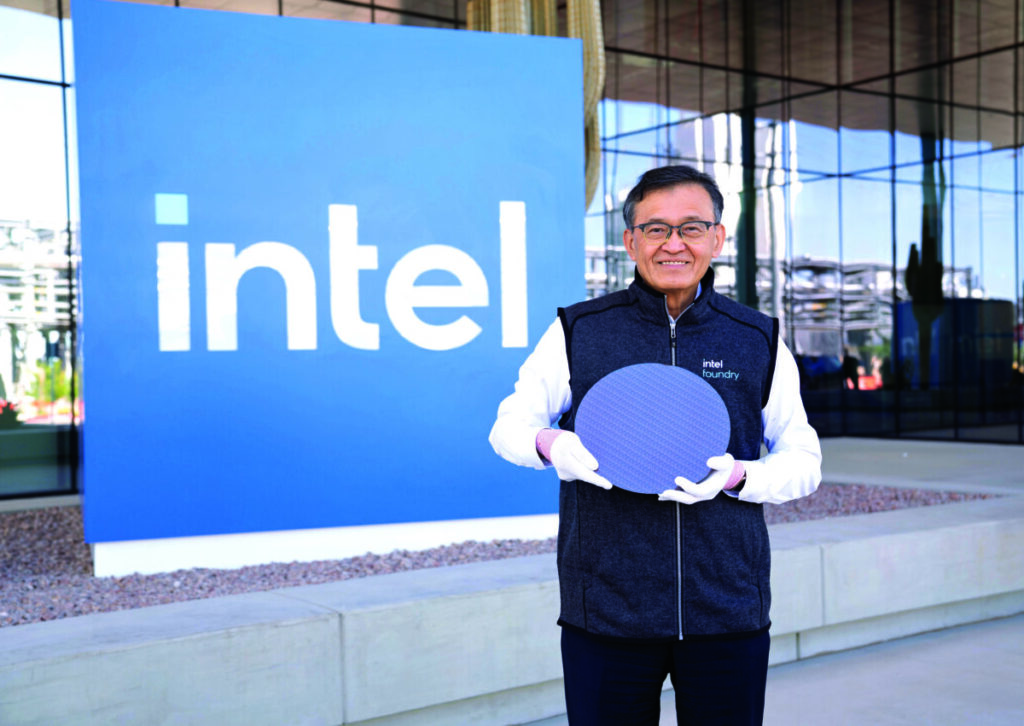
This is a tricky one. I’ve never met Lip-Bu Tuan, never even seen him on stage. But there is a sense of relaxedness when Intel execs talk about him, of assurance in his strategy, that I never saw when Pat Gelsinger was in charge. Nor, come to that, any of his recent predecessors.
Tuan’s winning formula appears to be a keen engineering focus – I’m told he keep on top of developments with deep dives every six weeks or so – along with strategic, business thinking. He clearly has a vision of where the money is going to be made in the next few years and how to get there.
Still, these are early days. He’s very much in his honeymoon period, and the recent developments – the promising early signs for Intel’s 18A process in particular – were put in place by previous CEOs. But from all available evidence so far, he knows how to lead a huge semiconductor company.
Intel is finally set to take advantage of AI
Just like Microsoft was late to the internet, Intel was late to AI. To grossly simplify, it was too busy defending existing markets to take a big gamble on this new world. Relative newcomer Nvidia was far more nimble, far more ambitious, and far better placed: AI (again to grossly simplify) is all about parallel processing, as typified by GPUs rather than CPUs. And we all know what Nvidia built its reputation on.
There are two reasons why I think Intel can finally start chomping decent market share in this market. The first is its partnership with Nvidia, the second that it appears to be shifting away from its own Gaudi accelerators. These were meant to position it head to head against Nvidia, but simply never delivered. Perhaps that will change, but sometimes you have to walk away and concentrate on your strengths.
For Intel, that strength is the performance-per-watt of its data centre processors, which can – in certain lucrative scenarios – be an excellent partner to Nvidia’s technology. A good recent example being the news of the Xeon 6+ family of chips, codenamed Clearwater Forest, that it announced earlier this month.
Making America great again is here to stay
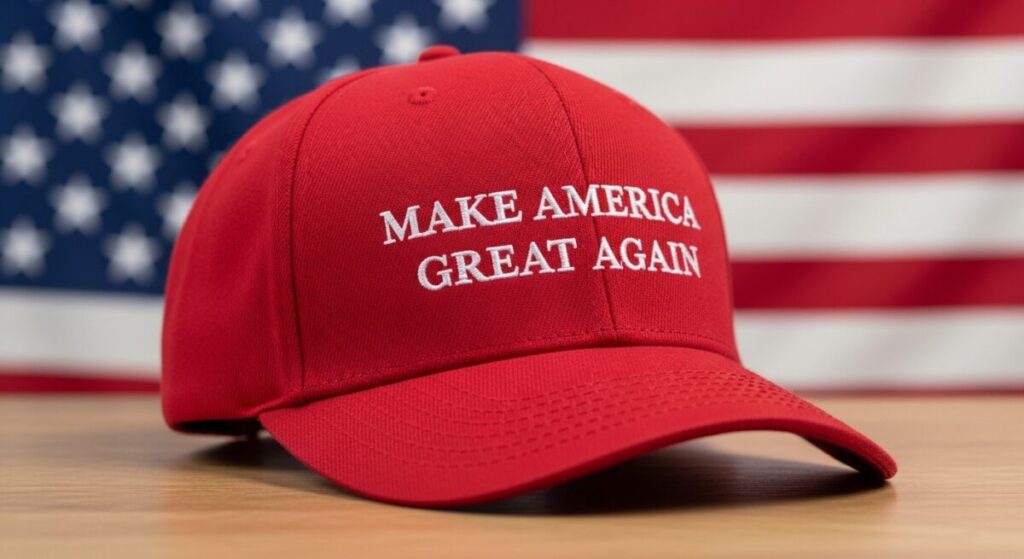
Finally we come to the Donald Trump factor. Whatever you feel about the US President, he has shifted America’s sense of self in a more, well, selfish direction. That’s shown in the Make America Great Again slogan, but also in his tariff policies and their corollary: the shift of manufacturing to the USA.
While Trump will only be in power for another three years, it’s impossible to imagine a future Democrat or Republican President who will reverse this position. MAGA is now too firmly seated as an ethos. In which case, high-tech manufacturing will increasingly come back to the USA. And this is a country well suited to it, with huge plains to build fabs on, a highly educated workforce and a government that’s willing to support it with subsidies.
All of which means that the Intel Foundry business is set for a period of fair weather. And now that Intel has finally got back on course with its 18A process, with 14A sitting ready in the background, of all the American tech companies Intel is best placed to take advantage.
More Intel articles
- Intel announces “Crescent Island” data centre GPU
- Inside Intel’s Fab 52 and the Intel 18A process
- Exclusive interview with Kira Boyko, Product Line Director, on Intel Clearwater Forest: “You’re going to see a 750 kilowatt reduction and then 3.5x performance”
About The Author

Tim Danton
NEXT UP