Trending Topics

 Trending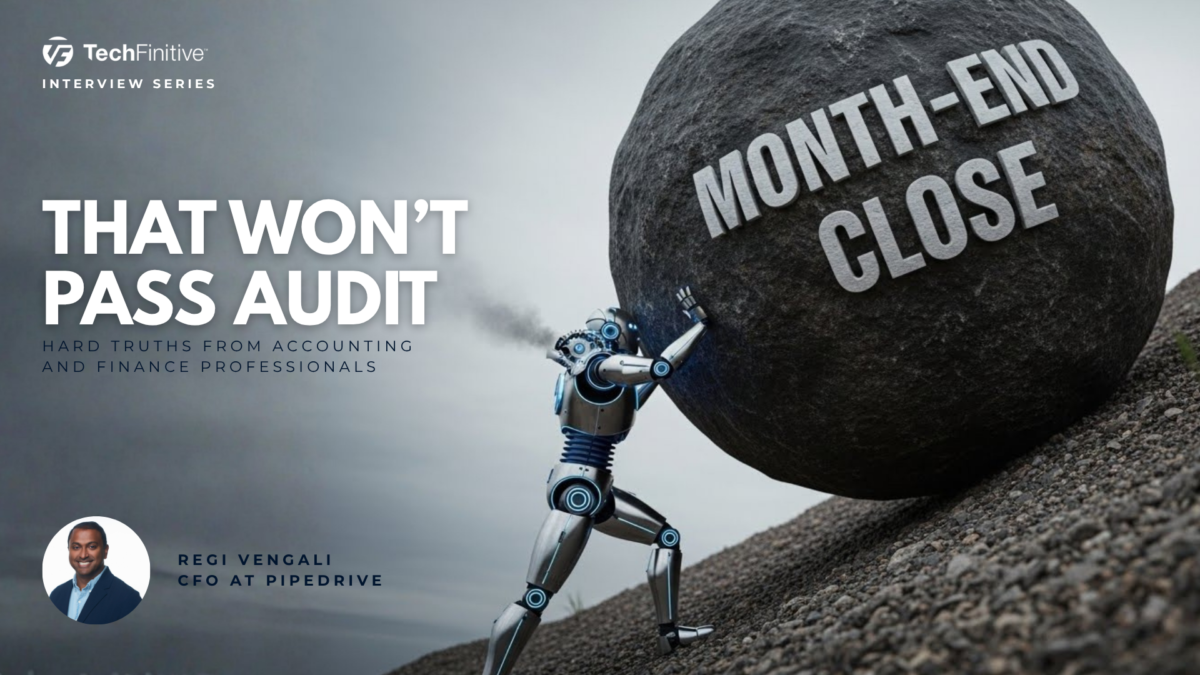
Regi Vengalil, CFO at Pipedrive: “Companies are no longer looking for accounting-focused CFOs alone”

For Regi Vengalil, modern finance is less about new tools and more about a shift in mindset. With experience spanning financial leadership and operational strategy, he’s seen firsthand how expectations of the finance function have changed fundamentally. Today, his work as CFO of Pipedrive focuses on embedding finance directly into strategic decision-making, making sure that teams are capable of producing forward-facing insight. And positioning finance as the driver of growth.
As Regi puts it, finance is moving “from being a historian to being a navigator”. It now influences direction rather than simply documenting it. In his view, this leaves teams increasingly accountable for turning raw data into measurable outcomes. Looking ahead, he describes a “value map” approach, where every insight is tracked from inception to outcome, making finance directly accountable for the impact it creates.
As finance takes on this more strategic role, team members’ skillsets must also develop. Regi describes the modern finance professional as needing to be capable of being both a “storyteller and strategic influencer”. Naturally, this lends itself to closer collaboration with other departments. Whether planning critical investments or setting pricing levels, the enhanced responsibility of modern finance teams mean that they must work across the business, connecting data to context so they can provide telling insights.
For teams feeling the weight of this new pressure, Regi’s advice is simple: “Don’t try to boil the ocean.” Start small and focus on the high-friction areas before expanding. In doing so, teams can demonstrate immediate impact, build internal trust to buy-in and create a sustainable path toward a broader and eventually complete financial transformation.
With Regi’s advice on focus in mind, the question remains as to how organisations are turning that principle into practice. That’s why we started by asking him about what he’s already seen develop before turning our eyes to the future.
How has the role of the finance function changed in the last three to five years, and what do you think most organisations still underestimate about that shift?
The shift is from being a historian to being a navigator. Financial rigor and clean books remain the foundation, but they are now the baseline rather than the differentiator. Companies are no longer looking for accounting-focused CFOs alone; they are looking for strategic problem-solvers who use financial stewardship as a lever to shape direction and drive better decisions.
This shift fundamentally redefines the finance function as a value generator rather than a cost center. We will be scrutinized on our ability to turn raw data into financial velocity. The CFO’s future scorecard will likely resemble a value map where every insight is tracked from hypothesis to execution to realized gain, demonstrating the value generated.
What impact has AI had on your finance or accounting workflows so far and where do you see the most realistic near-term value?
AI has most directly impacted our close management process. Our Controller built a proprietary close management tool using Gemini Canvas in about three weeks without requiring engineering support. The tool consolidates data from disparate closing spreadsheets, automatically compares subledger balances with what is recorded in our ERP system NetSuite and identifies exceptions, validates reviews and approvals by key team members, and provides visibility into the completion status of each close process, including auditability and tracking.
Beyond saving license costs for this type of software, it also improves transparency, accuracy and visibility across the process. These kinds of standardized reporting and process management workflows appear especially well-suited for automation, including weekly financial reporting packages, momentum-based forecasting models and dashboards that help diagnose trend drivers.
What skills do modern accountants and finance professionals need today that weren’t essential five or ten years ago?
Modern finance professionals need to be storytellers and strategic influencers who help shape the future of the business. Historically, finance teams were expected to “report the news” and were often viewed as back-office functions focused on tracking performance rather than influencing it. Today, that role has evolved. Finance leaders are increasingly expected to anticipate where the market is heading and contribute meaningfully to strategy, unit economics, pricing, M&A and critical investment decisions.
How is finance collaborating with other parts of the business – such as IT, operations, or marketing – and where does friction still exist?
By providing broader transparency, we’ve reduced that organizational friction. When stakeholders can clearly see where a request stands and what the next step is, it increases accountability, shortens approval cycles and improves overall organizational velocity while remaining cost-efficient and integrated into our financial systems.
What’s one finance or accounting technology investment that delivered unexpected value, and why?
Implementing an automated procure-to-pay (P2P) solution like Zip has delivered value in my experience. Beyond standardizing the process across procurement, tax, legal, privacy and finance, it has significantly improved transparency for stakeholders submitting requests.
The unexpected benefit has been process visibility. Many P2P tools are priced per license rather than company-wide, which can restrict access to information about where a request sits in the approval workflow. That lack of visibility often creates friction, and people don’t know the status of a software purchase or vendor approval, and valuable time is lost to manual coordination and follow-ups.
What advice would you give to finance leaders who are under pressure to ‘digitise’ but lack internal buy-in or technical resources?
My advice to finance leaders feeling the weight of the digitization mandate is simple: don’t try to boil the ocean. The pressure to transform can feel overwhelming, particularly when technical resources are limited or internal alignment is still forming. Instead, take a “land and expand” approach: focus on one high-friction, clearly defined process and prove its value before asking for broader investment.
It can be incredibly hard to convince yourself, let alone your peers, of the ROI of a multi-year automation overhaul. Start with a structured workflow that relies on (relatively) clean data, such as T&E reimbursements or accounts receivable aging. The goal isn’t just to automate manual steps, but to improve visibility and decision-making. For example, replacing a spreadsheet that takes weeks to update with a real-time dashboard can create immediate clarity and actionable insights.
Digitization becomes compelling when it produces tangible outcomes: faster insights, better control, stronger accountability. Demonstrating that impact on a small scale builds credibility and makes it easier to secure buy-in and resources over time. So start small, prove value and scale from there.
Looking ahead, what do you think the finance function will be measured on in five years that it isn’t today?
Looking ahead, finance will still be measured on traditional pillars like forecast accuracy and cost of delivery. But increasingly, I expect a premium will be placed on the tangible impact or return of the team’s strategic actions. We are moving toward a conscious, data-driven effort to link the value of our decisions directly to the bottom line, quantifying exactly how a marketing reallocation or a specific cost-efficiency initiative translates into long-term value creation.
In five years, success won’t just be defined by how closely we hit the budget. It will be measured by how effectively finance uses real-time data to influence outcomes, whether that’s improving unit outcomes, reallocating investment or shaping go-to-market strategy. I anticipate the emergence of a “Return on Insight” (ROI) or “Return on Effort” metric. This moves the needle beyond the domain of pure analytics and into the realm of strategic accountability.
More interviews
- Mat Clothier, CEO and Founder, Cloudhouse: “Change for the sake of change and rushed modernisation will only increase risk”
- How IT departments can stretch their budgets in 2026, repairable ThinkPads and what “AI PC” really means (exclusive interview with Lenovo)
- Alex Baulf, VP of Global Indirect Tax and e-Invoicing, Avalara: “AI works best when it is combined into well-governed processes”
- Dan Owens, CFO of Maxio: “The goal is not to automate everything”
- J.R. Faris, President and CEO of Accountalent: “Finance systems hardly have a common language”
About The Author

Rowan Campbell
NEXT UP