Trending Topics

 Trending
How IT departments can stretch their budgets in 2026, repairable ThinkPads and what “AI PC” really means (exclusive interview with Lenovo)

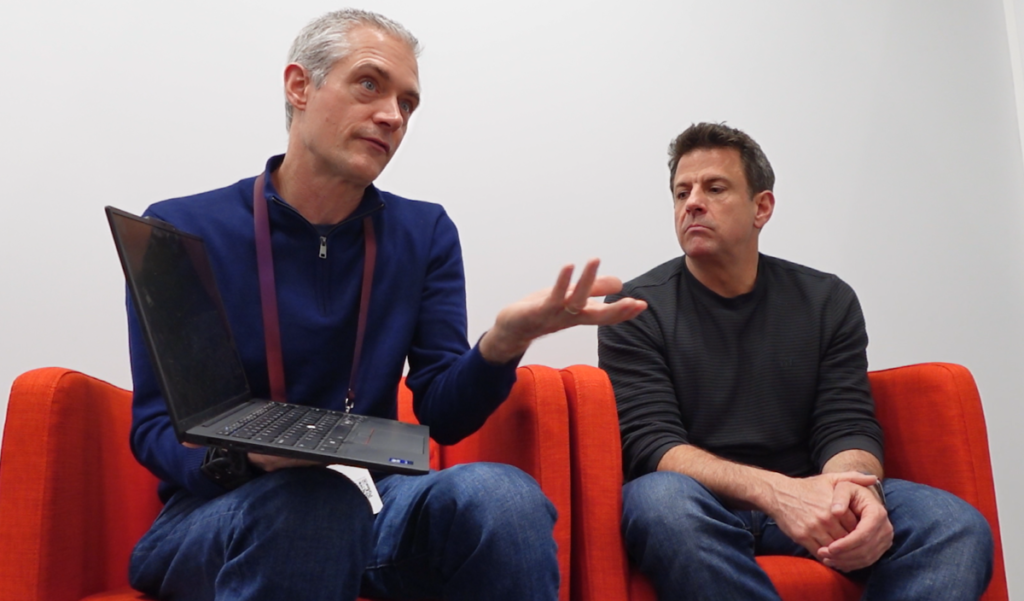
In the unlikely event their Lenovo careers ever draw to a close, Steve Long and Tom Butler have the perfect name for a country music duo. Long & Butler, Butler & Long, they both scan. For now, the two Lenovo Vice Presidents are happy to pair up for interviews – including an extremely enjoyable chat we had at MWC 2026.
We covered more than I squeezed into one article, so these are very much the edited highlights.
As Tom is the VP in charge of the worldwide commercial portfolio – think ThinkPads – this was one natural focus of our chat. The fact that Steve spent 23 years at Intel before joining Lenovo as General Manager of its commercial wing was bound to come up too. But he was far too polite to mention that he’s a Senior VP, one rung above VP in the weird world of American job titles.
To make the interview easier to navigate, I’ve created a short table of contents for you to jump to below.
Lenovo ThinkPads in 2026: Repairability
I started by asking which of the several billion new products Lenovo announced at MWC was Tom most excited about?
“I am most enthusiastic about our T Series’ complete redesign, and the reason for it is because it’s our largest volume product I sell in the ThinkPad range, and we focused on the repairability,” he said. “We have now achieved a 10 out of 10 repairability score from iFixit, which we’ve partnered with as a third party to evaluate.”
I have to admit I agree with Tom here. Whilst I love the work that Framework does, and believe it has inspired Dell and Lenovo to do better, there’s no way that it will ever match Lenovo ThinkPads for volume.
The enhanced repairability means that Lenovo can meet “the strong desire of our commercial customers to extend the life of their systems,” Tom added, “to repair, refurbish, redeploy as an option, but also our DIY fan base as well. We want [them] to be able to be able to repair these devices.”
As someone who opens up laptops every week, one bane of my life is making sure I don’t lose the screws. And lining them up when it’s time to reassemble the laptop can be a right pain. As a result, I love captive screws, where they’re locked into position.
“As you open the chassis, it’s captive screws, six captive screws,” explained Tom, who had grabbed a sample device by this point. Pull away the cover, he said, and “I can then slide the keyboard up, put a new one in, or even redeploy with another language keyboard.”
Even the battery is toolless, he said, because the “screws on the back of the cover [that] hold it in place”. Lenovo also labels all replaceable parts with QR codes “that can take you directly to our site to buy the part, but also see videos, tutorials, online instruction guides”. Which is great, but only if Lenovo makes parts available to buy, which hasn’t been a strength for the company in the past.
“Probably one of the most exciting things – again, I’m geeking out on the repairability – but the USB-C with Thunderbolt ports on the motherboard. Historically, if one of those failed, you had to replace the motherboard,” Tom said. Here you just need to remove “two captive screws pop in, pop out”.
Breadth of choice
When I asked Steve the same question, about what had made him most excited in terms of Lenovo announcements at MWC 2026, he pointed to the sheer scale of the company’s ambition. “I think [what] we’re most excited about is, after 65 products that we launched at at CES, which was two and a half months ago, here we are, launching another 35.”
And now, he added Lenovo is “starting to focus a heck of a lot more on interoperability of these devices. Tom talked about repairability, but it’s also about how the devices work together, from every type of screen to some of the new prototypes that you saw.”
Here, Steve is referring to the likes of the Modular AI PC Concept, which was one of our picks of MWC 2026.
Tom was keen to point out that this wasn’t like a car show where manufacturers produce concept designs that will never see the light of day. Lenovo uses its concept designs “to ascertain the market interest,” he said. “We go directly to our customers as well after these shows and solicit their feedback, use cases we could unlock.”
And this is arguably the key differentiator for the Windows ecosystem as a whole compared to the more straightforward line-up of MacBooks. While I admire the MacBook Neo, and think it can have a role to play in businesses, you’re very much doing things Apple’s way.
“[Our customers] want choice,” said Steve, “whether [a laptop] is modular or whether it’s thin and light. I think if you really get to …. the tried and true worker, they want a functional device that is snappy, is responsive, is power efficient, but increasingly, their device is like an expression of themselves, depending on what they’re doing and where they are.”
How an IT decision maker can stretch their laptop budget in 2026
We also discussed the challenges facing an IT budget holder in 2026, who must upgrade their team with top-quality laptops within budget – in the face of rapidly rising prices. Any recommendations, guys?
“Demand has created a supply crunch around memory, around other components,” sais Steve. “So the answer to the IT DM [decision maker] who has a fixed budget is persona-based. Who is your user? What do they really want?
“Your high performance user needs a workstation,” he added. “Your travellers still are going to need a thin and light, long battery-life device… but maybe some of your front line or your entry level workers can use a device that you extend, maybe, the life of.”
Steve added some of Lenovo’s customers have offset their capital expenditure by switching to an opex model of purchasing, based around the idea of extending the lifecycle of active laptops and reflecting that in the company accounts.
This is where refurbished laptops can step in. Lenovo has actively encouraged maximising the life of its ThinkPads via refurbishment in recent years, and in 2026 this may be a valuable way to eke out extra usage.
“We actually have dedicated service, Asset Recovery Services. So either we can help facilitate to our customers by bringing our devices back in for repair, refurbish and have them ready for redeployment,” said Tom. “It either can count as a credit back to the organisation if we didn’t go broker elsewhere, or it could be in partnership with them to redeploy.”
Both men warmed to the theme, eager to expand on the points the other had made. “I think Tom and I both agree that you’re going to regret if what you do is go to the least common denominator, you’re going to regret it,” said Steve. “Your intern over the summer might be on a refurbished PC and have a great experience for what they’re looking to do, but you have to analyse what the people are trying to get done.”
In case you’re wondering how to achieve this, Steve pointed to Lenovo’s Care of One platform, but other digital employee experience platforms are available.
Finally, let’s talk AI PCs… has the industry delivered?
As I mentioned at the start, we covered a lot of ground in the interview. If you have 40 minutes to kill, and don’t mind the spotty audio quality (it was noisy…) then you’ll get a better flavour of the interview by watching it on our YouTube channel..
One of the most interesting sections was getting into the weeds of AI PCs. As someone who worked at Intel when this concept came to life, I was keen to get Steve’s views. “I would say this because I came from a different spot in the industry, and was able to observe what was happening and my vantage point.
“The industry did what this industry does all the time, and we defaulted into talking about speeds, feeds and architectures, right? No one should care about what an NPU is or does, except maybe some of your readers, because they really do care, and they want to understand what’s happening.
“But the end user and people using this shouldn’t care about what a GPU, CPU does, but that’s how we defined the AI PC in the beginning. So this thing’s new. It’s got an NPU on it.”
He added there being further confusion over what an AI PC actually was. Did it need an NPU with a certain number of TOPS?
“We get carried away, I think, with that, which is why I think it’s confused,” said Steve. Instead the industry, the hardware and software makers, should focus on how people use the NPU rather than hitting them with specs and acronyms.
“So you have to have this hardware architecture out there,” he said, referring to the silicon. “[The] best laptops that we’ve ever built are the ones that have multi architectural capabilities inside them.”
But now the hardware is there, it’s time for software to “catch up for having use cases. We have our ThinkShield products with SentinelOne, one of our partners, we offload threat detection into the background on the NPU. People shouldn’t care about that. They’re going to get a better experience because of that.
“That example, if you scale it across other software vendors, that’s when an AI PC use case starts to become interesting over time.”
Related articles
- Use of Intel vPro is “skyrocketing” says Jen Larson, Head of Intel vPro
- We go hands on with the Lenovo ThinkBook Modular AI PC Concept at MWC 2026
- “Sometimes my CEO says we’re unfairly awarded with the most amount of assets that we can have”: Exclusive interview with AE Natarajan, HPE Juniper Networks
About The Author

Tim Danton
NEXT UP


