Trending Topics

 Trending
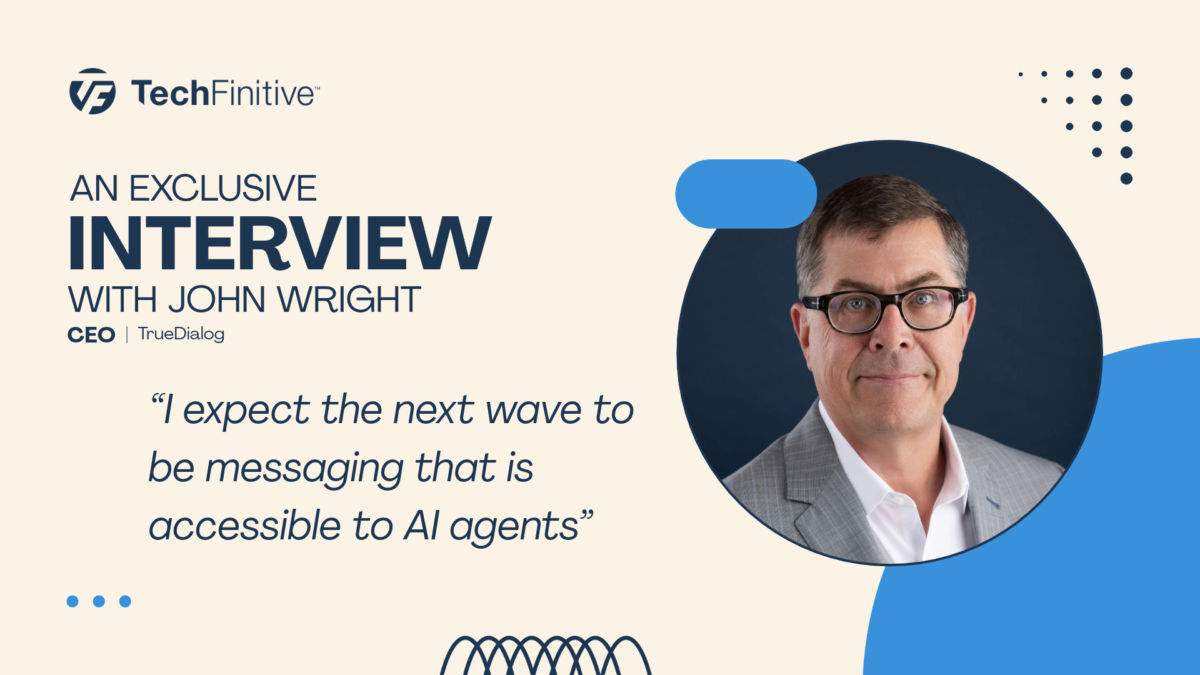
John Wright, CEO of TrueDialog: “I expect the next wave to be messaging that is accessible to AI agents”

Texting is an established business channel, but it can create blind spots when conversations sit outside customer relationship management (CRM) systems. Sales teams may miss recent interactions, campaigns can clash with support issues, and compliance risks arise when unsubscribe requests are overlooked.
John Wright, CEO of TrueDialog, believes the answer lies in making SMS work reliably within the systems organisations already use. TrueDialog’s tools bring conversations into CRM records, use AI to recognise opt-out requests and assess whether content is likely to reach its intended recipients. The company is also investing in Rich Communication Services (RCS), which offers verified sender profiles, interactive buttons and richer media than conventional SMS.
In this interview, Wright discusses the practical limits of SMS and RCS, how AI can strengthen compliance and deliverability, and why integration and ease of use may matter more than an expanding list of features. He also considers how business communications will evolve as AI agents become more involved in customer interactions.
Businesses increasingly use SMS alongside email, apps and other digital channels, but customer conversations often end up fragmented across different systems. What problems does this create for sales and marketing teams, and how does TrueDialog’s TrueConnect approach address them without adding another layer of complexity?
When SMS sits apart from email, apps, and CRM, no one sees the full customer conversation. Reps follow up without knowing marketing just texted, campaigns collide with open support issues, and text results never tie back to pipeline.
TrueConnect fixes this inside the tools teams already use. Texts sent from Salesforce, HubSpot, Microsoft Dynamics, or TrueDialog appear on the same contact record in every connected system. TrueDialog stays the system of record, and no development project is needed. Teams get one complete conversation without learning another tool.
TrueDialog’s TrueOptOut uses AI to recognise unsubscribe requests that conventional keyword matching can miss. How difficult is it to distinguish a genuine request to stop receiving messages from an expression of frustration or an ambiguous reply, and how do you balance avoiding missed opt-outs against incorrectly suppressing contacts?
It’s hard, which is why keyword matching alone falls short. “STOP” is easy, but people also write “please take me off your list,” “I never signed up for this,” or a frustrated “quit texting me.” Others reply with something ambiguous, like “who is this?” TrueOptOut reads the intent behind the message rather than scanning for exact words. It’s built to catch the opt-out requests that keyword matching misses, which reduces exposure under the U.S. Telephone Consumer Protection Act (TCPA) on every inbound message.
The balance comes down to unequal risk. A missed opt-out creates compliance exposure and damages trust, while a wrongly suppressed contact can be restored. So when TrueOptOut is uncertain, it errs on the side of compliance and opts the contact out. It then places the reply in a review queue, where the customer can look at it and reinstate the contact if the person didn’t mean to stop. Compliance is protected by default, and the customer retains control.
RCS promises richer, more interactive brand messaging than traditional SMS, but its capabilities and availability differ across devices and networks. Where does RCS offer a meaningful advantage over SMS today, and what needs to happen before businesses can make it a dependable part of their customer communications strategy?
RCS beats SMS in three ways: trust, interactivity, and richer media. Verified sender profiles help prevent the impersonation and phishing that have long plagued SMS. Brands can also send cards, carousels, and tap-to-reply buttons so customers can confirm an appointment or pick an option without leaving the thread, along with high-quality images and video.
The obstacle is consistency. RCS works on iPhones running iOS 18 or later, but only on MNO’s (Mobile Network Operators) that have enabled it, and RCS for Business support is a smaller subset of those. Business branding and interactive elements are also still limited in how they display on iPhone. Business RCS is encrypted in transit but not end-to-end, which may matter for sensitive content.
For RCS to be dependable, iPhone network and market coverage must widen, branded content must render the same way on every device, and delivery and engagement reporting must be consistent. Until then, businesses need a safety net. TrueDialog supports SMS, MMS, and RCS in one platform, and when a recipient’s device reports it can’t process an RCS message, it sends a fallback SMS. Every customer gets the message, and brands can use RCS wherever it works without worrying about the gaps.
TrueDialog has introduced tools such as RCS Composer that allow teams to build interactive messaging experiences without developers. How much of the challenge in business messaging is technological, and how much comes down to helping organisations rethink how they communicate with customers rather than simply transferring existing campaigns to text?
Technology is increasingly the smaller part of the challenge. Our visual RCS composer lets front-line teams build and launch rich campaigns without developers, and messages fall back to SMS when RCS isn’t available.
The harder part is mindset. A campaign pasted in from email is too long and built around a link. The best programmes start with one customer action, then use buttons and suggested replies to make it a tap. That redesign pays off: RCS campaigns have reported 3-7x higher click-through rates than SMS and 80% conversion rates.
As SMS becomes more central to customer engagement, deliverability, consent and regulatory compliance become harder to treat as separate concerns. How should businesses measure the success of a messaging programme beyond open rates and response rates, and what are the most common mistakes that can undermine performance or expose them to compliance risks?
SMS can’t tell you whether a message was opened, so teams relying on that metric are guessing. The signals that matter are delivery rate by network, link clicks, replies, opt-out and complaint rates, conversions, and cost per delivered message. RCS adds richer data, including opens, clicks, and interactions, but it still needs to be read alongside those fundamentals. Together they show whether deliverability, consent, and compliance are healthy or quietly eroding.
The most common mistakes are:
- Weak consent records, or contacting people who never opted in.
- Registration that doesn’t match what’s actually sent.
- Missing opt-outs that aren’t phrased as “STOP.”
- Sending copy that network (carrier) spam filters flag, then treating “sent” as “delivered.”
Prevention beats cleanup, and TrueDelivery has reduced false positives by up to 85%. It scores each message for deliverability before it’s sent, giving authors instant feedback to edit content, and TrueOptOut catches opt-out requests that keyword matching misses.
TrueDialog has appeared on the Inc. 5000 list for a second consecutive year and has received several industry awards in 2026. Looking ahead, where do you see the biggest opportunity for growth in enterprise messaging: wider adoption of RCS, AI-driven personalisation and compliance, deeper integration with business systems, or something else? And what will distinguish the platforms that succeed?
The biggest opportunity isn’t any single item on that list. It’s the combination of integration and AI-driven compliance, with RCS as the experience layer on top. Messaging only becomes strategic when it works inside the systems teams already use, and when brands can trust it to reach customers and respect their wishes. That’s why we’ve built tools like TrueConnect for CRM visibility, TrueOptOut for compliance, TrueDelivery for deliverability, and added RCS on top of them.
Beyond those, I expect the next wave to be messaging that is accessible to AI agents and other systems, not just human users in an inbox.
The platforms that win will make the hard parts invisible. They’ll pair carrier connections and compliance support with tools front-line teams can use without developers. Reach, trust, and simplicity will matter more than feature count.
More great interviews
- Gadi Evron: “People in the industry have a narrative problem; they have a lack of imagination problem”
- Marcelo Tamassia, Global CTO at Syntax: “There is no doubt the industry is experiencing AI washing”
- Niamh O’Hara, PhD, CEO and Co-Founder of Biotia: “The experience of both patients and clinicians when accessing our testing services is increasingly important.”
- Nada Usina, CEO and Co-Founder of NU Advisory Partners: “The greatest acceleration of AI-powered software adoption may come from small and midsize businesses”
About The Author