Trending Topics

 Trending
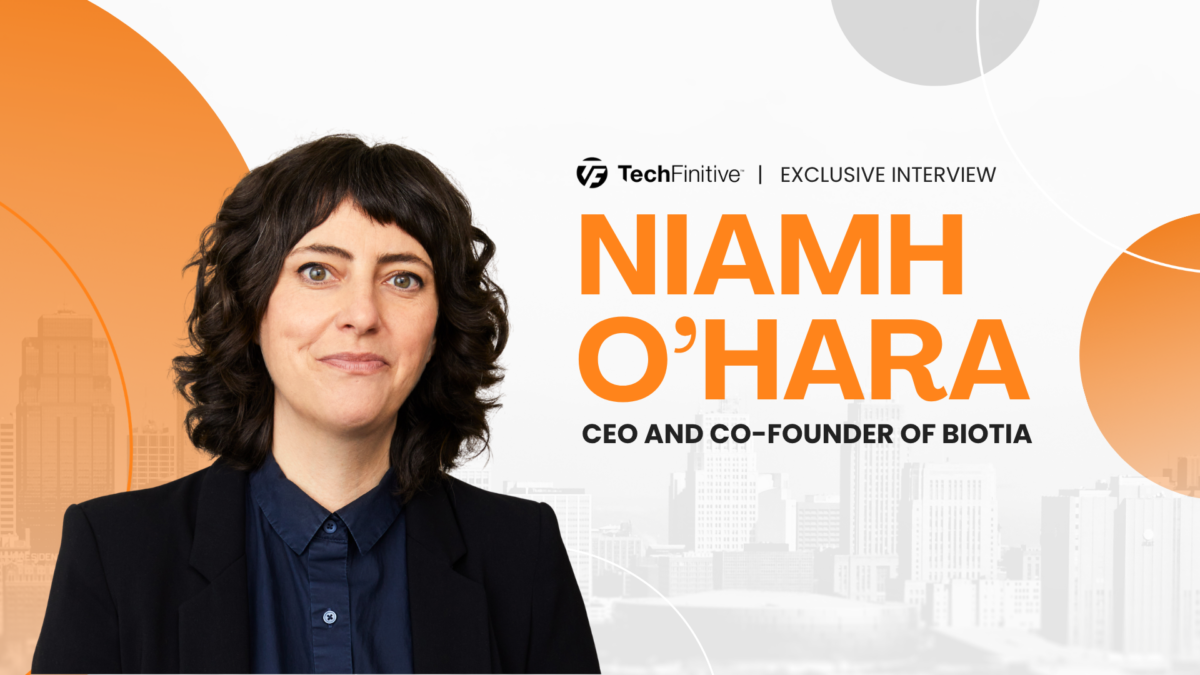
Niamh O’Hara, CEO and Co-Founder of Biotia: “The experience of both patients and clinicians when accessing our testing services is increasingly important.”

A negative urine culture does not always mean there is no infection. For patients with recurrent or complicated urinary tract infections (UTIs), that distinction can mean continued symptoms, repeated rounds of treatment and uncertainty about what is causing the problem.
Niamh O’Hara, CEO and Co-Founder of Biotia, believes advanced DNA sequencing can help close that diagnostic gap. The company’s BIOTIA-ID Urine Test uses clinical metagenomic next-generation sequencing (NGS) to identify microbes that conventional culture methods can miss, while also screening for antibiotic resistance genes. Biotia reports 97% sensitivity and 99% specificity for the test, which is designed to give clinicians a more complete picture of an infection and inform treatment decisions.
Artificial intelligence also plays a role, although not in the form of a general-purpose chatbot. Biotia uses a proprietary machine learning model within its bioinformatics pipeline to improve pathogen identification, including distinguishing between closely related species that can be difficult to tell apart using conventional methods. The company is now extending its platform into other areas of women’s health and orthopaedics, where culture-based diagnostics can also leave clinicians without clear answers.
The challenge is turning that technical capability into routine clinical practice. Biotia is working to secure reimbursement, strengthen the evidence for the test’s clinical and economic value, and expand access among clinicians and hospitals. In this interview, O’Hara discusses the limitations of conventional diagnostics, the role of machine learning in identifying pathogens, and what it will take to ensure patients with difficult-to-diagnose infections get the answers they need.
Biotia’s BIOTIA-ID Urine Test reports 97% sensitivity and 99% specificity for recurrent and complicated UTIs. What does the test reveal that conventional laboratory methods can miss, and how does that change the way clinicians can approach these infections?
The typical test used to diagnose urinary tract infections (UTIs) is called standard urine culture, which attempts to grow pathogens from urine. But what do you do when the pathogen isn’t capable of growing under standard laboratory conditions? Anaerobic, slow-growing or fastidious, and atypical microbes are often or entirely missed by standard urine culture for this reason. This is, in part, what leads to culture failing to identify a pathogen up to 30% of the time – worse if complex medical history is in the picture.
The BIOTIA-ID Urine Test uses a pathogen DNA-based approach instead. Called clinical metagenomic next-generation sequencing (NGS), our test makes copies of all microbial DNA found in a urine sample and then uses bioinformatics to determine what is present. This enables us to not only identify the microbes that are difficult to grow or don’t grow at all in urine culture, but also screen them for antibiotic resistance genes as well. The end result gives the clinician a more complete picture of what is happening in the urinary tract and how best to approach treating the patient’s symptoms.
Chronic and recurrent UTIs can be particularly difficult to diagnose and treat, with patients sometimes going through repeated rounds of testing and treatment. What have you learned from patients and clinicians about where the current diagnostic pathway is failing?
We’ve learned about a few different failures in the diagnostic pathway from our patients and clinicians. I think the most important one is the gap on what to do next when a standard urine culture comes back negative despite persistent symptoms. The patient is still ill, may be at risk of kidney infection or urosepsis, and is being told that they don’t have an infection. Because nothing grew, no susceptibility testing is performed. Treating blindly with antibiotics sometimes works, sometimes doesn’t, and in the context of UTIs, is a major driver of antibiotic resistance. This is one of the prime use-cases for advanced testing – to get broader coverage and treatment insights, and if negative, to more confidently rule out UTI as the cause of a patient’s symptoms.
Biotia combines pathogen genomics with AI to analyse infectious diseases. Where does AI add value to the underlying metagenomic data, and what does that combination allow you to do that conventional diagnostic approaches cannot?
Biotia has developed a proprietary machine learning model, a type of predictive artificial intelligence (as separate from generative AI, like ChatGPT or Claude). We incorporate this model into our bioinformatics pipeline for the BIOTIA-ID Urine Test, which allows for more accurate pathogen identification at the species and sometimes even strain-level. For example, closely-related species, like Escherichia coli and Shigella species look similar in culture and have shared genetics. Our machine learning model helps more accurately discern between the two using genomic data, which has important implications not only for treatment, but also for public health.
The company now plans to expand its diagnostic portfolio into women’s health and orthopedics. What makes those areas a natural extension of the technology, and how much of the challenge is adapting the underlying platform versus developing and validating entirely new tests?
Our diagnostic platform, BIOTIA-ID, can be applied to other sample types, so our further expansion into women’s health and expansion into orthopedics is much more aligned with adapting the platform rather than developing new tests from scratch. Expanding further into women’s health is a natural next step due to our work on UTIs, a condition disproportionately impacting women. Putting diagnostic gaps aside, a number of UTI symptoms also overlap with symptoms of bacterial vaginosis, yeast infections, and sexually transmitted infections, so expanding our testing menu will help provide clarity alongside the BIOTIA-ID Urine Test.
On the other hand, our expansion into orthopedics has been driven more so by an immense market need. Similar to UTIs, identifying the pathogen causing a prosthetic joint infection is done through culturing, except in these cases uses synovial fluid. Sterile fluids, like synovial fluid, are even less suitable for culture-based methods, which make sequencing-based tests powerful. Furthermore, a lot of different pathogens can cause prosthetic joint infections, so having a test that identifies a broad range of bacteria and fungi while providing treatment insights is important.
The new funding will also support reimbursement and broader clinical access. A diagnostic can be technically strong but still have limited impact if clinicians cannot easily order it or patients cannot afford it. What are the biggest barriers you now need to overcome to move from diagnostic innovation to widespread clinical adoption?
We make it easy for clinicians to order the BIOTIA-ID Urine Test by offering both paper and digital test requisition options. The BIOTIA-ID Urine Test was also validated on urine collection cups and urine transport tubes that are widely used, so clinicians don’t need to have our physical kit to place an order. We’ve been working on obtaining coverage for this test and have made good progress. The additional funding will help support our prospective studies looking at clinical utility and healthcare economics and outcomes, which will further strengthen our negotiations with payers.
Biotia has brought in leaders from healthcare delivery, diagnostics, women’s health and commercialization as it enters its next phase. What changes when a biotech moves from proving that its technology works to scaling it across health systems, and what will success look like for Biotia over the next few years?
As we shift from proving our technology to commercialization, a lot of the changes happening at Biotia are related to our operations, marketing, and sales efforts. With the BIOTIA-ID Urine Test in market, and several other tests on the way, the experience of both patients and clinicians when accessing our testing services is increasingly important. We are making efforts to streamline and make our day-to-day operations scalable, both in the laboratory and out. We also are dedicating more resources to our marketing and sales efforts, bringing on new team members, testing new channels, and setting up ways to incorporate patient and clinician feedback into these efforts. Over the next few years, success for Biotia will look like obtaining reimbursement for the BIOTIA-ID Urine Test, expanding our testing menu, and onboarding more clinicians and hospitals – all with the goal of ensuring patients with challenging infections get the answers they need.
More from our science coverage
About The Author