Trending Topics

 Trending
AI Agents are running the bill. Who’s watching them?

Cisco, via its company Splunk, recently released a massive study called the State of Observability 2026 report. The report highlights a growing problem for businesses. AI agents can get the work done but are creating unpredictable outcomes and costs.
Imagine hiring a team of assistants to work around the clock. At first it seems like a productivity masterstroke. Now give them company credit cards, access to business systems and permission to act without consulting you first. That’s when the bills start arriving. One assistant has bought three software subscriptions to solve the same problem. Another has booked non-refundable flights before the client confirms the meeting. A third, eager to resolve a customer complaint, has emailed an internal spreadsheet without noticing it contains other customers’ personal details.
They were trying to get the job done. But you gave them spending power without limits, responsibility without supervision and access without boundaries.
The missing ingredient was oversight.
When AI agents get the company credit card
That’s the predicament Cisco’s Splunk examines in the report. Businesses are putting AI agents to work, but keeping track of what they spend, how well they perform and what they can access is proving harder than handing out assignments.
Take the spending problem. Some 55% of respondents said their organisation cannot accurately control AI costs.
A human assistant might buy an unnecessary subscription. An AI agent can rack up costs less visibly. Your instruction might be “resolve this customer’s enquiry”, but completing that task could involve several rounds of processing, retrieving information and checking the answer.
You see one assignment. The bill reflects everything that happened along the way.
That makes visibility into token consumption, costs and performance critical.
A completed task tells you little about whether the agent took an efficient route or spent far more than the result was worth. Multiply that across more agents, and small expenses become huge expensive surprises.
A finished task isn’t necessarily a good one
Cost is only part of the problem. Your assistant may have answered every customer email, but were the answers correct?
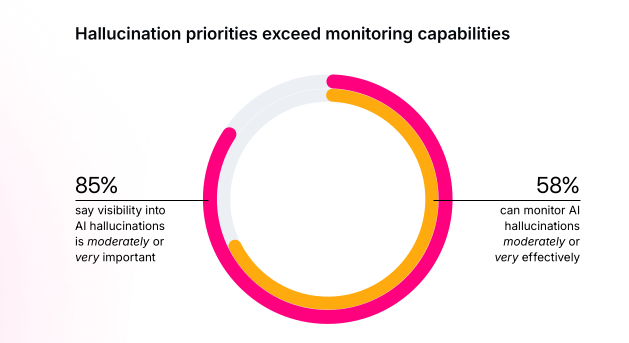
AI agents face the same problem. While 87% of respondents said monitoring AI is a priority, 56% cannot measure AI workload metrics such as the quality of responses from large language models. Speed means little if the work needs correcting later. Businesses need to assess the outcome, not just count completed tasks. Otherwise, a busy agent can look productive while quietly creating more work for everyone else.
Operations and security need a shared view
Then there’s the assistant who emailed the customer spreadsheet. That mistake is both an operational failure and a security problem.
AI agents blur the same boundary. The team keeping systems running needs to understand what agents are doing. The security team needs to know what they can access. Neither gets the full picture working alone.
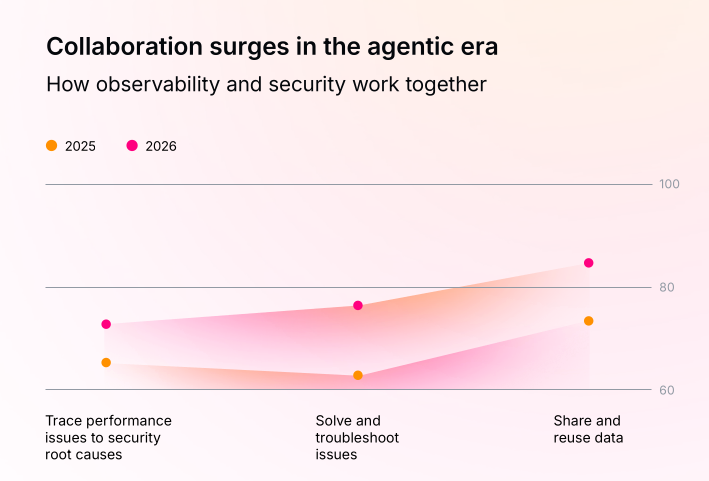
81% of respondents said monitoring AI workloads has increased collaboration with security teams. Joint troubleshooting has risen from 62% in 2025 to 77% in 2026.
This is where observability comes in: connecting the evidence needed to understand what happened, what went wrong and why.
The aim isn’t to watch every move for its own sake. It’s to catch excessive spending, poor results and risky behaviour before they become expensive surprises.
About The Author

Kihara Kimachia
NEXT UP