Trending Topics

 Trending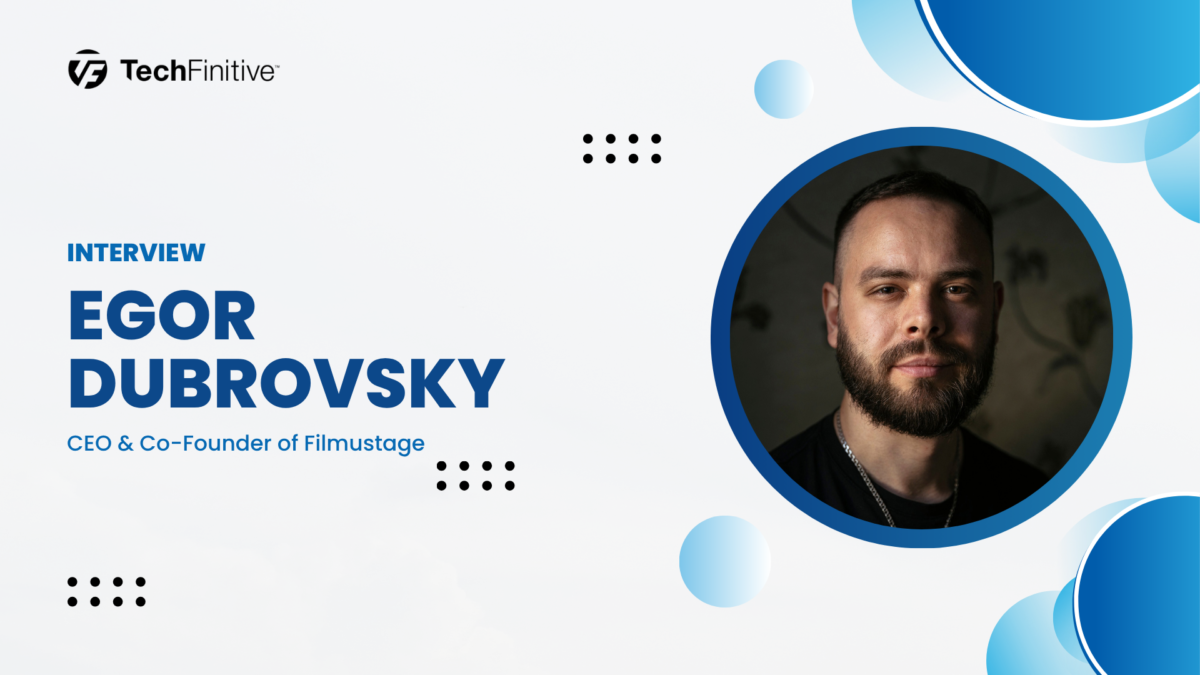
Egor Dubrovsky, CEO and Co-Founder of Filmustage: “Software won’t fix a culture where 74% of people kept working through a personal crisis with no support”

AI is already changing the way people work in film, but the disruption may be less dramatic than the headlines suggest. For Egor Dubrovsky, CEO and Co-Founder of Filmustage, it is happening one production task at a time: a studio handling its own subtitles, a crew using AI to rebuild a schedule, or a production team automating the paperwork that would otherwise keep someone working late into the night.
That distinction matters to Dubrovsky. His company focuses on assistive AI for filmmaking, using it for tasks such as script breakdowns, scheduling and pre-production rather than generating the creative work that audiences ultimately see. His argument is that AI can take on structured, repetitive work while leaving creative decisions and production judgment with the people who have the experience to make them.
That does not mean the transition is without consequences. Filmustage’s research found that four in 10 US film workers say they have already lost work or income to AI, while younger workers appear particularly exposed. Dubrovsky, who started his own career as a director’s assistant, is concerned about what happens when the entry-level roles that traditionally taught people how productions work begin to disappear. At the same time, he sees an opportunity for AI to remove some of the unpaid preparation and administrative work that contributes to burnout across the industry.
In this interview, Dubrovsky discusses the gap between how the film industry talks about AI and how workers are already using it, where assistive AI can make a practical difference, and why the industry may need to rethink how the next generation gets its experience.
Your research found that four in 10 US film workers say they have already lost work or income to AI, while nearly half are using AI themselves. What does that tell us about how AI is actually changing employment in the film industry, rather than how people imagine it might change employment?
Mostly, those two numbers describe the same people. Plenty of film workers lost a gig to AI and then started using it themselves, because they saw what happens if they don’t. The change is already here, and it’s quieter than the headlines suggest. A small studio does its own subtitles. Decisions like that get made one line item at a time. The people who pick up the tools early usually keep their place on the next project. The ones who wait often find out after the budget has already been split.
The research makes a distinction between generative AI that produces creative work and assistive AI that handles tasks such as script breakdowns, scheduling and production paperwork. Why is that distinction important, and where do you draw the line between helping filmmakers work faster and replacing the work they do?
Generative AI makes what the audience sees: the image, the voice, the script. Assistive AI handles the work around it. That means breaking a script down into props and locations, building a schedule, and redoing the paperwork when a location falls through. The distinction matters because people tend to lump the two together, and that shapes how crews react. When every AI tool looks like a threat to creative work, people end up refusing the ones that would take the grind off their plate. When I worked as a director’s assistant, I watched talented people lose whole days to that second kind of work. Nobody gets into film to fill in spreadsheets. My line is simple. If a task needs taste, a creative call, or someone’s name in the credits, a person should own it. If it’s the thing people do at 2am because it has to get done, a machine can take it.
Almost half of the film professionals surveyed said they have passed off AI-generated work as their own, with one in five doing so routinely. Why do you think people are reluctant to be transparent about their AI use, and what does that say about the industry’s current attitude towards these tools?
Right now, admitting you used AI can cost you the job. Clients still see it as cutting corners, and colleagues see it as a threat. So people use it quietly, hand in the work and keep their heads down. I understand why. But hiding it keeps everyone stuck. Studios can’t set fair rules for tools they pretend nobody uses, and workers can’t negotiate over something they won’t admit to doing. In public the industry is against AI, and in private it runs on it. That gap will close once people can talk openly about how they work without worrying about their reputation.
9 in 10 respondents reported experiencing professional burnout, with overwork and low pay among the leading causes. Can AI genuinely help address some of those pressures by reducing administrative work and unpaid hours, or is there a danger that the industry simply uses productivity gains to demand more from the same people?
Both can happen. A lot of prep work happens off the clock: rewriting schedules at night, redoing breakdowns after every script change, rebuilding a budget over the weekend. That’s the unpaid time AI can realistically take off people’s plates. But a producer can also fill the saved hours with more work the next day. Software won’t fix a culture where 74% of people kept working through a personal crisis with no support. That’s a leadership problem. AI does make time visible, though. When a breakdown that used to take three days takes an hour, everyone can see where those days used to go, and crews have something concrete to push back with. What happens to the saved time is still up to the people running productions. I’d like to see some of it go back to crews as rest.
The survey found that younger film workers are reporting particularly high levels of both AI-related income loss and burnout. What do you think this means for the next generation of filmmakers, and could AI ultimately make it harder for people to get the experience they need to build a career?
This worries me most. Among workers under 30, 48% have lost income to AI and 96% report burnout. I think entry-level work is the most exposed: assistant jobs, logging, first-pass breakdowns. For decades, that’s where people learned how a production actually runs. I got into the industry as a director’s assistant, so I know how much those years teach you. If those jobs shrink, young people need another way in. Senior crew and studios will have to mentor on purpose and let juniors run real parts of a shoot. There’s an upside too. A young filmmaker with the right tools can now make an indie project on a budget that was impossible ten years ago. That counts as experience too.
Filmustage sits firmly in the assistive-AI camp, using AI for areas such as script breakdown, scheduling and pre-production. What have you learned from building these tools about where AI genuinely adds value in filmmaking – and where human expertise remains difficult to replace?
When we started building Filmustage, we focused on the part of the job I knew best from set: the prep. Most of a filmmaker’s time goes into the work before anyone calls “action.” That’s breakdowns, schedules, and budgets that fall apart when one actor’s availability changes. AI handles that well because the work is structured and repetitive, and nobody’s creative identity is tied to it. Where it struggles is judgment. An AD knows which actor needs the early call and which location floods in October. A producer knows when cutting a scene will save the film and when it will break it. None of that is in the script. It comes from years on real sets. The most useful thing AI can do is have the groundwork ready so those people can spend their time making the calls.
Great interviews worth a read
- Cindi Howson, Chief Data Strategy Officer at ThoughtSpot: “By slapping an AI label on their software products, companies are trying to combat irrelevance”
- James Pennington, Global Sustainability Services Director at Lenovo: “We sell fully re-manufactured, enterprise-grade solutions that cut costs and carbon without sacrificing performance”
- Jeremy Powell, Chief Information Security Officer at Sumo Logic: “If you can’t answer ‘Did this get better this week?’ with a number, you don’t have an AI strategy”
About The Author

Ricardo Oliveira
NEXT UP