Trending Topics

 Trending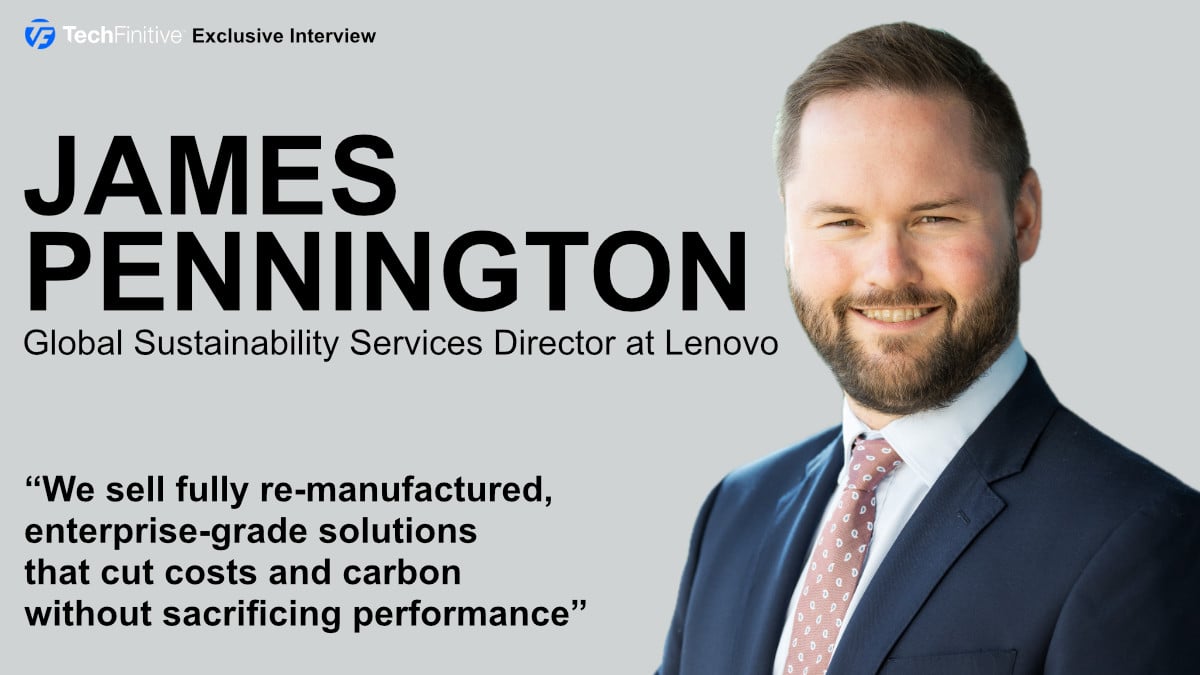
James Pennington, Global Sustainability Services Director at Lenovo: “We sell fully re-manufactured, enterprise-grade solutions that cut costs and carbon without sacrificing performance”

For years, the circular economy was treated as environmental idealism. It was a nice-to-have initiative to bolster the word count of corporate ESG reports. Today, it’s a hard-nosed business strategy. As tech budgets tighten and Scope 3 emission targets loom, technology leaders finally realise that repairing, refurbishing and extending the life of hardware isn’t just about reducing electronic waste; it’s about protecting the bottom line.
Nobody understands this shift better than James Pennington. Having developed sustainable models at the World Economic Forum and Deloitte, James now drives progress as Lenovo’s Global Sustainability Services Director. In an industry built on rapid hardware cycles, he is proving that global scale and circularity can successfully coexist.
We sat down with James to discuss how Lenovo is de-risking refurbished tech for enterprise procurement. We also spoke about tackling the logistical puzzles of international asset recovery and why Lenovo’s infrastructure goal is maximising compute power per watt.
What first drew you to the circular economy?
Actually, I could easily pinpoint it. I’d always been interested in the natural resources space and sustainability to some extent. I used to work at the World Economic Forum and I built up and led the circular economy program there. We had networks of experts that aimed to bring together top experts in the world around a particular topic. I ended up running the council on circular economy, which was very new. It was chaired by Ellen MacArthur (founder of the Ellen MacArthur Foundation) and Bill McDonough (co-author of Cradle to Cradle: Remaking the Way We Make Things). They were trying to pitch the circular economy to all these other councils.
I watched Ellen and Bill do 10 pitches in a row on why the circular economy was a good idea. I saw the best advocates for a circular economy and I’ve always been focused on the topic since then.
It was like getting a guitar lesson from Jimi Hendrix.
Learning to putt with Tiger Woods, exactly. I spent the best part of 8 years telling everyone else that the circular economy was a good idea. The circular economy needs to work as a business. It’s a big opportunity as there’s a lot of value at stake. Then I joined Deloitte and set up the circular economy practice to show that it’s possible to build a business around the circular economy. This is when I first met Lenovo.

What was it about Lenovo’s vision that attracted you to the company?
I felt that the vision and the pathway Lenovo was on just shone. I’d built a small business around the circular economy, but how can we do it in the electronics IT vertical? How can we make this a business that has global scale? That starts by having the right product and being able to bring it to market. If you can really get the scale, you can also shift the entire market and system in some way. It’s an exciting opportunity. So that’s the main reason I decided to join.
There’s still a lot of scepticism about circularity, so how are you allaying the fears of your day-to-day customers?
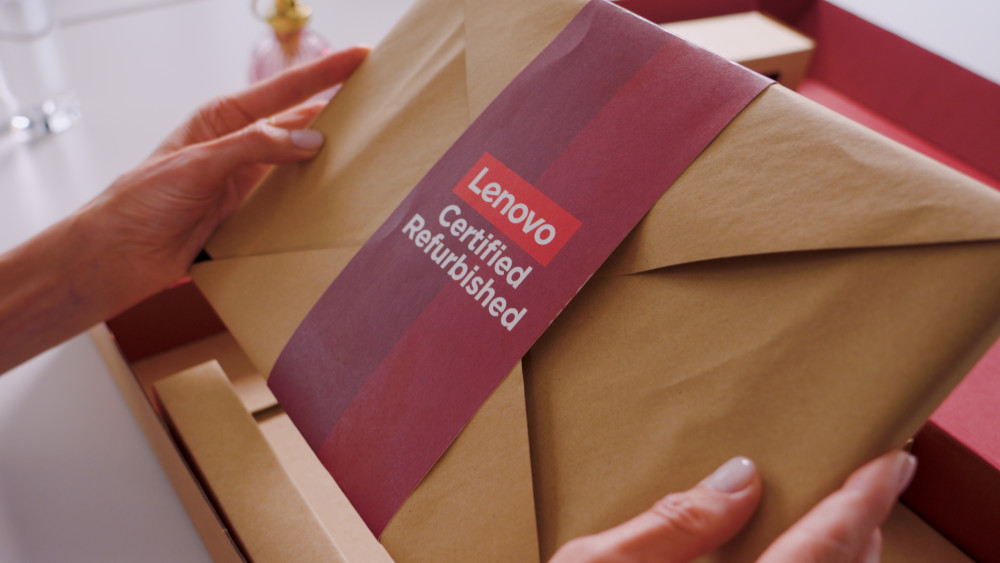
It’s a really good question. There are three main areas. We sell our certified refurbished products, which are fully re-manufactured, enterprise-grade solutions that cut costs and carbon without sacrificing performance.
We have our certified refurbished services where we take devices from customers, refurbish them and give them back. Then we also have our asset recovery as well so at end-of-life. We can take them and pass value back to the customer.
That enterprise-level solution is important. We go through a high-end re-manufacturing process. The product goes through the same testing as a new product and comes with all the services that a customer would expect. That’s up to a three-year warranty, battery guarantee and refurbished with genuine Lenovo parts. You can buy it in the same way you’d buy a normal laptop if you’re the procurement manager of a company. It’s having the same grade, the same quality, the same experience as new.
Even though it goes through a very high refurbishment process, it’s still cheaper than a new device with a 20 to 25% saving.
When we’re speaking to bigger companies, that kind of cost and carbon saving is the thing that we really push. We can help a company reduce its IT procurement costs and help it reduce its carbon. Lenovo undertook life cycle assessments for all its refurbished devices, done to ISO standard and third party, verified by model, by geography. We can give that full picture on the cost saving and the carbon saving and this is the quality you’re getting. Bringing those three things together, especially at a time of rising costs in the industry, is a good fit.
Lenovo has seen a growth in its refurb take-up. Has its success surprised you?
We have an active channel program. Our 360 Circle program brings together all our channel partners, active in different communities, working groups and partners, all sustainability focused. Those channel partners then see the opportunity and step forward to take those products, stock them and sell them as they would a new product. They get the same rebates and the same process, making the experience as new as possible. That’s brilliant and it’s growing. We see huge, huge potential there.
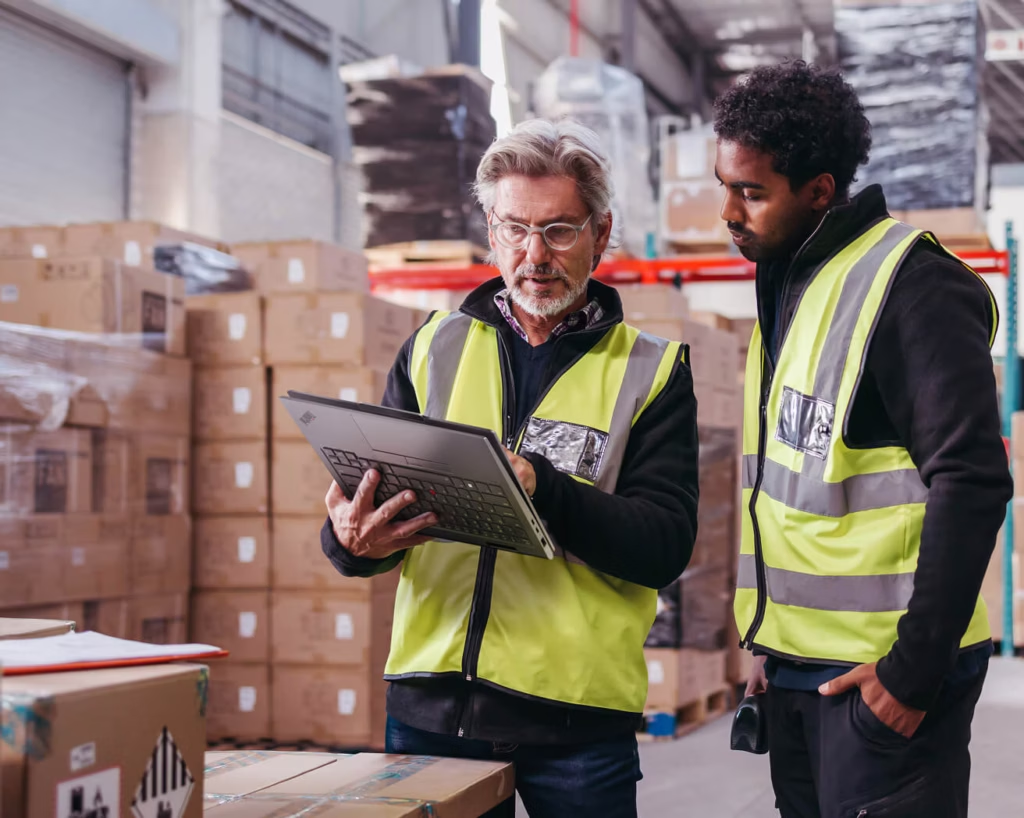
We’re also seeing large enterprises looking at this. My hope, and we’re starting to see this, is it de-risks to a point where a large enterprise can think about procuring. Where they would normally buy 1,000 new devices, they’ll buy 800 new devices and 200 refurbished devices to save cost and carbon. We recently did some modelling for a consultancy, looking at their Scope 3 emissions. We found that if they were to move to 30% refurbished devices, they’d cut their IT budget by 8% and cut their emissions by 15% and cut their overall Scope 3 by 3%. If you’re a large enterprise, that kind of proposition is very strong.
PC refurbishing sounds like a straightforward process but it’s a huge logistical puzzle, particularly when working in different territories and legislations. How have you pulled all of that together?
It’s a challenge. One benefit for a larger company is that they get their own devices back, the same devices that they’re used to having, they’re used to working with. They get refurbished, fully re-manufactured to extend the life. I think ARS (Asset Recovery Services) is another area that we try to be global, which brings more technicality. We want to take back your devices and give you the same experience in Manila as we do in London or Milan.
We must know the regulations in every single country around the world and audit every single facility that we might want to work with. For example, we have to know that they’ve changed the e-waste legislation in the Philippines in the last six months. When it comes to full refurbishment, we’re more concentrated in the supply chain because it’s so specialized. There’s reverse logistics, there’s data wiping, refurbishment, forward logistics, there’s the security. It’s not just shipped. It comes in a new box straight from the factory. All of these different things are a refurbishment challenge.
Lenovo’s Infrastructure Solutions Group (ISG) has had an exceptional year delivering AI solutions, but environmentally speaking, it’s a tricky path. What is Lenovo doing to make its AI offering more sustainable?
It’s completely true. The circular economy is one aspect of this. We do a lot of asset recovery and refurbishment in the data centre space. Energy is the key thing here that we’re looking at, especially if there’s the latest model people need to run and there are upgrades they need to make. We need to take those devices back and refurbish them with the minimum amount of emissions and get them back into service.
Our focus on data centre sustainability is about efficiency, which has both a business and an environmental rationale. It’s quite clear that the way trends are moving in certain geographies, it’s difficult to build. We focus on tokens per watt and what can be done in that space. With heating and cooling, we have our Neptune liquid cooling, which can bring an increase in efficiency by about 40%. That’s 40% lower energy use and cost and that’s also a closed-loop water system as well.
On the other side is how we run the servers. We know a lot about what can be done to make the workloads run more efficiently. That’s all configured in the data centre so that everything from heating and cooling, virtualization, and workload placement ensures you’re getting the maximum tokens per watt possible. Then the conversation becomes less about building more but about how we get more out of what we have and increase the performance.
Vital components of a circular economy are the principles of repair and reuse. How are your product and design teams incorporating this into Lenovo products?
Our REAL framework is our starting point for all things. That’s responsible design, ethical materials, accountable models and life cycle intelligence. Sitting under that is a set of KPIs and a governance framework, which brings together parts of the organisation. It’s a good way for us to interlock with colleagues in product design, our team which focuses on the sustainability of the products, the ESG team, the channel team and our team looking at the business side.
Obviously, we focus more on accountable models but we really embrace our important strategic partnerships. Repairs on customer sites are another important KPI for us as well. Some of the most carbon-inefficient repairs are when someone drives a single PC somewhere and then drives back again after they’ve repaired it. It’s important to repair the PC but it works better in a larger company when we can get that done at the customer site. It’s a huge sustainability boon, not to mention less downtime so a better customer experience. Also within that REAL framework is information and feedback that goes with refurbishing a lot of devices. We get to understand that a certain piece may fail after a certain amount of time. That insight gets passed back to the design team to help to then improve.
Modularity is an important part for us. The better the modularity we have, then our the refurbish and re-manufacturing process is quicker and easier. We also have an opportunity on the back end by bringing down the cost of refurbishment too. We see that. There’s a virtuous circle between improvements in design, improvements in repairability, modularity and longevity. It helps our business model from a circularity perspective and shows there are good synergies between the group and joint KPIs everyone’s working towards.
When a Lenovo product can no longer be refurbished or repaired, what does your end-of-life management look like?
There are a few interesting things that we’re doing. Getting data to customers is part of our cost/carbon strategy, which we’ve been pushing for the last year or so. We want to place our offering with a cost which is easy to understand. You get a quote on what it’s going to cost; you pay the money; you get the receipt.
On the carbon side, we want to make sure that both sides of that transaction have the data. We’ve created our tool, Lissa (Lenovo’s Intelligent Sustainability Solutions advisor), which models all the impacts of making different decisions around IT across a whole fleet. Users can mass upload whatever their IT fleet sees what using refurbished, asset recovery or extending the life for a year would do to their overall carbon footprint.
We’ve focused on getting good carbon data from the LCAs on all our ThinkPad range and mirror that with our refurbished LCAs, showing around 50% less carbon. Our carbon impact portal allows companies to see everything they’ve bought and see the overall carbon footprint, which is third-party assured and can be used for reporting. We have that full process, going through data for the customer to help them report on their Scope 3 emissions and just make better decisions about making actual progress towards a 2030, 2040, 2050 target.
What about recycling oversight?
On asset recovery, the key thing for us is trust and transparency. Making sure that we work with partners that are R2 certified and provide good traceability and tracking of the devices. The reuse rate is very high and the non-recycled rate is incredibly low. We track all of that. It goes back to the customer in terms of what they had and what happened to it. What was its fate? How much was reused? How much was recycled along with the value? There is a chain of custody that goes all the way through the whole life cycle of the device and that’s something we want to keep building on.
With the waste, there are regulations in place to restrict the movement of electronic waste across borders, so you can’t necessarily have a single hub where you bring everything and recycle. The Basel Convention is in place, rightly, to stop the dumping of electronic waste, so we have a more distributed system when it comes to end-of-life management. It is about how we make sure we have the right partners in the right geographies, then making sure that this kind of distributed system can drive those propositions at scale.
Being compliant with Basel and every other regulation is the key priority for us and our customers.
About The Author

Lee Grant
NEXT UP