Trending Topics

 Trending
The future of QR codes

QR codes are now everywhere. Train stations, supermarkets, restaurant tables, apps. They’ve certainly come a long way since they were originally invented in the 1990s as a tool for industrial inventory control.
Yet we’re still only beginning to explore what these compact, versatile codes can do. In the next five years, QR codes are set to become even more ubiquitous, and we’ll be using them in new ways to achieve more.
If your business isn’t already using QR codes, hopefully this will give you inspiration!
A farewell to barcodes

QR codes are scanned billions of times a day, but mostly for simple purposes such as linking to a static web page. In the next five years we can expect to see their uses expand considerably. “People are starting to understand that a QR code doesn’t necessarily have to just direct you to a website,” explains Jean-Charles Passepont, CEO of QR services provider Unitag. “You can do much more than that.”
That’s partly driven by industry group GS1, which is promoting QR codes as replacements for regular barcodes in retail. Regular barcodes encode a unique digital identifier that suppliers and vendors can use to track items, but QR codes can carry far more information.
“Everything that you scan with a barcode will evolve to a QR code,” predicts Marko Pavuna, Unitag’s chief marketing officer. “The code will provide information regarding the supply chain, the quality, the date of use, the source of the materials, and everything that needs to be legally presented.”
Customers will be able to scan the same “2D barcode” to see relevant information such as the ingredients and manufacturer, usage instructions and even the best-before date for perishable goods – not to mention brand promotions and bonus materials.
Getting personal with QR codes
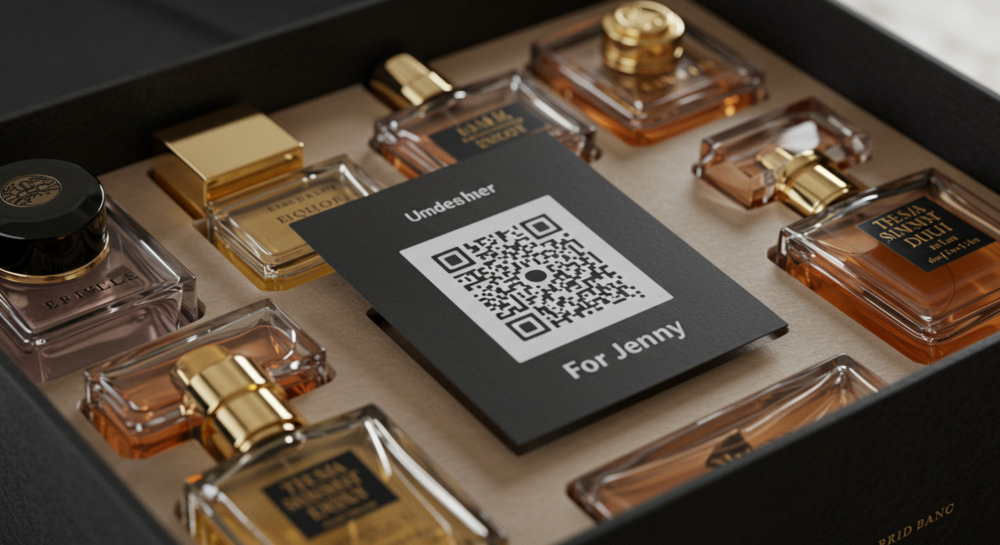
We can also expect to see QR codes used increasingly for personal identification. A unique QR code generated by an app can be used to confirm that you’ve bought a ticket, joined a group or qualified for a promotion. Limited-use codes can be validated a certain number of times, working like gift cards or drinks vouchers.
“I know Sephora loves that,” comments Pavuna. “When you buy some perfumes they give you a little card with a QR code, and you can scan it to access deals… it feels like you have a membership card, a loyalty card which is more than a loyalty card. You scan it and you appear in another digital world.”
The familiar square, black-and-white design meanwhile is likely to be increasingly joined by branded QR codes, with logos and emblems that tell you who created them and what to expect when you scan them. Because a QR code can work with up to 30% of its area obscured, it’s possible to produce imaginative designs that adapt the r format in creative ways.
Growth of specialist QR platforms

While QR code capabilities become more sophisticated, demand will grow for specialist partners that can help businesses make the most of them.
While it will still be possible to create your own codes for free, we’ll see a growing market in service providers like Unitag. Along with convenient QR code creation, it provides analytics and tracking to help businesses manage their supply chains and understand how visitors are interacting with their codes.
And it costs far less than traditional product tracking and market research methods. “People will realise they don’t actually need to spend millions on this type of stuff,” predicts Passepont.
Talking of money, let’s talk QR code payments. Banking apps can already generate one-off payment codes, which initiate a transfer of a defined sum to a specified bank account when scanned: these will become increasingly common as an easy way to process payments in seconds, whether the person is standing in front of you or sharing a code from the other side of the world.
Smart dynamic QR codes

Beyond this, QR platforms will offer smart QR codes, which link to different content depending on the time and date they were scanned. “One of our goals is to offer intelligent QR codes that evolve with time,” confirms Marko Pavuna. “For example, you might have a code that comes with a certain product, and links to a promotion page; that would evolve five months down the line to another page.”
By reading and storing the “fingerprint” of the device used to scan a code, QR partners can already serve up personalised resources, customised for the visitor’s device. “Say you want to offer a link to an app,” said Marko. “We can use filters that say if the visitor scans the QR code on an Android phone, go to link number one; if it’s an Apple device, go to link number two. And you could add as many conditions as you want.”
But that’s today’s technology. Marko envisages a time when the QR code and the product evolve together. Perhaps the product is enhanced with new features, or there’s a limited-time offer exclusive to owners of that QR code (like a club membership).
All of which means that, with the same technology, QR codes could take users to custom, evolving destinations, tailored to their location, their registered interests and even their history of interactions.
New QR code technologies
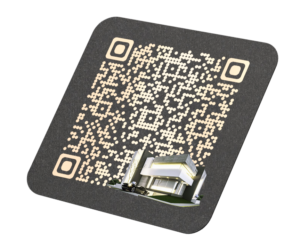
There are several innovations in the pipeline aimed at improving the security of QR codes. Printing systems are in development that integrate holograms and watermarks into QR codes, so you can easily recognise them as legitimate – and they won’t work if someone tries to duplicate them.
Another security initiative is SDMQR (self-authenticating dual-modulated QR) codes, which contain a cryptographic signature alongside the standard encoded data. When read with a compatible scanner application, this effectively unforgeable signature confirms the identity of the creator of the QR code, along with the destination, to help visitors proceed with confidence.
QR becomes AR
Elsewhere, work is underway to integrate QR codes into AR experiences. When an AR camera detects a code, it can instantly follow the embedded instructions to project information or graphics into the augmented view, with no need for network access or a back-end server.
This could work well in combination with disguised QR codes. Here, patterns of dark and light elements are integrated into a (somewhat) ordinary-looking picture.
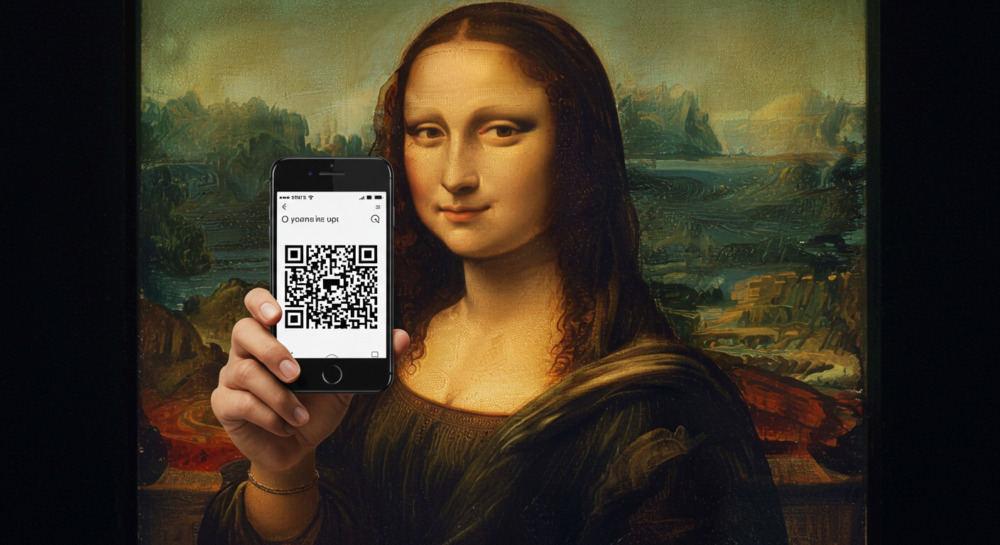
“I can send you an image with a hidden QR code inside,” says Pavuna. “I could generate an entire image where we would basically recreate – say – the entire face of Barack Obama, and it would actually be a QR code. You might not be able to tell, but if you look at it and kind of close your eyes a little bit, you’d be able to see the little squares.”
This makes it easier to include QR media in visual designs, in ways that are less blocky and obtrusive than the standard square format. And more attractively eye-catching.
With all these innovations in the pipeline – or already rolling out – there’s one final thing that’s certain about the future of QR codes: the opportunities for businesses to benefit are only going to get bigger and bigger.
Related articles