Trending Topics

 Trending
A brief history of QR codes


QR codes might seem like a modern phenomenon, but they’ve been around for more than 30 years. They were originally devised in 1994 by an engineer called Masahiro Hara, working for Japanese automotive company Denso.
Before the invention of QR codes, Denso – like many other businesses – used standard “UPC” barcodes to label their products and process their inventory. Unfortunately, regular barcodes can only be read at a horizontal angle, and each one can only store a very limited amount of information, making them a slow and fiddly tool for large-scale stock management.
Hara realised that the business could operate more efficiently if digital codes were easier (and quicker) to read. Even better if they could store more data. He set out to create the “quick response” code, or QR for short.
What makes QR codes so versatile?
After two years of research, Hara came up with the now-familiar square design, using a black and white grid capable of encoding more than 4,000 characters of information. The format also included three distinctive concentric square patterns – known as position detection markers, or informally as “eyes” – allowing a scanner to immediately recognise the orientation of a QR code, and decode it from any angle.
Hara additionally implemented a sophisticated error-correction method for the encoded data pattern, making it possible to read a code where as much as 30% of the area was missing or illegible – a big improvement on UPC barcodes, which struggle if more than one number is damaged or missing.
How quickly did QR codes catch on?
Masahiro Hara patented the concept of the QR code – but he and his employer agreed to make standard codes free for public use, so that businesses all around the world could benefit. QR codes were formalised as an ISO standard in the year 2000.
At first, QR codes were mostly used in industrial roles, similar to how Denso had used them. But as smartphones with built-in cameras and mobile internet access emerged, marketers realised that QR codes could also be a powerful way to share and access online content.
“Around 2010, QR codes started to become more popular for businesses,” recalls Jean-Charles Passepont, CEO of QR code specialist Unitag. “The technology was still quite niche – something you’d add on to a project as an experiment.”
Years of steady growth followed – then the world changed.

The pandemic breakthrough
The Covid-19 pandemic saw interest in QR codes explode. As citizens worldwide sought to minimise physical contact, codes became the perfect means of sharing information from the safety of a smartphone.
“It was still a bit what I call ‘low level’,” notes Passepont. “In pubs and restaurants QR codes were mainly used at the point of sale. But this very quickly helped big brands understand that people are not scared to interact with a QR code.”
Along with zero-contact interaction, QR codes also offered huge sustainability benefits, replacing paper documents with all-digital assets. They soon came to be widely used for a whole range of purposes such as confirming one’s identity, exchanging contact information, sending a message or sharing a Wi-Fi password.
“You even have some entities that create custom codes, where you need a specific device to read them,” Passepont points out. “Trainline is one: when you buy your train ticket online, the QR code that’s generated has no eyes except one in the middle, and only their reader can read it.”
What’s happening in QR codes right now
Today QR codes are widely accepted by consumers, with companies using them for product and customer tracking, marketing loyalty programmes and more. “The QR code hasn’t changed since its creation,” says Jean-Charles Passepont. “What’s changed is the creativity of people, about the things you can do with it.”
To help businesses make the most of the potential of QR codes, professional partners such as Unitag are now on hand to help create custom QR codes for businesses, and to take care of traffic management – so when someone scans a QR code, their activity can be tracked, and they can be automatically forwarded to the desired destination. In future, specialist partners could even offer codes as a dynamic resource.

“One goal for us is to have intelligent QR codes that evolve with time,” explains Unitag CMO Marko Pavuna. “For example, you might have one that comes with a certain product, and links to a promotion page that would evolve, five months down the line, to promote different content. And then, maybe one year or two years later, it would link to a refurbished page where you can either change the product or update it.”
History of QR codes: final destination?
“There will of course be evolution,” agrees Passepont. “QR codes are still a work in progress, and our clients are only at the beginning of understanding what they can do with QR codes.”
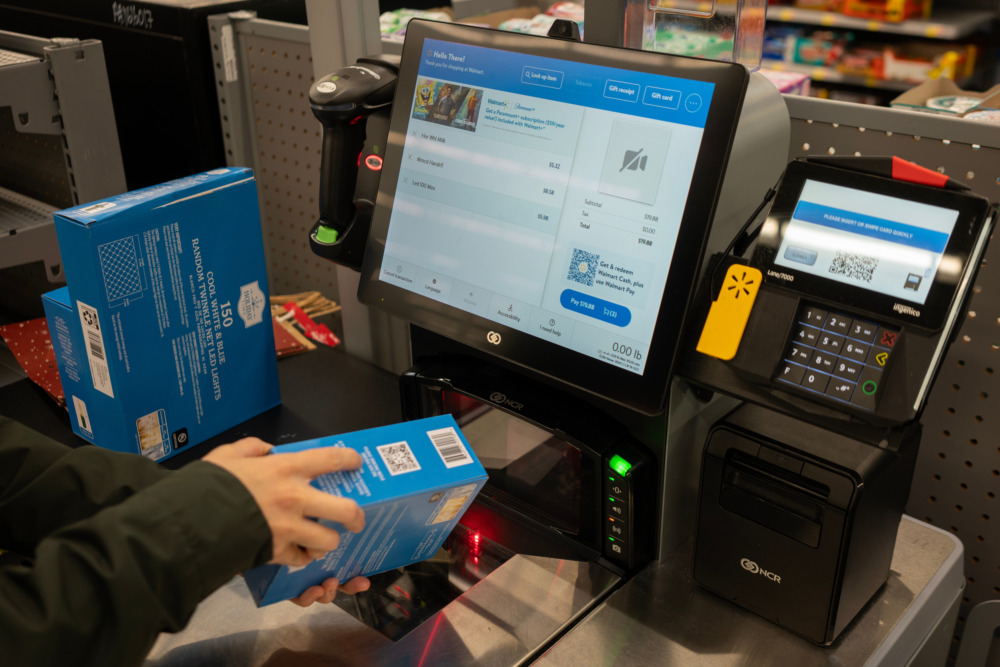
One mainstream change that’s already in the works is the retiring of conventional barcodes on consumer products: by 2030, these will be replaced by multi-dimensional QR codes that carry a wealth of information for both retailers and consumers.
But the big change won’t just be what QR codes can do – it will be who’s using them.
According to analyst Future Market Insights, the value of the global QR code market is expected to more than double from $1.5 billion in 2023 to $3.5 billion in 2033. That growth will come from a growing, broadening recognition of the power of QR codes.
It will also come from smaller companies recognising how they can integrate QR codes into their strategies. “Right now, looking at our clients, it’s larger businesses that are using QR codes in the longer term, strategically,” says Passepont. “In the future, we expect to see all sizes of business take advantage.”
Related articles
About The Author