Trending Topics

 Trending

The borderless workforce: Why global talent is becoming a competitive advantage

Picture this: you’re the team leader or hiring manager at a software company and need an engineer who has moved a payments platform to the cloud without taking it offline. That’s already a super specific skill that narrows the talent pool. Now, add one more rule and also ask candidates to live within commuting distance of headquarters. Suddenly, a small talent pool turns into a puddle.
This is the core idea behind a borderless workforce, and it starts with a simple question: does the second requirement make it harder to meet the first?
For some roles, proximity matters. But when a project is waiting on a skill the local team doesn’t have, widening the search can change what the business is able to deliver, not just what it pays.
The borderless workforce is about more than cheaper labour
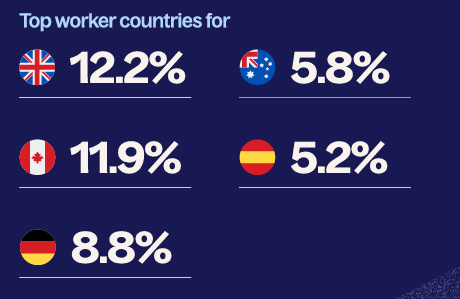
Deel’s State of Global Hiring Report analysed more than one million worker contracts across over 37,000 companies in more than 150 countries. Among startups that had raised at least $100 million, software developers accounted for 28% of cross-border hires. Those startups also hired AI engineers and technical sales specialists abroad, with hiring concentrated in markets such as the UK, Canada and Germany. That’s a view of hiring on Deel’s platform, not the entire labour market, but it complicates the idea that companies mainly go abroad to cut wage bills.
The growth opportunity goes beyond engineering.
A business developer who knows how buyers in a target market evaluate suppliers may spot why a pitch that works at home falls flat abroad. As we have argued in our coverage of recruiting from a global talent pool, language and niche expertise can be as valuable as a larger shortlist.
Hire for the work, not the map
Borderless doesn’t mean indifferent to location. A developer who can work from written handovers may need little overlap with headquarters. A sales engineer who joins live customer demos needs working hours that match the customers’. Define those constraints first, then assess candidates on the skills the job requires.
Deel helps companies hire, manage, and pay workers internationally. Its employer-of-record service can employ a worker locally and run payroll where the hiring company doesn’t have its own entity. The company still needs to onboard that person, give them access to decisions, and judge their work by the same standards as colleagues at headquarters.
The advantage isn’t a longer list of countries on the careers page. It’s being able to find the person who can do the work without first asking them to move.
About The Author

Kihara Kimachia
NEXT UP