Trending Topics

 Trending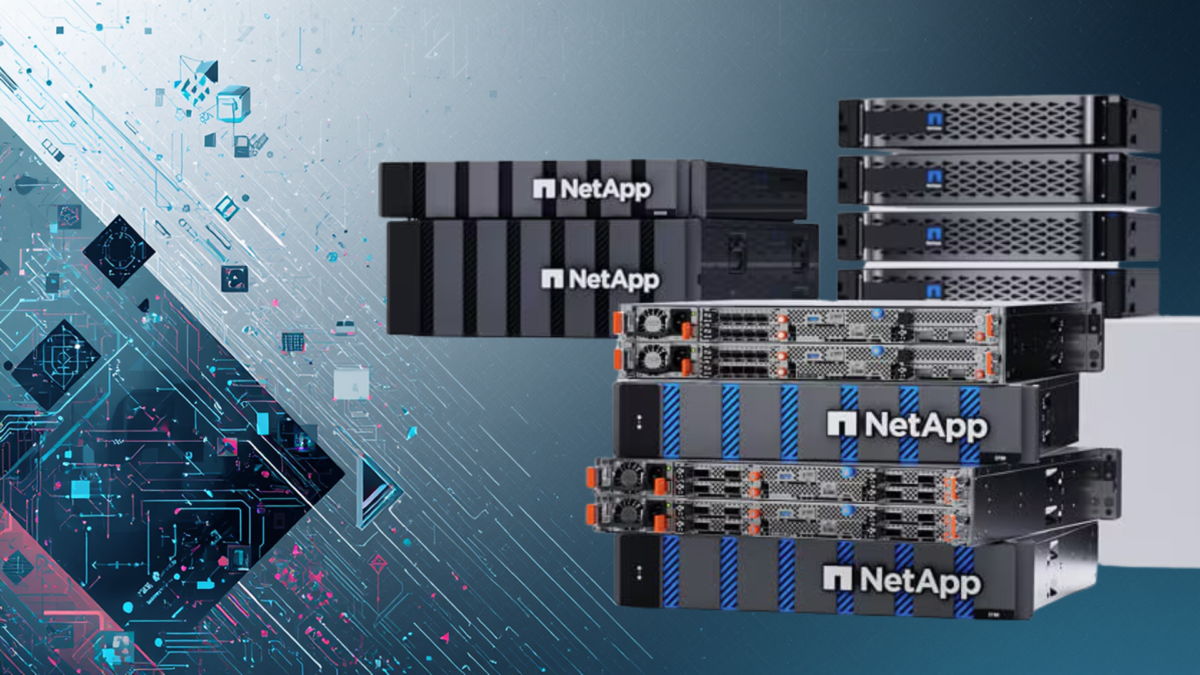
NetApp’s March push shows why AI ROI starts with data infrastructure

Recently I argued that enterprise AI still has a return-on-investment problem, with many organisations eager to invest in AI but far fewer able to point to clear, measurable business value from those efforts. One reason is that AI success depends on more than models and use cases, because fragmented data, weak governance, and disconnected systems can stop promising pilots from becoming production-grade outcomes. That is why NetApp’s busy March matters: taken together, its latest announcements suggest the AI conversation is shifting toward the data infrastructure foundations that make enterprise AI usable, scalable, and trustworthy.
NetApp and NVIDIA target the data readiness gap
The clearest example is NetApp’s AI Data Engine, announced with NVIDIA, which is designed to help enterprises build a metadata-rich, searchable, and governed layer for AI workflows. The significance here is not just another AI product launch, but the fact that NetApp is targeting one of the most persistent blockers to AI value: getting enterprise data into a form that systems can actually find, understand, and use without adding unnecessary data movement. For enterprises still struggling to turn experimentation into return, that focus on data readiness may prove more important than simply deploying more AI tools.
NetApp followed that announcement with a refresh of its EF-Series lineup, unveiling the EF50 and EF80 for high-performance workloads including AI, high-performance computing, and databases. According to the company, the systems deliver more than 110GBps of read throughput and 55GBps of write throughput, while offering a 250 percent performance improvement over previous generations and up to 1.5PB in a 2U form factor. Those figures matter because AI ROI is not only about intelligence at the application layer; it is also about whether the underlying platform can handle the throughput, density, and latency demands of production-scale workloads.
Why AI workloads demand built-in resilience
But performance alone is not enough. If enterprises are going to rely on AI for operational and customer-facing processes, they also need confidence that the data beneath those systems can be protected and restored quickly when something goes wrong. NetApp’s partnership with Commvault points directly to that challenge, combining NetApp’s ransomware detection capabilities with Commvault’s backup and recovery orchestration across hybrid environments. In practical terms, that suggests a strategy in which storage is not just a place to keep data, but an active part of cyber resilience and business continuity.
The same logic runs through NetApp’s partnership with Elastio, which focuses on helping customers identify clean recovery points through deeper inspection of snapshots and backups. That is a meaningful addition because recovery is only useful if organisations can trust the data they are restoring, especially in ransomware scenarios where corruption may already be present inside backup sets. For enterprises pursuing AI at scale, that trust matters even more, since unreliable or compromised data can undermine both resilience and the business case for further AI investment.
Seen together, NetApp’s March announcements look less like isolated product updates and more like a coordinated effort to reposition storage as a strategic enabler of AI outcomes. Enterprises often get AI return on investment wrong by underestimating the foundations required to support it. NetApp’s latest moves suggest the next phase of enterprise AI will depend as much on discoverable data, high-performance infrastructure, and trusted recovery as on the models themselves.
About The Author

Kihara Kimachia
NEXT UP