Trending Topics

 Trending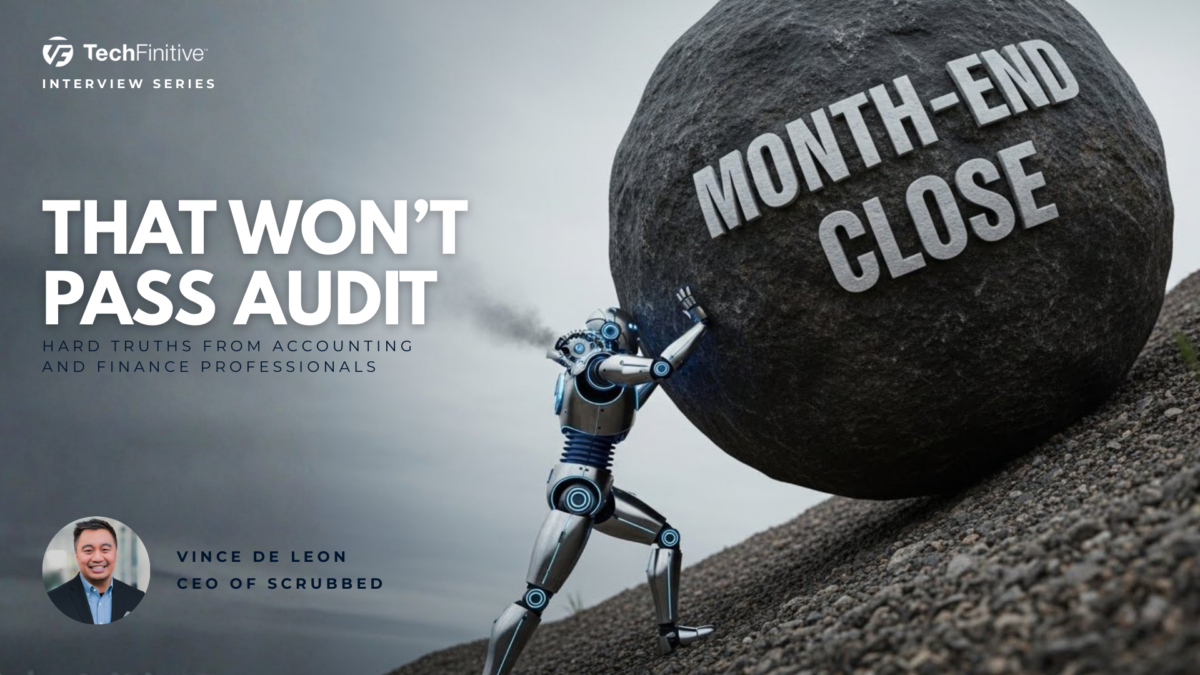
Vince De Leon, CEO of Scrubbed: “Closing procedures are still far more manual than they should be”

With a background of 20 years of accounting, operations and technology advisory, Vince De Leon has built his career translating his financial knowledge into real-world solutions. Before his current position as the CEO of Scrubbed, he developed his viewpoint by working across diverse environments, including healthcare, retail and higher education. From all of this experience, Vince developed his wide-reaching view on finance: one that values systems and human judgement in equal measure.
To Vince, the greatest weakness in many finance systems today isn’t a technological one, but more behavioural. Organisations have a tendency to assume that the solution for efficiency lies in buying new platforms and tools, but, as Vince points out, “this shift is not mainly about buying a tool”. Instead, he says it’s more “about changing how people work and what they believe their job is”.
Vince’s solution? It begins with lowering the barrier for change. His advice is to “start easy and start small”, so rather than launch large transformation projects that overwhelm teams, leaders should prioritise the most painful processes. “Find the one thing people equally dislike about the finance process and digitise that first,” explains Vince, arguing that when people feel that immediate relief, trust builds naturally. Resistance to changes then begins to fade.
Ultimately, Vince sees the future as belonging to finance professionals who can combine their expertise with curiosity. As he puts it: “modern accountants and finance professionals need to be faster learners of tools, not just strong doers of tasks”. Finance professionals must move beyond being strong operators, and become strong adopters of automation, recognising that preference for familiar workflows are often what end up slowing people down.
While talking about these ideas is one thing, we wanted to know how Vince has observed the finance function has shifted in the past few years and, even more crucially, where organisations may be missing the bigger picture.
How has the role of the finance function changed in the last three to five years, and what do you think most organisations still underestimate about that shift?
Over the last few years, I have seen the finance function pulled in two directions at the same time. On paper, the expectation is that finance becomes more strategic, faster, and more analytical. In practice, plenty of accountants are still nose down on the same processes they have always used. Constantly working with the same Excel spreadsheets, formulas and little nuances that exist only in people’s minds can create significant difficulty in providing adequate support for better thinking, better review and better decision support.
What most organizations still underestimate is that this shift is not mainly about buying a tool. It is about changing how people work and what they believe their job is. We really need to get better at easing people into using automation and artificial intelligence to help do the work. Not because humans are the problem, but because we are wasting human judgment on repetitive steps that should not need judgment anymore.
I also think we should be willing to eliminate certain tasks that no longer add value to the enterprise. A lot of legacy reporting and manual checking exists because it always existed. AI can help identify that too, but someone still has to be honest enough to let go of the old habits and the old comfort.
Which accounting or finance processes are still far more manual than they should be, and what’s stopping teams from automating them?
Closing procedures are still far more manual than they should be. Even in teams that talk about automation, month-end can look like a familiar grind of checklists, spreadsheets, and late nights. A big part of it is that people assume close activities are too nuanced to automate, so they accept the manual burden as the cost of being “careful.” The irony is that the most painful parts of close are usually the most repetitive parts.
Most of the time, there is a conceptual framework behind what we do, and that can be programmed into a large language model to replicate what we are trying to accomplish. Simple things like depreciation, balance sheet reconciliations, and other close procedures happen the same way over and over. The intent does not change, even if the numbers do. Since it is repetitive, it should be automated.
The complexity is that these tasks tend not to be rule-based. They are concept-based. An accountant is applying an understanding of what “makes sense,” not just matching a condition to an outcome. That used to be the hard stop for automation. What has changed is that LLMs are capable of understanding those requests now, which opens the door to automating more of close without pretending that everything is a rigid rule.
What are the biggest integration challenges between finance systems (ERP, payroll, billing, reporting), and how do they affect accuracy and agility?
The biggest integration challenge I see is that datasets are not standard between systems. People assume “an invoice is an invoice” or “a customer is a customer,” but the definitions and fields rarely line up cleanly. A sales invoice from QuickBooks Online does not match the setup of what NetSuite will want to vouch in accounts payable. That mismatch sounds minor until you are trying to reconcile across systems, explain a variance, or trace a transaction end to end during an audit.
Because the data does not map cleanly, invoice exchange is still very manual. People end up exporting, reformatting, emailing, keying things in again, and building workarounds that turn into permanent processes. Unlike in South America where they have Facturas and the exchange is more standardised; a lot of teams still rely on human intervention to bridge the gap. That creates delays, rework, and more opportunities for errors that look “small” until they accumulate.
MCP can change all that, but the bigger issue is readiness. More accountants need to understand how this works first. The role has to shift from being a processor to being a checker. If the systems are going to talk to each other and automations are going to run, the accountant’s value becomes validation, exception handling, and making sure the integration is producing results that hold up under scrutiny.
What skills do modern accountants and finance professionals need today that weren’t essential five or ten years ago?
The biggest skill shift I see is that modern accountants and finance professionals need to be faster learners of tools, not just strong doers of tasks. Most accountants I know, including myself, are doers. We like to get in, do the work, and control the output. We also have preferences about which tools we use and how we use them. In a lot of cases, those preferences are what slow us down. It isn’t that that the work is harder than before, but we cling to familiar methods even when the tools have changed.
I still remember watching a younger person using Excel entirely on the keyboard and barely touching the mouse or trackpad. She was so much faster than me. It was a simple reminder that capability is not only about knowledge of accounting, but also about fluency in how you execute. That is the same dynamic I see with automation and AI.
We need to know how to utilise and maximise automation and AI use. It is no longer enough to have a fast device so you can do your work. You need to know how to use the new tools fast so you can do quality work fast, and you need the humility to keep learning when the toolset changes again.
How is finance collaborating with other parts of the business – such as IT, operations, or marketing – and where does friction still exist?
Finance is a key collaborator in the business because finance regulates and prioritises the main resource of any company. Money is obvious, but time and attention are resources too, and finance is often the function that forces trade-offs to be made. When finance is working well, it is not just saying “no” or policing spend. It is helping the organization decide what matters most and funding it in a way that is sustainable.
A well-run finance team can significantly reduce friction by being the best coordinators of conflicting priorities. That is where the real collaboration shows up. IT wants to build or improve systems. Operations need headcount or capacity. Marketing needs budget and flexibility. Each function can justify its own plan. Finance has to translate those plans into a coherent resource picture, then help leaders make decisions with eyes open.
Where friction still exists is when finance is brought in too late or treated as a back-office gate. If finance is only involved at the last stage of the project, the meeting is going to be adversarial in nature. If finance is involved throughout the entire project, finance will be able to highlight any constraints, assist in the creation of realistic time lines, and assist in avoiding unexpected changes to the project at the last minute. That is not soft collaboration. It is governance and coordination, and it is one of the most valuable things finance can do.
What advice would you give to finance leaders who are under pressure to ‘digitise’ but lack internal buy-in or technical resources?
For finance leaders under pressure to digitise without internal buy-in or technical resources, my advice is simple: start easy and start small. If the first project is huge, abstract, or painful, people will resist and you will burn credibility. Find the one thing people equally dislike about the finance process and digitise that first. When people feel relief quickly, they become more open to the next change.
A common example is expense reports. Nobody enjoys them, and they waste time across the organization, not just in finance. If employees can take a picture of their receipts and send it via email to an automated system that compiles the receipts and automates the expense report, it becomes popular fast. You are not forcing a new discipline, you are removing a headache.
If technical resources are limited, connect with experts online and ask for experiences that mirror your situation. Plenty of people are willing to help, especially if they are happy with the technology they are using and they have already worked through the early mistakes. That kind of practical learning matters when you do not have a big internal team. Digitization isn’t just one single event, but a series of small wins that create trust, and that trust is what gets you through the harder parts later.
More interviews
- Carolyne Mwaura, Global Head of People at Wasoko: “Prepare for all meetings whether big or small, and know your stuff!”
- Shelley Martin, Head of Marketing at Dragonfly AI: “Brands are already moving beyond superficial metrics like impressions or clicks”
- Carl Ronander, VP of Marketing at Funnel: “Authenticity is a tricky term in marketing, even before AI”
- Jessica Cardonick, SVP of Marketing at Adverity: “Don’t dismiss AI as a threat to your jobs”
- Michael Lengenfelder, Global Solution Architect FP&A, Unit4: “Finance professionals need a journalist’s determination to keep searching for the truth in the numbers”
About The Author

Rowan Campbell
NEXT UP