Trending Topics

 Trending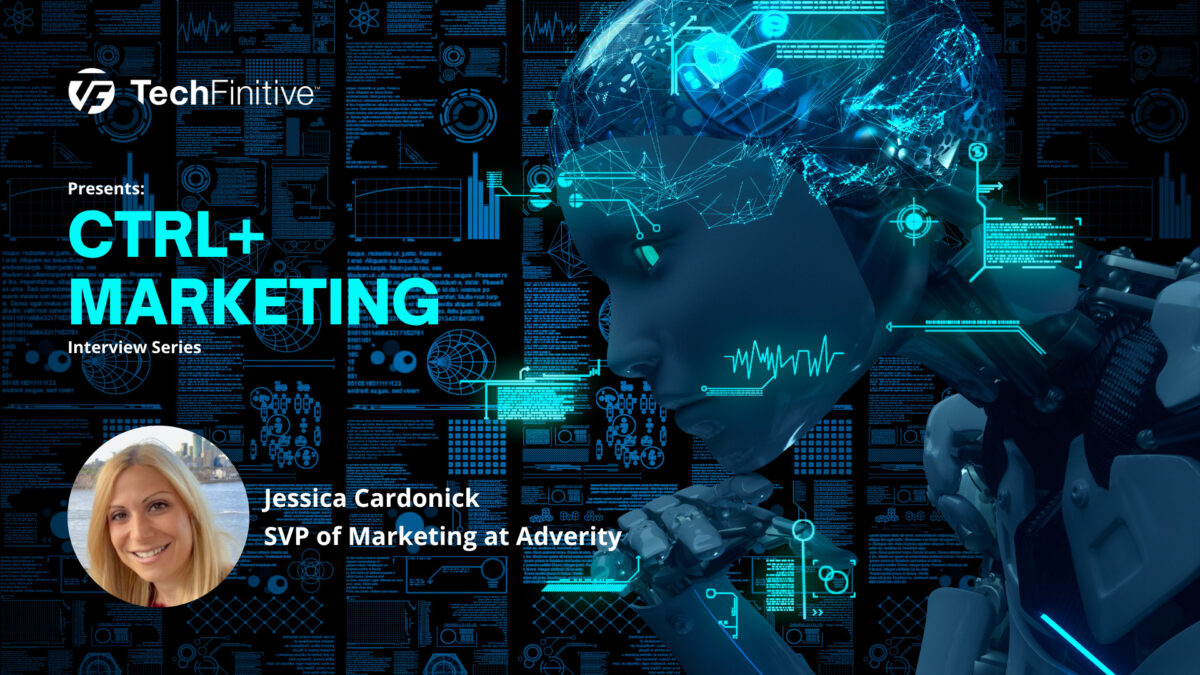
Jessica Cardonick, SVP of Marketing at Adverity: “Don’t dismiss AI as a threat to your jobs”

With more than two decades of marketing experience, Jessica Cardonick has worked on every aspect of building a successful marketing campaign. From demand generation and product marketing to brand positioning and analyst relations, she’s led teams across global enterprises and ambitious startups alike. Now SVP of Marketing at Adverity, the “data platform for marketing teams”, she’s applying all that experience to help marketers use AI to make faster and more informed decisions.
Her approach to AI is refreshingly grounded. While many are trying to replace workers with AI agents, Jessica has a different viewpoint. “AI’s role is to fill in gaps,” she explains, “not to come up with the original ideas.” Jessica’s main use case for AI comes when marketing is done at scale, where speed matters most.
This perhaps shouldn’t be a surprise: her background gives Jessica a strong sense of when and where to lean on automation. After years of leading strategic marketing across both large enterprises and startups, she has seen firsthand that successful marketing always needs solid data foundations. As she puts it, if you’re “going to have any trust in the output of AI tools, then the inputs must be reliable and coherent”.
Jessica has no fear about the technology replacing workers; if anything, it should make them more valuable. “AI will actually enable them to do their jobs better,” she explains, with AI grabbing repetitive and time-consuming work while the marketer spends more time focusing on big picture projects that require a human touch.
Thanks to her unusual mix of strategic thinking and hands-on experience, Jessica’s perspective is a valuable one to hear as the strengths of AI only grow. And with her beliefs in where AI can fit into the workflow, we started by asking what the most interesting way Adverity has used AI technology in its current campaigns.
What are the most exciting AI tools or technologies you’re currently using in your marketing campaigns?
Currently, we’re embedding AI into various marketing processes; focusing on where it drives the most impact. We’re using AI for personalisation, competitive research, signal led planning, content efficiency and marketing reporting. We’re using tools like HubSpot AI and Gemini to support us when it comes to personalisation at scale for ad creation and ABM campaigns as well as browse AI for competitive intelligence. AI is also playing a part in content planning as well as supporting production by eliminating repetitive manual tasks. We can move faster and more confidently at the campaign setup stage with keyword research and early stage content planning. And lastly, we’re using Adverity’s own AI solutions such as Data Conversations to deliver immediate campaign insights as well as to manage all of our data.
In the future, we plan to boost our personalisation efforts by using tools like Perplexity to help build tailored experiences throughout our website and the wider buying journey. We’re looking to speed up our time-to-insight by using AI tools such as Gemini to generate A/B test and prioritise what’s most worthy of testing. Additionally, we want to further utilise Browse AI to get automated alerts on competitor activity, while using tools like NotebookLM to identify trends in buyer behaviour.
How can AI-enhanced marketing create a connection that feels authentic to the humans who receive the communications?
Our approach to AI is very much guided by judgements on when it is appropriate to use – and, perhaps more importantly, when it isn’t. If you’re drafting something such as thought leadership, you can’t use AI to form your opinion – to be truly authentic, you have to use your own original ideas. In this scenario, AI may be used to help fill in gaps; understand patterns and behaviours at scale, improving relevance and personalisation overall; or to repurpose material that you’ve created previously. You have to define your own structure, but you can then utilise AI to embellish or provide examples for key points that you might want to make clearer.
AI is not a replacement for original thinking. It can’t be a substitute content marketer or communications professional. AI’s role is to fill in gaps – not to come up with the original ideas. It can also be used to tweak content to ensure that each person that reads it enjoys a bespoke experience. It could adjust the narrative of an article to include examples that would be especially relevant to a particular recipient, for example, or transpose long-form text into bullet points for customers that had expressed a preference for that particular format.
How do you see the role of human marketers evolving alongside increasingly sophisticated AI systems?
The key is in understanding how, as marketers, they can best leverage AI to become both an assistant and a support system. Rather than replacing human marketers, AI will be something that they have to learn how to get the best out of. Some processes will change, and there will be new, AI-enabled processes to learn too. Ideally, though, the human marketer’s role will shift from being heavily executional to more strategic as AI tools mature.
Time-consuming and repetitive tasks will be where AI’s main focus lies. Freed up from administrative jobs, marketers will have more time to tackle the high-level and strategically important activities. But they’ll also need to figure out how they get the best from AI.
When it comes to using AI to analyse data for faster insights, marketing leaders need to recognise the importance of having a solid data foundation first. – if they are going to have any trust in the output of AI tools, then the inputs must be reliable and coherent. The marketing department – indeed, the whole organisation – needs to have a data-driven culture, where strict rules around how data is captured and stored are applied consistently.
Ultimately, human marketers won’t be replaced by AI, as they will always be required to have oversight. While data and insights can be extracted more quickly by AI, it’s always humans that will be making the decisions.
Which AI trends or developments do you believe will have the biggest impact on digital marketing in the next 3-5 years?
AI is going to open up new possibilities for marketers through data. With interactive, conversational interfaces, teams will be able to quickly explore data trends and insights without needing specialist technical skills or having to rely on analysts or Business Intelligence teams to run reports. They’ll have access to real-time insights that can help them quickly make effective decisions, while still operating within structured, governed environments.
Leaders will be able to ensure that everyone within the marketing department that needs access to data insights can have it – there will be no training sessions required, or static dashboards to interpret. Marketers will be able to ask questions and get sensible answers in language they understand. They’ll also be able to get instant data visualisations, where appropriate. AI will be a democratising force, giving teams and individuals the potential to perform at their very best.
AI will also ensure that marketers can continue to enjoy all of the above benefits in the longer term. It will automate the processes of capturing and connecting data, flagging any discrepancies so they can be addressed. AI will ensure that the data foundations underneath the Conversational and Agentic AI layers are solid, meaning that the insights surfaced will always be accurate and trustworthy.
What’s one thing marketers get wrong about AI, and what should they focus on instead?
One thing that many marketers used to get wrong – though I’m confident that most have actually grasped now – is the belief that AI is going to replace them. AI can’t replace the skill set of talented, creative marketers. On the contrary, AI will actually enable them to do their jobs better, helping them validate their ideas and prove their worth. They can quickly get their ideas off the ground, prepare test campaigns, carry out A/B testing, understand what they’re getting right and what they need to tweak, then activate campaigns – personalised, and at scale – faster than they’ve ever done before.
While campaigns are live, they will be able to extract real-time performance insights, with solid data points to demonstrate the impact that their work has had. Business leaders will be able to see tangible evidence of the ROI of marketing activities. And with AI taking on some of the most tedious, time-consuming and repetitive tasks, it will give marketers more time to spend on the aspects of marketing that they really enjoy. AI will literally help marketers to love their job more. That’s where they should be focusing – how they can use AI to make their working lives more fulfilling.
If you could give one piece of advice to marketing teams just starting to explore AI, what would it be?
Everything stems from a curious mindset. Don’t dismiss AI as a threat to your jobs, or as something that will be here today and gone tomorrow. Learn about all of the different types of AI and solutions on the market, and how they can be applied to specific use cases. Then put this theory into practice – play around with the tools, carry out many experiments, and see what else you can learn. You can either assign someone to take charge of these experiments, or take on the responsibility collectively, but take this process seriously – it’s not just a bit of fun.
It’s also important that you take a step back and review your existing processes when assessing the potential of new AI tools. Think about where the areas of friction are, where bottlenecks typically occur, and which tasks take up a lot of time and energy for teams. But also figure out where it would be wasteful to apply AI solutions; you should confine it to the use cases where it will be most impactful. Whether these use cases are data collection, analysis, personalisation, idea generation, research or elsewhere, never forget that AI tools will need human oversight. AI is here to stay but it definitely isn’t here to replace human creativity, it’s here to empower it.
More interviews
- Sharon Yates Harrison, CMO of Gravyty: “AI is forcing us to redefine what personalisation actually means”
- Ada Mockute Jaime, CMO at Nordcurrent: “Do not be scared or sleep on the opportunities AI presents”
- Deema Tamimi, VP of Marketing at Creatopy: “The real magic happens when you treat AI like a creative partner, not just a productivity hack”
- Rachel Fairley, Marketer: “Please don’t outsource your thinking”
- Milind Pathak, CMO at Proximus Global: “AI isn’t always the right tool for the job”
About The Author

Rowan Campbell
NEXT UP