Trending Topics

 Trending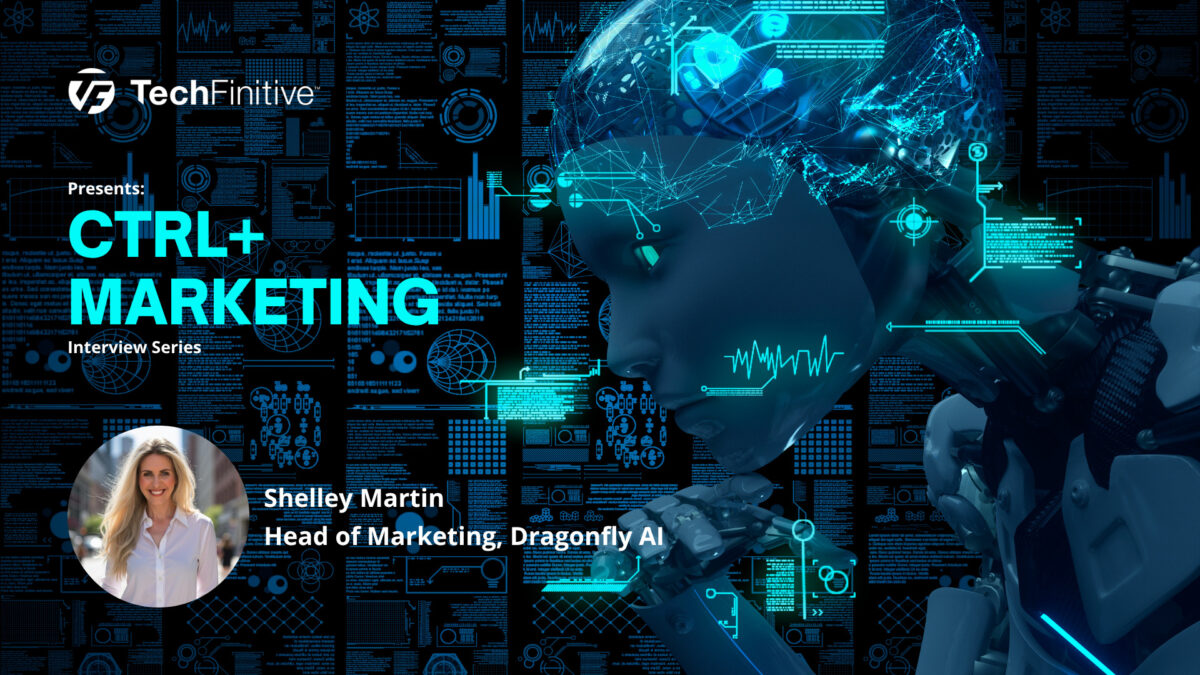
Shelley Martin, Head of Marketing at Dragonfly AI: “Brands are already moving beyond superficial metrics like impressions or clicks”

When it comes down to understanding the impact of marketing on businesses, Shelley Martin has been ahead of the curve for years. With over 15 years of experience working with every tool, trend and tactic around, she knows the recipe for success involves taking advantage of the latest tools. Now Head of Marketing at Dragonfly AI, a pioneering visual intelligence platform, she’s using AI to put data and creativity into conversation.
Shelley’s background gives her a rare perspective, having worked for data-driven automation platforms to the human side of storytelling. With that experience, she knows that AI isn’t here to replace marketers: it’s here to enhance their intuition and guide their decisions.
Shelley puts it plainly when she says that “the future of digital marketing belongs to those who combine human storytelling with AI’s predictive power”. For example, AI is giving marketers a way to test and refine creative choices before they ever go live. It has also reduced pre-production time drastically, minimising the time spent on repetitive grunt work and letting talented humans focus on the creative aspects.
It’s mixing speed and depth that defines Shelley’s outlook on marketing’s future. She doesn’t see AI as a threat to authenticity, instead as more of a tool that can put it on a global scale. By pairing machine learning with human insight, brands can design campaigns that feel personal, emotional and memorable at far greater scales.
With Shelley’s focus set on both the human and technical aspects of AI, we started by asking Shelley how the technology has already shifted the way she approaches digital marketing, and what that shift means for the future of the field.
How has AI changed the way you approach digital marketing over the past few years?
It might sound obvious, but speed is everything. AI has reduced digital marketing campaigns from 30 days to 30 minutes, mirroring the ever-rapid pace of trends (thank you TikTok), to keep pace with consumer preferences that can now turn 180° overnight.
Beyond speed, content generation and optimisation has become an integral part of most content production workflows. AI has massively impacted the quality of what can be produced at pace. Visual AI and Creative AI tools have upped the content ante. Visual AI tools can mirror the way humans interact with visual content, recognising the same patterns, colours, and even emotional responses. They can therefore predict the responses of certain audiences, suggesting an optimised layout for maximum engagement.
Creative AI, however, takes this one step further, helping to generate ideas, automate repetitive tasks and optimise designs to grab consumer attention. AI is the powerhouse making digital marketing simultaneously more agile and more personal. This is because it’s data-driven. AI tools analyse what is successful (and what is not) and fine-tune accordingly in real-time. The modern marketer can experiment, innovate and optimise their content faster, while remaining sympathetic to the brand image.
In your experience, how effective is AI at understanding and predicting customer behaviour compared to traditional methods?
AI is significantly more effective than traditional methods, especially in dynamic, data-rich environments. It’s enabling marketers to move from “what happened” to “what will happen” and crucially why it’s happening. Traditional methods often rely on historical, aggregated data such as past purchases, survey responses, demographic group testing, but AI enables vast real-time data analysis and machine learning algorithms that can be continuously training to forecast purchase intent, churn risk and optimal engagement timing.
In my experience, AI has fundamentally elevated our ability to understand and predict customer behaviour, going far beyond what traditional methods could achieve. Where we once relied on static metrics like views or clicks, AI now enables brands to analyse the entire spectrum of creative effectiveness: from capturing attention, to triggering emotion, to encoding memory. This shift reflects a deeper, more predictive understanding of what actually drives behaviour, not just what gets seen, but what gets remembered and felt. In doing so, AI helps marketers move from measuring outputs to forecasting outcomes.
A combination of AI with human oversight and strategic thinking are key to brands getting the creative edge today, effective marketing is using AI not to replace intuition but to enhance and guide it.
How can AI-enhanced marketing create a connection that feels authentic to the humans who receive the communications?
People are often wary of AI-generated content, labelling it robotic and soulless. Unfortunately, this is true for much of the content churned out by LLMs. However, AI can unlock psychographic insights which, when combined with predictive analytics, help to design visuals that connect with specific audiences at a human level.
What is psychographics? Fundamentally, psychographics appeals to individuals through their lifestyles and values, factors often influencing consumer choices. Rather than demographics, which focuses on age, gender and income, psychographics goes further to uncover what a target audience cares about, and how these interests shape their behaviour.
AI can power this psychographic segmentation to create content that resonates with every targeted group, rendering visuals more impactful and memorable. By utilising psychographics in marketing campaigns, your design choices reflect your audience’s values, making the campaign feel personal.
It is AI that allows marketers to take this human-centric approach – or at least, lets them deploy it on a global scale. By prioritising the user throughout the design journey, marketers can be more proactive than when using traditional methods as they have accounted for their target audience from every perspective.
What does “authentic marketing” mean to you in an era of AI-generated content? Is true authenticity still possible at scale?
Crucially, brands need to decide what ‘authenticity’ means to them and, with that in mind, reach for tools that can help them to scale this idea. It is possible for AI and authentic marketing to co-exist – if we let them do just that, coexist. Rather than relying on 100% AI-generated content, marketers need to use the data insights to fashion and deliver their creative ideas, and with confidence.
The best adverts are the ones telling a story or that stir up emotions like nostalgia, joy, or empathy. Through tying these emotions to brand values, marketers can create a sense of authenticity. Machine learning is a tool that allows them to do this. It is transforming the creative process of marketing. Using neurological insights and data analytics, marketers can unleash their creativity.
Sometimes a design looks amazing but doesn’t grab attention in the way one would expect. After all, individuals see and interpret things differently. Fortunately, data can fill this gap. Knowing exactly what captures people’s eyes can inform design choices, which are far more likely to succeed. These scientific breakthroughs can empower brands to achieve new heights with their marketing campaigns, with the results to show for it.
Where do you think AI enhances brand trust, and where does it risk undermining it?
This is a tricky question, as people generally don’t respond positively to content they know is AI-generated. That is why using the tool to enhance rather than to churn out content is so important. But it is understandable. Marketing teams are under pressure to accommodate all the digital platforms on which they operate, and which are constantly multiplying, and with each new outlet the appetite for high-quality creative content grows. It is all about creating creative quality, and quality often suffers when volume increases.
The data insights from Creative AI offer targeted creative quality which drive meaningful connections with audiences. Ultimately, it’s these connections that drive action and loyalty. AI can also maintain a cohesive brand voice, which helps to position brands as reliable counterparts for their customers. But it must be used with caution. Relying too heavily on AI tools without strict oversight from clued-up teams will undermine brand performance — nobody wants to think they’re talking to a robot.
Which AI trends or developments do you believe will have the biggest impact on digital marketing in the next 3-5 years?
Over the next 3–5 years, I think AI will redefine creative effectiveness as a core driver of digital marketing performance. Brands are already moving beyond superficial metrics like impressions or clicks to focus on what truly influences consumer behaviour—attention, memory and emotion. Emerging AI tools are making it possible to predict, measure and optimise these deeper cognitive and emotional responses before a campaign even goes live. This means marketers can now test and refine creative with precision, ensuring that every asset not only captures the eye but also sticks in the mind and moves the heart.
AI will also enable creative at scale without compromising quality. Generative AI, powered by brand-safe frameworks, will produce variations tailored to specific audiences, moments and platforms, while predictive models guide which combinations are likely to perform best. When paired with dynamic testing and neuro-backed analytics, this gives marketers a closed-loop system: from creation, to prediction, to performance, to learning. The result is a smarter, faster and more emotionally resonant creative process – one that finally places creative effectiveness at the centre of growth strategy.
As these capabilities mature, creative will no longer be treated as a “black box” in performance marketing. It will be measurable, optimisable and accountable – driving not just engagement, but real behavioural outcomes. In short, the future of digital marketing belongs to those who combine human storytelling with AI’s predictive power to create experiences that are both scalable and unforgettable.
More interviews
- Sharon Yates Harrison, CMO of Gravyty: “AI is forcing us to redefine what personalisation actually means”
- Ada Mockute Jaime, CMO at Nordcurrent: “Do not be scared or sleep on the opportunities AI presents”
- Deema Tamimi, VP of Marketing at Creatopy: “The real magic happens when you treat AI like a creative partner, not just a productivity hack”
- Rachel Fairley, Marketer: “Please don’t outsource your thinking”
- Milind Pathak, CMO at Proximus Global: “AI isn’t always the right tool for the job”
About The Author

Rowan Campbell
NEXT UP


