Trending Topics

 Trending
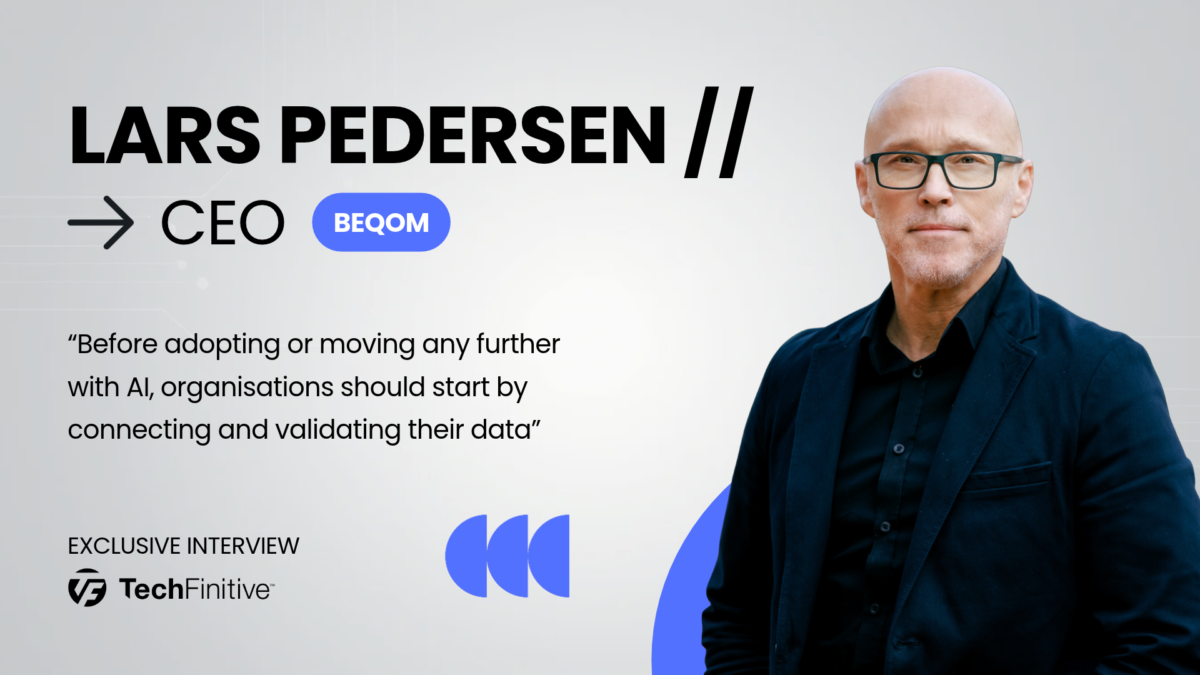
Lars Pedersen, CEO of beqom: “Before adopting or moving any further with AI, organisations should start by connecting and validating their data”
Compensation remains one of the biggest investments organisations make in their people, yet many businesses continue to manage it using spreadsheets, fragmented data and manual processes. As pay structures become more complex and expectations around transparency, fairness and accountability increase, those familiar ways of working are becoming harder to justify.
For Lars Pedersen, CEO of beqom, the problem goes beyond administrative inefficiency. Poorly governed compensation processes can expose businesses to financial, regulatory and reputational risks, while making it harder to explain and defend decisions that directly affect employees’ livelihoods.
In this interview, Pedersen discusses why organisations need to treat compensation with the same rigour as financial data, who should be accountable for pay decisions and why introducing AI into fragmented systems could create more problems than it solves. He also explores the role of deterministic, explainable AI in compensation management and the questions business leaders should be asking as they prepare their pay plans for 2027.
Your research highlights the persistence of spreadsheet-heavy and manual compensation processes. What keeps organisations tied to them: flexibility, familiarity, cost or something more fundamental?
Familiarity is certainly one of the top reasons. But the more fundamental issue is that many organisations still treat compensation as an administrative function, rather than one of their most significant business investments. A reliance on spreadsheets often reflects a failure to modernise underlying processes. Teams continue with what they know, even as the complexity and sensitivity of pay decisions outgrow those ways of working. Yet as our recent research showed, companies can outgrow their tools even when pay structures seem relatively straightforward.
A particular reason for this is a growing gap between expectations around compensation decisions, especially from employees and regulators, and the capability of current tools and processes. Fragmented systems reinforce a dependence on existing workflows; as there is no connected view, HR, finance and managers have to manually piece together compensation, performance and budget data.
So, what looks like flexibility actually creates inconsistent formulas, uncontrolled versions and processes dependent on individual knowledge. That makes pay decisions harder to scrutinise and explain.
Finally, the perceived cost of change can obscure the ongoing cost of inaction – administrative burden, delayed approvals, errors and limited oversight all create unnecessary costs for the business. This is not to mention the business impact of losing top talent.
At what point does using spreadsheets for compensation become an enterprise risk?
Compensation becomes an enterprise risk when businesses lose visibility and control over decisions that directly affect their workforce and reputation. The tipping point comes when an organisation can no longer confidently establish who has accessed sensitive pay data, what spreadsheet version is authoritative or how a decision was reached. This lack of accountability and explainability can have cultural and regulatory repercussions.
When teams use different data, assumptions or rules, for example, decisions that appear reasonable in isolation can produce inconsistent outcomes across the workforce. At scale, these inconsistencies can translate into significant financial exposure, particularly when businesses are making pay decisions across multiple markets and thousands of employees. This can be exacerbated by how data is handled and shared. Downloading salary, bonus and equity data into files and circulating them between stakeholders creates risks around access, uncontrolled copies and inconsistent calculations.
Then, the wider enterprise risk this creates can extend to anything from misallocated budgets to pay inequalities and decisions that are difficult to explain. All of this can undermine employee trust and expose the organisation to disputes.
What does governing pay data with the same rigour as financial data look like in practice? Is replacing spreadsheets enough, or does the decision-making process need to change too?
Businesses wouldn’t accept major financial decisions being made without reliable data and clear accountability. Compensation should be no different, particularly given the scale of investment involved.
The first step is to establish a reliable, connected source of pay data, with clear ownership, controlled access and consistent rules for how information is updated and used. Every input, calculation, recommendation, approval and exception in the compensation decision-making process should be recorded. By evidencing this trail, the reasoning behind decisions can be reconstructed and reviewed.
But replacing spreadsheets alone is insufficient. The wider decision-making process also needs to change, so that compensation is managed as a strategic business investment rather than an administrative exercise.
Organisations need clear decision-making authority, approval controls and a consistent approach to assessing fairness and budget impact. Where AI supports the process, traceability and human oversight should be requirements from the outset. Managers must be able to understand and challenge recommendations and override them if necessary.
Compensation now involves HR, finance, IT and the C-suite. Who should ultimately be accountable for how pay data is accessed, shared and used?
One of the headline stats from our research was that 93% of organisations said that, alongside HR, their compensation software decisions also involve the C-suite, finance, IT and procurement. What this shows is how compensation is now considered a key part of business performance and outcomes and not simply an administrative task.
This cross-functional involvement should strengthen accountability rather than leave everyone assuming another team owns the risk. Ultimately, accountability for compensation governance needs to sit at executive level, with clear responsibilities across the business. A named executive should be accountable for compensation governance. Then, responsibilities underneath that executive need to be explicit. For example, the structure might be that HR owns pay policy and fairness, finance oversees budgets and financial controls, and IT supports security and access management.
At a more micro level, managers remain accountable for the individual decisions they approve, including explaining why they accepted or departed from a recommendation. What’s critical to note is that if AI is used, it cannot absorb that responsibility. Organisations should record both the system’s contribution and the human judgement behind the final outcome.
AI is often presented as a shortcut to faster, better compensation decisions. What happens when it is introduced into a process built on fragmented data?
The danger is that businesses automate poor decisions rather than improving them. AI can process information at a scale and speed that humans cannot, but that becomes a liability if the underlying data and processes are flawed. So, before adopting or moving any further with AI, organisations should start by connecting and validating their data and then implementing the most up-to-date rules for calculating decisions. This should include identifying specific tasks where AI can help, such as highlighting potential pay gaps or modelling scenarios, to guide its implementation.
Crucially, what also matters is the type of AI that is used. While large language models have their uses for explaining data and drafting text, they become a risk when used for compensation decisions, as they’re black-box systems. This means it’s not possible to see the reasoning behind how they arrived at their output. They also use probability to make decisions, meaning the same input can produce different outputs.
This is why we use Intentional AI, which follows deterministic principles and has guardrails. Defined rules and logic are applied to compensation data and that means the AI always produces the same output for the same input. Intentional AI also means that models are explainable. Teams can see what data, formulas and rules were used and how the recommendation was generated.
Human judgement remains essential for trust and accountability, and humans must always be in control of decisions that impact livelihoods and careers. Employees won’t be happy if AI is deciding this for them autonomously, especially when there are circumstances beyond the data to consider too. And as already mentioned, if they do use AI, then this should be recorded. To summarise, AI should propose, but humans must command.
As businesses prepare their pay plans for 2027, what is the first question boards should ask to establish whether their compensation processes are fit for purpose?
“If an employee challenged a pay decision tomorrow, could we explain and defend it, showing the data, rules and human judgement behind it?”
Boards need to consider both the commercial effectiveness of their compensation spending and whether individual decisions can withstand scrutiny. Not only should they ask this question, they should then test it against a real decision. Can the organisation trace the information used, identify who accessed it and demonstrate who approved the outcome?
This will help the C-suite assess whether compensation, performance, equity and budget information do in fact support a coherent decision, or whether teams are still relying on manual reconciliation and competing versions of data that inhibit this visibility and explainability.
Organisations can then use the findings from this test to prioritise improvements. Success should be measured through accuracy, fairness, accountability and employee understanding, alongside speed and efficiency.
More interviews
- Yulgan Lira, Co-Founder and CEO of Colb: “People do not want to become experts in financial technology”
- Dr Garfield Jones, EVP Research & Strategy at QuSecure: “Organizations should treat today’s data as a risk because of harvest now, decrypt later”
- Antony Jenkins, Founder and Chief Executive, 10x Banking: “Resist the temptation to do the most visible thing like everyone else”
About The Author

Ricardo Oliveira
NEXT UP