Trending Topics

 Trending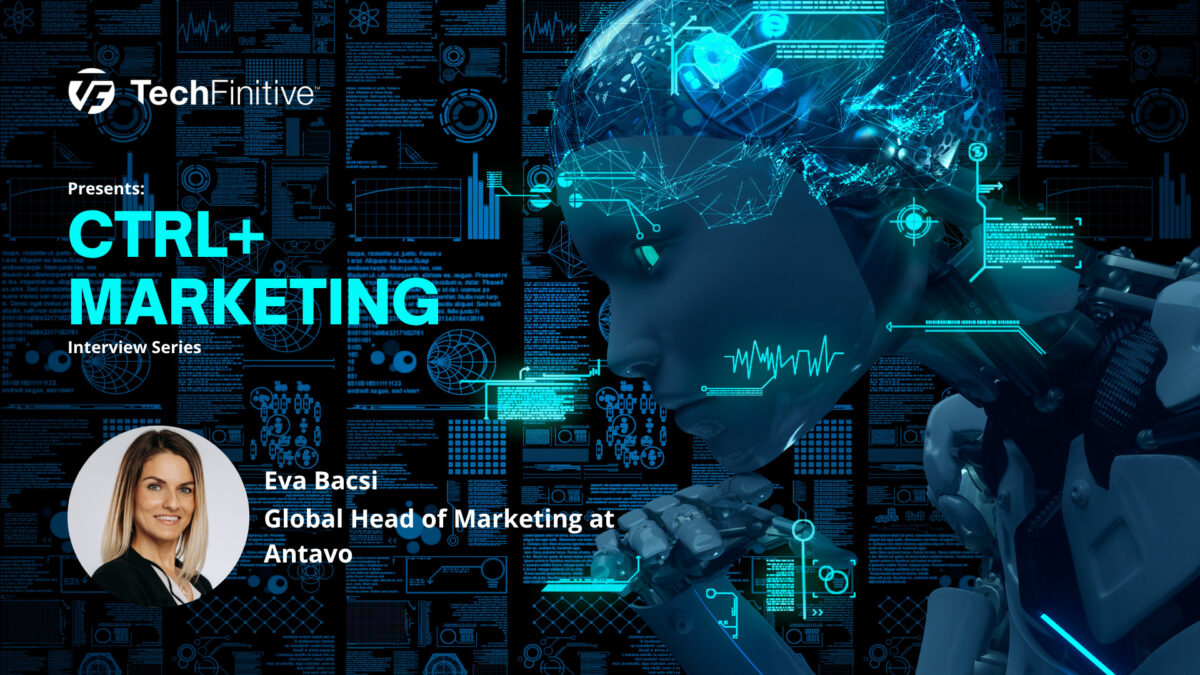
Eva Bacsi, Global Head of Marketing at Antavo: “AI will continue to advance but I don’t see it replacing marketers”

When we last spoke with Eva Bacsi, Global head of Marketing at Antavo, she was just beginning to implement AI tools into the company’s marketing workflows. Fast forward to today, and that early experimentation has evolved into a careful yet full-scale embrace of AI’s capabilities.
For Eva, the goal has never been to replace human creativity, but to amplify it. ChatGPT and Gemini have become “invaluable partners” in the creation process, Eva says, “brainstorming ideas, creating first drafts and refining our final copy”. These tools aren’t replacing the team’s creative instincts, but accelerating the process and maintaining momentum under tight deadlines.
As AI continues to evolve, so too does the role of the marketer. Eva believes this evolution is not about surrendering control, but instead letting marketers shift “toward creative leadership and strategy,” focusing on what only humans can do while leaving AI to handle the grunt work.
To reach this point, though, had its challenges. “When we first explored AI, my team approached it with scepticism,” Eva admits. With Antavo’s reputation built on high-quality, data packed insights, there were concerns that AI might compromise their standards. “Though trial and error we defined clear boundaries where AI could help and where human expertise remained essential.”
When we last spoke to Eva, these AI-powered tools were just entering the picture. To understand just how much has changed, we thought we should begin by asking how much AI has changed her approach to digital marketing.
How has AI changed the way you approach digital marketing over the past few years?
AI has transformed how I approach digital marketing. When our team faced a growing demand for content, we struggled to maintain our regular blog publishing schedule. As we aimed to increase output, I realised we needed to work differently rather than add headcount.
I explored different AI writing tools, which helped us transition from barely meeting deadlines to consistently publishing each week. We’ve since integrated AI across our workflow – video production, graphic design and content creation. Tasks that once took days, such as script writing, editing, voiceovers and image sourcing, now take only hours to complete.
It is key to understand that AI doesn’t replace human creativity or strategic thinking. It handles the repetitive and time-consuming tasks that often create bottlenecks in creative work. Our team remains at the heart of everything we do, from developing ideas to refining messaging and ensuring content aligns with our strategic goals.
By removing production friction, AI has freed us to focus on what matters. We can test new ideas quickly, iterate faster and stay responsive to the rapid changes in tech marketing. It’s not about working harder but working smarter. The technology amplifies our team’s capabilities rather than replacing them, allowing us to deliver more value while maintaining the human insight that makes content resonate.
This shift has been necessary for keeping pace in an industry where standing still means falling behind.
What are the most exciting AI tools or technologies you’re currently using in your marketing campaigns?
My team and I are integrating several AI tools that redefine how we deliver marketing campaigns. For content creation, ChatGPT and Gemini have become invaluable partners for brainstorming ideas, creating first drafts and refining our final copy.
We also now use MidJourney for visual storytelling. We’ve used it to create distinctive artwork for our Global Customer Loyalty Reports in 2024 and 2025, adding a creative dimension that would have been time-intensive to produce traditionally.
Right now, we are exploring Gamma for document design. While we are still learning its full capabilities, it is already improving how we create PDFs and presentation decks. The quality uplift in our materials is noticeable, and it has been achieved with far greater efficiency than our previous processes.
Argil has also helped us overcome production challenges. Recently, while creating a product video with our Head of Innovation, we discovered a crucial sentence was missing from the recording. Rather than organise a reshoot, we used Argil to generate the missing segment. The result met our quality standards and saved significant time and resources.
Our web development team has also embraced AI coding tools, which have accelerated their workflow and streamlined the development process.
I’m excited about how these tools enhance rather than replace human creativity. They handle the heavy lifting, allowing our team to focus on strategy, storytelling and the creative decisions that help us to differentiate our work.
In your experience, how effective is AI at understanding and predicting customer behaviour compared to traditional methods?
AI has improved how we understand customer behaviour at Antavo. Previously, analysing our B2B customers and their end users relied on traditional methods like surveys and manual data analysis processes that could take days or even weeks, depending on the insights we needed.
Leveraging Generative AI tools has accelerated both the speed with which we analyse materials and our depth of understanding. At Antavo, we’ve developed Timi AI, a digital colleague with deep loyalty expertise. She identifies patterns and generates insights much faster than traditional analysis methods, helping us serve our customers better.
The predictive capabilities are particularly useful. Traditional analytics showed us what happened in the past but AI helps us anticipate what’s coming next. Timi AI combines knowledge of loyalty programmes and our platform with real-time trend analysis, providing relevant insights when our customers need them.
In my experience, AI’s most significant advantage is its ability to keep learning. It improves with every new data point and constantly refines predictions and recommendations, unlike manual analysis which happens only periodically. This has changed how quickly and accurately we make decisions.
AI tools aren’t perfect, but they’re a major improvement over spreadsheets and manual surveys. They’ve turned customer insights from a time-intensive process into an ongoing dialogue with our data, helping us deliver more value to our customers with each interaction.
Has AI impacted your creative process — for example, in content creation, ad design or campaign ideation? If so, how?
AI has certainly changed how I approach creative marketing, though not in the way people might expect. It hasn’t replaced creativity, but it now plays a supporting role that enhances my workflow. I find it helpful for accelerating content creation, exploring campaign concepts and developing visual assets. When deadlines are tight or I need fresh perspectives, AI helps maintain momentum.
As mentioned, we use ChatGPT and Gemini throughout our content process, from initial brainstorming through to refining key messages. These tools shine during ideation sessions or when I encounter creative blocks. I often rephrase prompts multiple times to explore different angles, which surfaces ideas I might have missed otherwise.
This ability to quickly iterate means less time stuck on blank pages and more time shaping tone, structure and strategic purpose. The efficiency gains create space for deeper creative thinking.
AI gives us more time for the fundamentally human aspects of marketing. These include crafting narratives, understanding emotional connections and setting creative direction. It handles the heavy lifting while we focus on the nuance and storytelling that make campaigns resonate.
We maintain productivity without sacrificing the creative spark that drives effective marketing. AI doesn’t do the creative work for us; it enables us to do our best creative work.
How do you see the role of human marketers evolving alongside increasingly sophisticated AI systems?
AI will continue to advance but I don’t see it replacing marketers. The technology is designed to work alongside us. I expect ongoing collaboration where AI handles time-consuming tasks while we focus on what only humans can do.
Our agentic AI solution, Timi AI, demonstrates this partnership well. It offers suggestions, maintains conversation history and supports loyalty programme owners with campaign planning and performance analysis. Marketers remain the decision-makers that shape messages and maintain the human touch that matters.
Our role is evolving toward creative leadership and strategy. We guide processes and ensure alignment with brand values and business goals, without getting bogged down in repetitive tasks or starting from scratch each time.
I view AI as an opportunity rather than a threat. With the right tools, we can experiment faster, work with greater confidence and achieve more, precisely because we’re not working alone. Generative AI amplifies our capabilities rather than replacing them.
The future of marketing isn’t about choosing between human creativity and AI efficiency. It’s about combining both to deliver better results for our customers and our businesses.
What challenges have you faced when integrating AI solutions into your marketing stack or workflows?
When we first explored AI, my team approached it with scepticism. We’ve built our reputation on producing high-quality, data-backed insights that have made Antavo a trusted voice and partner in loyalty marketing. We worried that AI might compromise those standards.
Job security concerns also surfaced. Some team members initially feared AI tools might replace them, which is an understandable reaction when new technology enters the workplace. Experience has shown us that AI complements rather than replaces our expertise.
The technical challenges were also real. Getting AI to understand our specific content standards and industry terminology took work and considerable time. We needed to train it to distinguish between quality loyalty insights and generic marketing advice. We also had to integrate AI outputs into our existing review and approval processes without disrupting what already worked well.
We invested time in understanding AI’s true value to our team. Through trial and error, we defined clear boundaries where AI could help and where human expertise remained essential for maintaining our quality standards.
We’re still discovering new applications, but the principles and policies we’ve established guide how we evaluate and implement any new tool. The key was moving past the initial uncertainty to find the right balance between technological efficiency and human insight.
What we’ve learned is that AI doesn’t threaten quality content. It gives us more time to ensure everything we produce meets the high standards our audience expects from us.
More interviews
- Katrin Lewandowski, Senior Director of Marketing at SALESmanago: “AI-powered privacy focused tactics are gaining momentum among marketers”
- Fergal Glynn, Chief Marketing Officer at Mindgard: “One common mistake is thinking AI is just a faster way to do what we’ve always done”
- Nicholas Kontopoulos, VP of Marketing APJ at Twilio: “To unlock AI’s true potential, companies need to pair AI with customer data”
About The Author

Rowan Campbell
NEXT UP


