Trending Topics

 Trending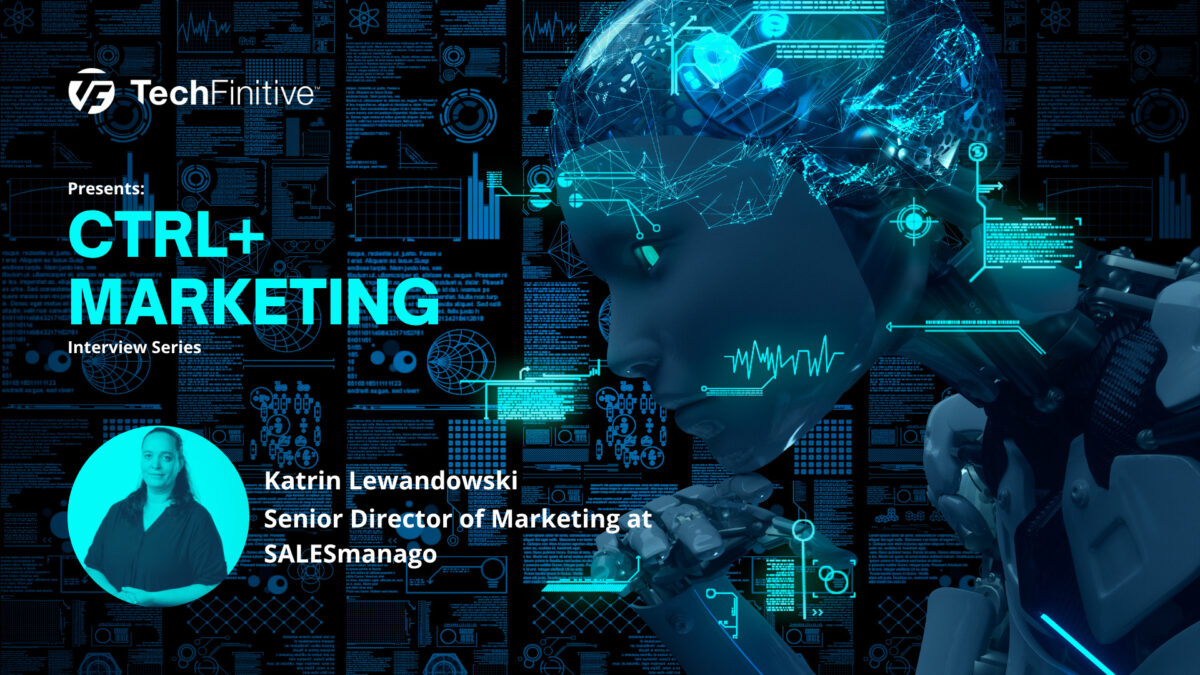
Katrin Lewandowski, Senior Director of Marketing at SALESmanago: “AI-powered privacy focused tactics are gaining momentum among marketers”

As one of the first interviewees in our CTRL+Marketing series, Katrin Lewandowski, Senior Director of Marketing at SALESmanago sets a high bar for others to follow. We chose marketing as the subject for this interview series as it sits plum in the crosshairs of AI, and can transform the practice in hugely beneficial ways – but also get it horribly wrong. Executed poorly, AI-powered marketing can destroy your relationship with users, coming across as false. Inauthentic. Get it right and you will see conversion rates like never before.
Why listen to Katrin? For a start, she has over 25 years’ experience in strategic marketing, content and communications. Her role at SALESmanago is to lead initiatives that build brand awareness and drive growth – all for a company that describes itself as “a platform for eCommerce marketers to acquire, convert and engage more customers”.
So, how can marketers use AI? Let’s start with personalisation. “Before the widespread adoption of AI, personalisation often meant fairly basic tactics,” said Katrin, pointing to basics such as using their first name in messages. “Today, AI enables a much more granular understanding of each customer’s unique behaviours, preferences and interactions, allowing brands to create experiences that feel truly bespoke and relevant.”
And, according to research from SALESmanago, it works: “71% of marketers using AI tools have noted a substantial improvement in customer loyalty, underscoring the tangible benefits of advanced personalisation,” Katrin told us.
But you can’t just blast messages to everyone, with the growing importance of authenticity combined with increasing amounts of privacy laws and regulations.
Safe to say it’s a challenge, and one that AI tools can again help with. How? For that, you’ll need to read the whole interview below.
In your experience, how effective is AI at understanding and predicting customer behaviour compared to traditional methods?
Thanks to its ability to analyse data rapidly and at scale, AI is outpacing traditional methods in understanding and predicting customer behaviour. Traditional approaches have relied on static data sources (such as historical sales records) which often fail to capture the subtle and evolving nuances of changing customer preferences. These conventional methods can miss important signals and trends that emerge in real-time, making it challenging for marketers to respond effectively.
In response, AI can combine real-time behavioural insights with advanced data analysis, helping marketers pinpoint the most effective strategies with remarkable precision. AI’s capability to analyse millions of interactions across multiple channels, including email and eCommerce platforms, enables the discovery of complex patterns that shape successful campaign strategies.
Our recent survey of eCommerce marketers across the UK, Poland and Italy found that 64% of marketers leveraging AI observed increased customer satisfaction, thanks to more targeted and relevant interactions. Businesses adopting AI also report improved conversion rates, higher customer retention and the ability to deliver personalised experiences at scale. This shift from traditional to AI-powered approaches marks a significant evolution towards a more intuitive and empathetic understanding of the customer journey, ultimately strengthening brand loyalty and long-term engagement.
Personalisation has become a key marketing trend. How has AI helped you deliver more personalised experiences at scale?
AI is helping marketers deliver relevant experiences at scale in ways that traditional methods simply couldn’t achieve. Before the widespread adoption of AI, personalisation often meant fairly basic tactics, such as addressing customers by their first name or segmenting them into broad demographic or behavioural categories. While these efforts were a step in the right direction, they lacked the depth and precision needed to truly resonate on an individual level.
Today, AI enables a much more granular understanding of each customer’s unique behaviours, preferences and interactions, allowing brands to create experiences that feel truly bespoke and relevant.
Our recent research revealed that 71% of marketers using AI tools have noted a substantial improvement in customer loyalty, underscoring the tangible benefits of advanced personalisation. AI-powered platforms are capable of unifying data from a wide array of sources, ranging from website interactions and browsing history, to build comprehensive, real-time customer profiles. These rich profiles empower marketers to deliver tailored recommendations, personalised content and relevant offers across multiple channels instantly.
At scale, this means thousands of uniquely crafted customer journeys can run simultaneously, each dynamically adapting to individual needs. For example, AI-powered tools can identify the exact moment a customer is most likely to convert and recommend the most relevant product, significantly enhancing the shopping experience and ultimately boosting ROI.
How do you see the role of human marketers evolving alongside increasingly sophisticated AI systems?
The role of marketers is evolving significantly as AI technology becomes more integrated into marketing workflows. Rather than replacing, AI systems are taking over more administrative and data-driven tasks that can be time-consuming and repetitive. AI excels at analysing vast amounts of information quickly and accurately, which frees up marketers to focus on areas where human insight remains irreplaceable, such as creativity and strategic thinking. This shift allows marketers to dedicate more energy to storytelling, brand positioning and crafting messages that truly connect with audiences.
For example, while AI can predict a customer’s preferences and optimise the timing of messages, it’s ultimately the marketer who defines the tone, creative direction and ensures everything aligns with the brand’s core values and ethos. Additionally, as AI continues to develop, marketers will increasingly take on the role of orchestrators, where they’ll fine-tune algorithms and models to reflect evolving brand values and ethical considerations. This human oversight is critical to maintain authenticity and trust in AI-driven marketing efforts.
Marketers will also play a vital role in interpreting AI-driven insights within broader market, social and cultural contexts, ensuring campaigns are relevant and sensitive to the audience’s needs. As AI tools become more sophisticated, those who embrace them as collaborators rather than replacements will be best positioned to create impactful, authentic campaigns that truly resonate with their customers and build lasting brand loyalty.
Data privacy and AI often come into tension. How do you balance personalisation with consumer privacy concerns?
Balancing personalisation with consumer privacy requires a transparent and thoughtful approach to how data is collected and managed. Today’s customers expect personalised experiences that cater to their individual preferences and needs, but they are also becoming increasingly cautious about how their personal information is handled. This caution is particularly heightened due to the rise in high-profile data breaches and growing awareness around data misuse. Striking the right balance between personalisation and privacy means that brands must prioritise building trust through honest communication and strict compliance with privacy laws and regulations.
To achieve this, marketers should adopt consent-based data practices that empower customers by providing them with clear and straightforward options to control how their information is collected and used. AI technologies can support these efforts by leveraging advanced techniques such as anonymisation and federated learning, which allow marketers to gain valuable insights without compromising individual privacy.
Furthermore, it is essential to personalise responsibly, focusing on relevance rather than intrusive or excessive data collection. For example, delivering tailored product recommendations based on a customer’s browsing history can be done without resorting to invasive tracking methods. By aligning personalisation efforts with strong ethical frameworks and privacy principles, brands can provide meaningful value to customers while respecting their privacy. This approach not only safeguards customer trust but also fosters long-term loyalty and sustainable relationships.
Which AI trends or developments do you believe will have the biggest impact on digital marketing in the next 3-5 years?
One key trend that is shaping the future of digital marketing is the rapid advancement of generative AI for content creation. Tools such as generative text and image models are already empowering marketers to produce highly tailored, high-quality content at scale, saving time and resources while enhancing creativity.
Given the speed of innovation over the past couple of years, I expect these technologies to evolve significantly, enabling brands to effortlessly generate a wide variety of dynamic assets including videos and even custom product designs. This will revolutionise how marketers create engaging content that resonates with their audiences in real time.
Another transformative trend is the increasing integration of AI into social commerce. As platforms like TikTok and Instagram continue to grow as primary shopping channels, AI-driven tools will facilitate real-time customer engagement and deliver highly relevant product recommendations, helping to create seamless and personalised shopping experiences.
Interestingly, our recent survey found that 63% of marketers feel platforms like WhatsApp and Instagram DMs are making it more difficult to accurately measure web traffic. This signals an upcoming shift in how SEO and digital traffic metrics will be approached in marketing strategies.
Additionally, AI-powered privacy-focused tactics are gaining momentum among marketers. These technologies enable brands to deliver personalised experiences while protecting consumer data, addressing the rising concerns around privacy. When combined with predictive analytics and natural language processing, these trends promise to make digital marketing more precise, effective and trustworthy, ultimately driving stronger customer engagement and loyalty.
How do you measure the ROI of AI-powered marketing initiatives compared to more traditional campaigns?
Measuring the ROI of AI-powered marketing initiatives requires a combination of both traditional marketing metrics and newer AI-specific benchmarks that capture the unique value AI brings. While conventional indicators like click-through rates and conversion rates remain important and relevant, AI offers much deeper and more nuanced insights into campaign performance. This includes areas such as multi-touch attribution, which helps marketers understand how different interactions contribute to a customer’s journey and predictive trend analysis, which forecasts future behaviours and outcomes.
For instance, AI enables real-time tracking and analysis of campaign performance across multiple channels simultaneously. This allows marketers to pinpoint exactly which touchpoints are driving the most significant impact on customer engagement and sales. Such detailed insights translate into measurable savings in time and resources, as well as better alignment with customer expectations and needs.
Beyond these quantifiable metrics, AI can also uncover less tangible but equally important benefits, such as enhanced customer satisfaction and improved long-term loyalty. Metrics like Net Promoter Scores and customer retention rates provide a broader and more holistic perspective on the lasting value generated by AI-driven marketing initiatives. By integrating these qualitative measures with traditional quantitative data, marketers can develop a comprehensive and accurate view of ROI that reflects both operational efficiency and the deepened trust and engagement AI enables with consumers.
More interviews
- Rupert Bedell, Managing Director at Fasthosts: “IT teams will need to adopt a more customer-centric mindset”
- How Google’s Steven Nickel is revolutionizing device repairability
- James Harvey, CTO, EMEA, Rimini Street: “There is a temptation to follow the hype in IT, but we should not forget the basics”
About The Author

Tim Danton
NEXT UP


