Trending Topics

 Trending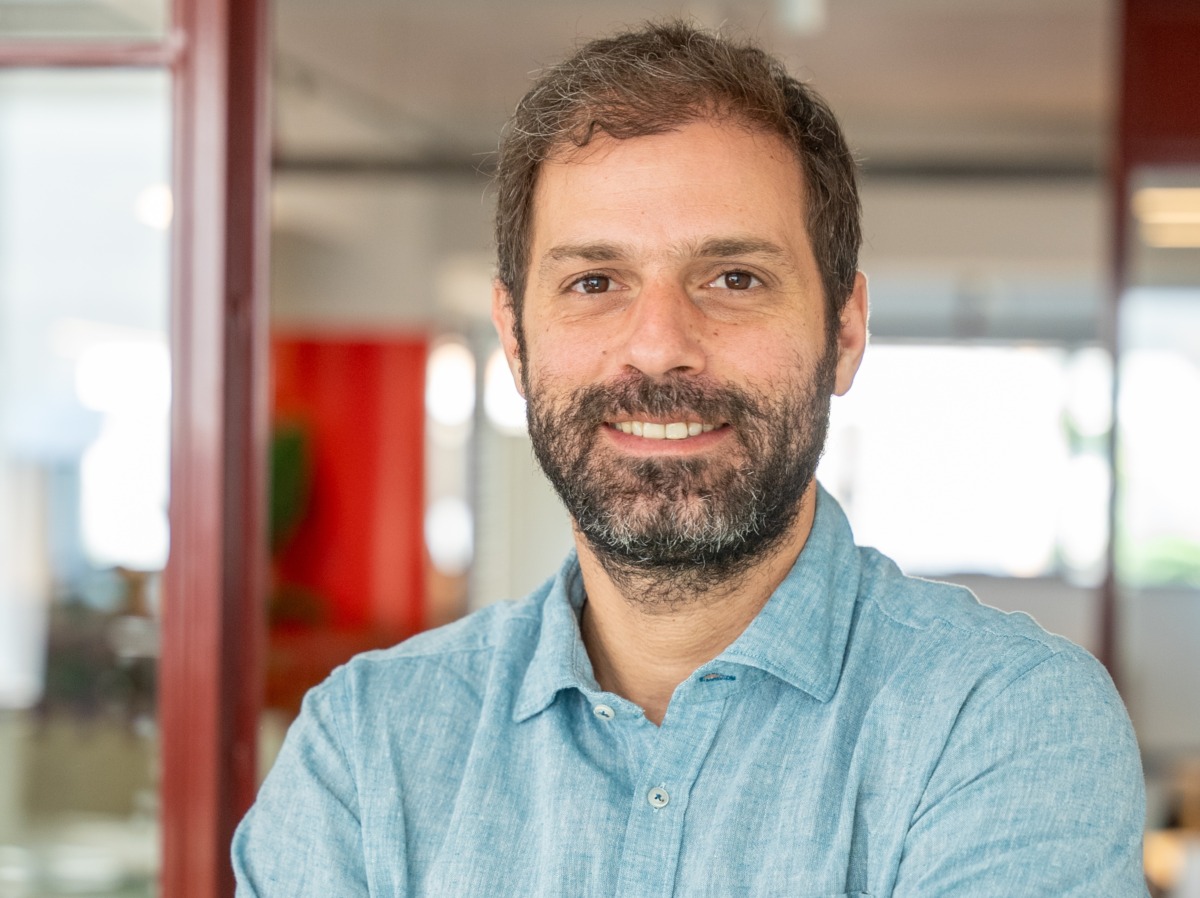
Christos Spatharakis, CEO of Ferryhopper: “We turned being trapped on an island into a business”

If you’re looking for flights, you probably use an aggregator that finds routes operated by different airlines. But, until relatively recently, there was no such service for ferries.
After the company founders were stranded on a Greek island, Ferryhopper was born, and it now covers more than 250 ferry operators in 60 countries. Here, CEO Christos Spatharakis tells us how the company marries together all those disparate ferry operators, how AI is transforming the business and the challenges of dealing with shrinking organic search traffic.
How did Ferryhopper get going?
The ferry industry has several structural characteristics that are not very common in other industries. One of them is that there is no global technological infrastructure or reference point.
As a result, there are several parts that used to be, and still are sometimes, unexploited. One of of which was the the non-direct connection between one island and another.
So we were on a [Greek] island and one of the founders was trying to go to another island, but there was no direct connection, so we were trying to to find all the alternative ways. It was 17 pages of itineraries from the first destination, and then some more to the second destination. We thought, come on, it cannot be that difficult to find the corresponding connection between two adjacent islands.
So we started working on the idea and we launched Ferryhopper in 2017. Initially, we thought that this is a Greek problem. Eventually, we understood that it’s an international problem, so we started working on the idea of expanding outside Greece. We started the expansion in 2020. Currently we operate in 60 countries – our focus is the Mediterranean, but we are very keen to to pursue this global opportunity and to continue expanding in other regions outside Europe.
It sounds like you’ve had to do a lot of work to integrate the ferry operators’ systems…
There are operators that are more advanced, there are operators that are a bit more technologically left behind, but I would say that the main problem is not the ferry operators themselves. The problem is that the ferry market has different local ecosystems that do not necessarily communicate with each other.
In the airline industry, because you are flying from Japan to US and from US to Greece, then Japan and Greece are also connected as as a standard because all the connections are happening between each other, so there is a common technology stack, a common infrastructure.
In the ferry industry, these local ecosystems do not communicate because there is no connection between, say, Ireland and Greece, and as a result, there are different technology systems, different types of accommodations, different operational habits that link into the market standards or dynamics, but can be very, very different between one region and the other.
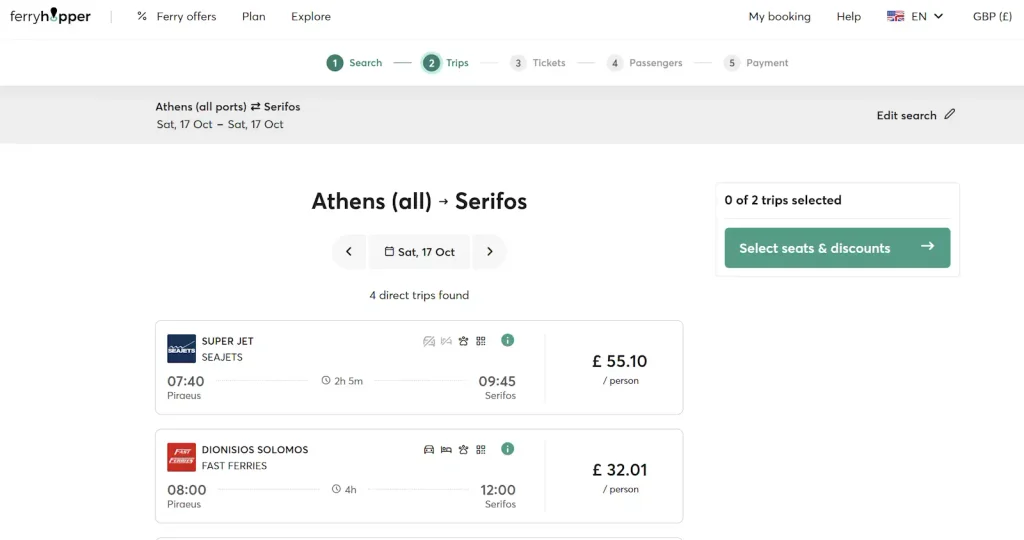
So, a lot of work was done internally by us to standardise all these different types into one uniform infrastructure and one uniform user experience. The main challenge here is to tackle the complexities without passing on this complexity to the customer during their booking flow, or even more during the post-booking and travelling experience.
Explain what your software is doing for us.
We have different ways that we connect to ferry operators. The standard one is that we directly link to their API, and then we have pre-booking and post-booking functionalities that we communicate through with the ferry operators’ ticketing system.
In some cases, there are regional distribution systems that somehow conglomerate different operators together, and then we will communicate through this distribution system. We have also developed tools and functionalities that allow us to connect to ferry operators that either don’t have an online system or they do not have an API. AI tools parse their data and we are able to get the information and the itineraries, and then work with them on the availability side.
There are more than 250 operators that we work with. We want to display real-time availability to the customers and we want to be able, as much as possible, to automate for the customer processes that are post-booking actions.
Can you explain more about how the AI works with those operators that don’t have an API?
If there is no system, no website, then by default we will need a manual curation of RPA [robotic process automation] systems or AI agents that fetch the information from documents and display the information on our website. So what we’re trying to make sure is that we are not displaying mistaken information.
Generally, we deploy such methods in markets that don’t have very high traffic, and maybe in some cases we could build an API connection later on if we see that there is value. So it’s more for smaller or experimental markets that we deploy such methods, but it allows us to to grow fast and understand where there is customer need, where is this business opportunity.
How else are you using AI in Ferryhopper?
We use AI in order to improve the way we communicate with customers, and we want to be using more and more AI on how we serve customers. I think that nobody actually knows how the AI scene will settle because we are in a very fast evolving phase of this technological evolution and, as a result, we are experimenting as much as we can.
We work a lot with Copilot and coding tools. We are trying to automate manual and repetitive processes. Internally, we have seen a very, very strong benefit and an acceleration of the way we work in several aspects, in several teams.
On the customer acquisition side, using LLM search engines and geo, I think that is a super-fast evolving environment. We are again experimenting a lot with what what geo means, what LLM search engines find useful. I think that we are seeing a growing line of customers coming through these engines, but usually these requests are more top-of-funnel services. So the the lower the funnel search relevance, the more we see still conventional search prevailing.
Are you seeing a drop off in search traffic because of AI?
Organic search traffic from Google has by default reduced globally, and the reason is that the real estate of organic links and organic placements has been pushed down and reduced in size.
I think it’s a transformation period between LLM search engines and the traditional search engines. This, for sure, has affected the price of customer acquisition and we see this happening across across the whole market: direct ferry operators, competitors, other verticals.
We have diversified successfully out of the strong dependence on organic, and we also work a lot with direct traffic and mobile app users. So we have a significant number of customers that know our brand, use our mobile app, come directly to our website, and as a result the effect that we have there is not so challenging. But we also experience it and I think it’s a very big concern across the online platforms and companies.
Finally, what’s next for the business?
We’re very happy because we are actively expanding towards Northern Europe. We are launching in the UK market, and we are very happy that in 2027 it will be a focus market for us. Also the Baltic countries.
We are working a lot on AI features and the technology towards the customer. So we want to continue working on providing a seamless experience, and we see that there is a lot of automations that are still due.
I’m very excited to have my team and everyone in Ferryhopper on this journey.
More from Barry Collins
About The Author

Barry Collins
NEXT UP