Trending Topics

 Trending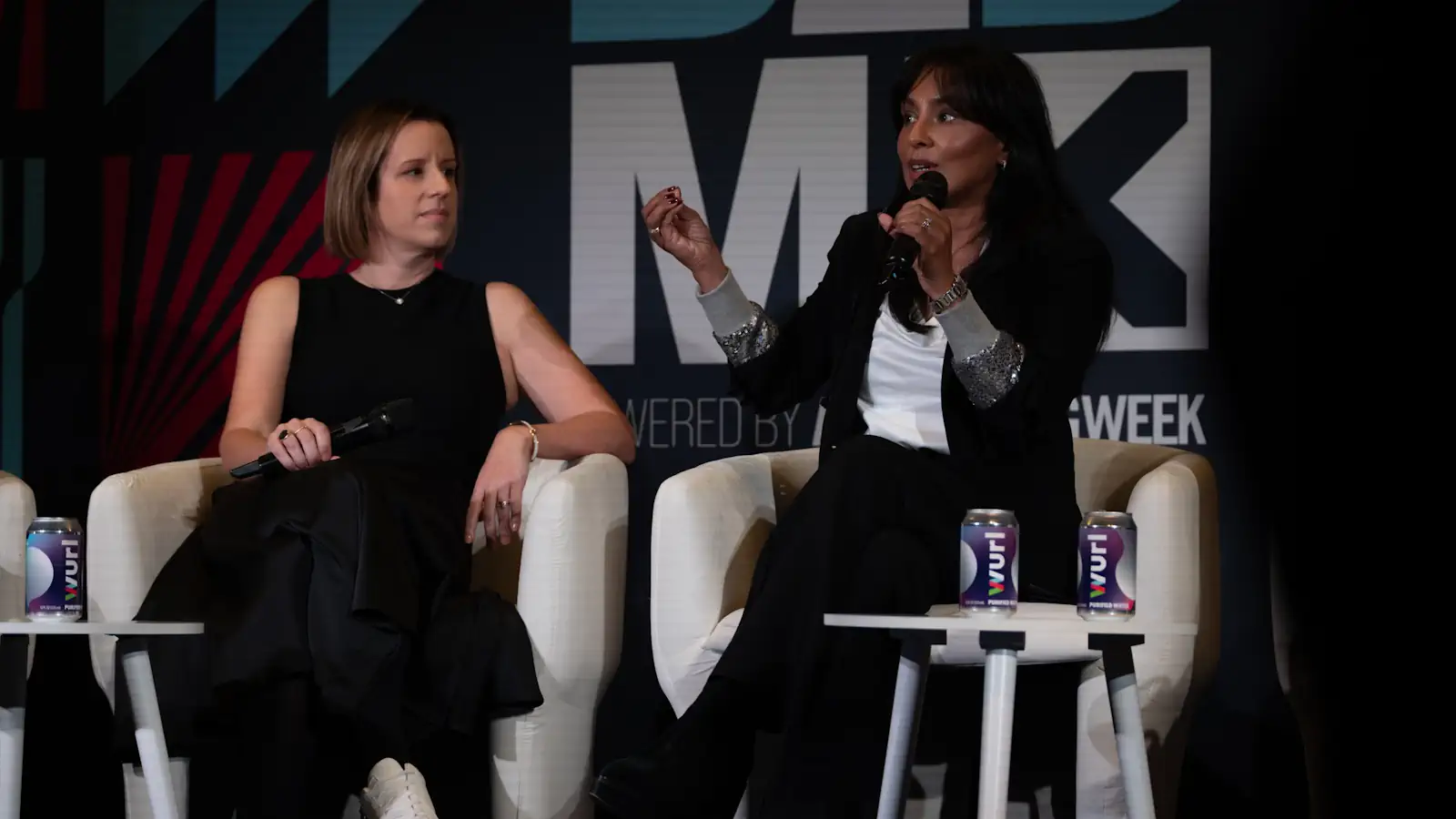
Authority in the AI age: How to boost your brand in LLMs (and the things you shouldn’t even try)

Brands can no longer just claim authority – they must build it across the AI ecosystem. Here’s what top marketing leaders say works, what doesn’t, and how to build your authority in LLMs
How do you control your brand’s reputation in the age of AI? That was the key question at a panel during Advertising Week New York 2026, and it wasn’t mere “talk”. By the end, attendees were given clear steps they could take to better understand their brand reputation and ways to improve it. Steps we share throughout this article.
Sue Pulendran, Vice President of Demand Marketing at NetApp, set the tone. “Your brand is what someone says about you when you exit a room,” she said. “AI is the room.”
For example, how well is your brand surfaced in AI recommendations?
“AI is not going to reward a brand because we say we’re the biggest or the best. It’s just not going to do that. We have to earn it,” she said. “We’ve been doing quite a bit of work at NetApp, diving into how we build that authority. How does AI build that authority?”
How AI builds a brand’s authority
This boils down to three Cs: corroboration, consistency and claims.
“So number one is corroboration,” said Pulendran. “Everyone needs to be saying the same things about the brand. The whole ecosystem, meaning our partners, analysts, publishers, the media.”
The second thing is consistency. “You can’t have the ecosystem saying things once. They need to say it over and over and over again for AI to read it and pick it up… AI is looking for a constant drumbeat of meaningful moments, and that’s when this continuity and consistency gets picked up. So it starts building authority.”
When it comes to the third C, Pulendran said that brands can’t simply “make bold, big claims. You need to be specific with proof points, stories, outcomes, business impact.”
Measuring impact of campaigns
As R-ai Founder and CEO Izzie Rivers explained, this isn’t a new problem. “Every time you ever go into a board meeting, somebody says, ‘Yeah, we spent money on a brand, but how’s that affecting our pipeline?”
What has changed is that even more of the customer journey has become invisible. “Now that we have people searching on LLMs before they do anything else, more of it’s dark. So you just have a more compounded problem with the board where you’re trying to prove the efficacy of the programmes that you have in market.”
Those programmes do work, Rivers added, but you need a way to measure the impact. “I’m a paid media person. That’s what we do every minute. We activate large campaigns. So we have a tremendous amount of data. We’re in a lucky place. We at least have numbers and metrics that we can use to prove impact.
“But we have to get better, and we are getting better, at hooking that into the pipeline and looking at what the optimisations are from, and joining up that full journey. And then you have to make the right inference and do testing and get those patterns back in.”
How using media can help

Chris Cannon, Co-Founder of TechFinitive, said brands understand that it’s more important than ever to be consistently featured. “Even in the last six months, we’ve got probably ten times more comms and PR agencies reaching out to us to get specific individuals and subject matter experts from their business featured in our interviews, opinion pieces and series.”
There are parallels with SEO authority, Cannon said, but now publishers must consider that readers are as likely to be robots as humans.
“We’re performing AI audits for clients in categories like business laptops. A lot of them were measuring visibility themselves, but not the preference of actually getting into the buying groups.”
For example, the TechFinitive audits found that while all the major business laptop manufacturers appeared in AI queries around business laptops, two of the biggest names “just dropped off completely out of the consideration” when battery life was added as a factor.
“One of the biggest challenges that brands are facing at the moment is how do you work with these trusted third parties or review sites or customer sites in a way that actually provides the increase in rankings, especially knowing that everybody else is trying to do the same thing?” said Rivers.
Moving the discussion to the boardroom
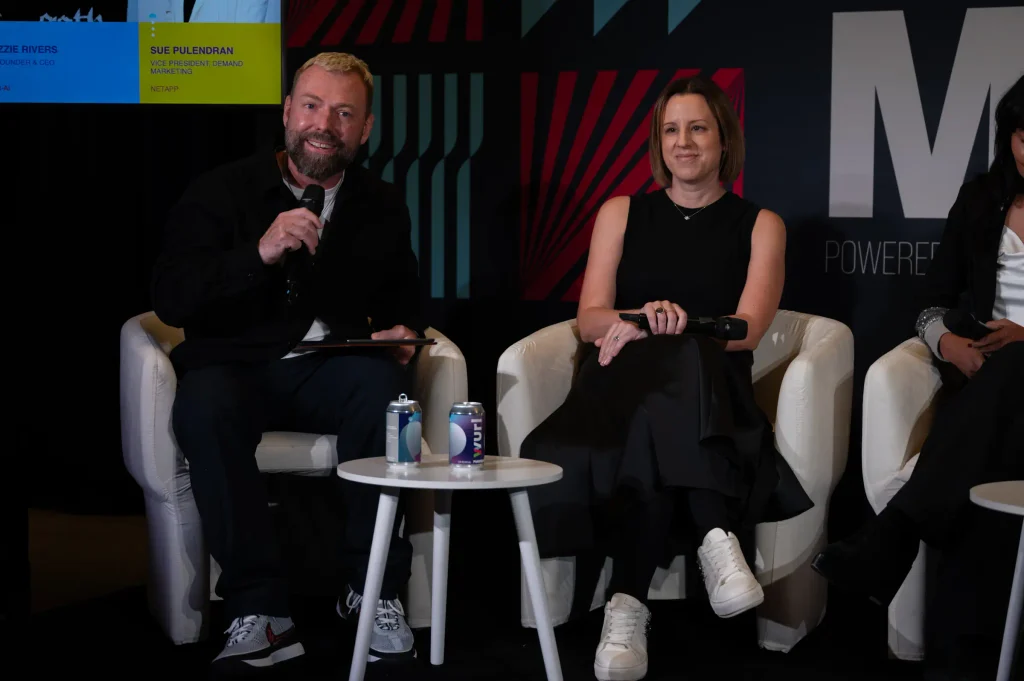
The final phase of the panel moved into the boardroom, with the panel’s host – Red Kite MD Jonathan Kitchen – setting out this scenario. “We’re sat in the boardroom. The general conversation is around the fact traffic’s down, top of the funnel is increasing, invisible investment needs to be justified. So, how do we do that?”
NetApp’s Pulendran said there was no need to theorise: this was a conversation happening every day.
“A lot of companies struggle with brand and demand, it’s like a seesaw,” she said. “At one point there’s the big brand conversation. At another point there’s a pointed demand conversation. I lead brand and demand at NetApp, and we view it as one end-to-end motion. You can’t have one without the other, they need to be in sync and in harmony.”
To take it to an extreme, your pipeline is going to be empty if no-one is aware of your brand.
“If they’re not aware of who NetApp is, we’re not being considered,” she said. “Are we even showing up in the LLM? So increasingly, that data and richness and insight is being shared with the board as a story.”
And by educating the board, giving them insights into this otherwise invisible world, the “conversation with the board starts much earlier with ‘Are we showing up? Why aren’t we showing up the way we want to?”
Final takeaway: What decision do CMOs need to make today?
For TechFinitive’s Chris Cannon, the key was alignment: for the different business functions to pull together in the same direction. “We had a client who used sales call data to identify common customer objections and concerns, and turned these into prompts to monitor how LLMs addressed them. This revealed gaps in AI-generated answers and opportunities to create targeted content that directly addressed those concerns. It’s a great example of using real sales insights to inform content strategy and improve brand visibility in LLMs.”
Sue Pulendran suggested a CMO consider “the three specific things we want to be known for, and how do we build around those?” It’s an approach that NetApp is already taking itself, she said. Building on Cannon’s point, she added that “we’re aligning internally on those three points across brand demand, analyst relations and public relations, social events. Every function is driving with those three messages.”
As a consequence, NetApp has identified the messages it’s no longer going to drive and halted campaigns that don’t serve it anymore. “Everything needs to rally around this, knowing that AI is recognising us for being unmistakably about three things, not surrounding everything.”
Izzie Rivers finished the session with some brutal home truths. “LLMs don’t care what you think your competitor set is. You think that you’re competing against a group of particular people. Put those in. See how you rank against some of the LLMs for sure. But I guarantee you, it will be a whole bunch of other people that you probably didn’t think of.
“And if you’re in the world of AI and trying to push your own AI products, by God, you should be partnering with the biggies and the hyperscalers in some informative way because you will not beat AWS, Google or OpenAI in any references.”
Other highlights from Advertising Week New York 2026
About The Author

Tim Danton
NEXT UP