Trending Topics

 Trending
Enterprise AI’s trust deficit

With all the hype around enterprise AI, you might expect most businesses to be reaping substantial benefits. Not quite. McKinsey’s latest survey points to a gap between widespread AI use and reported enterprise-level financial impact. Data readiness is one issue businesses need to examine: a dataset can look clean but still be unsuitable for the decision they want to automate.
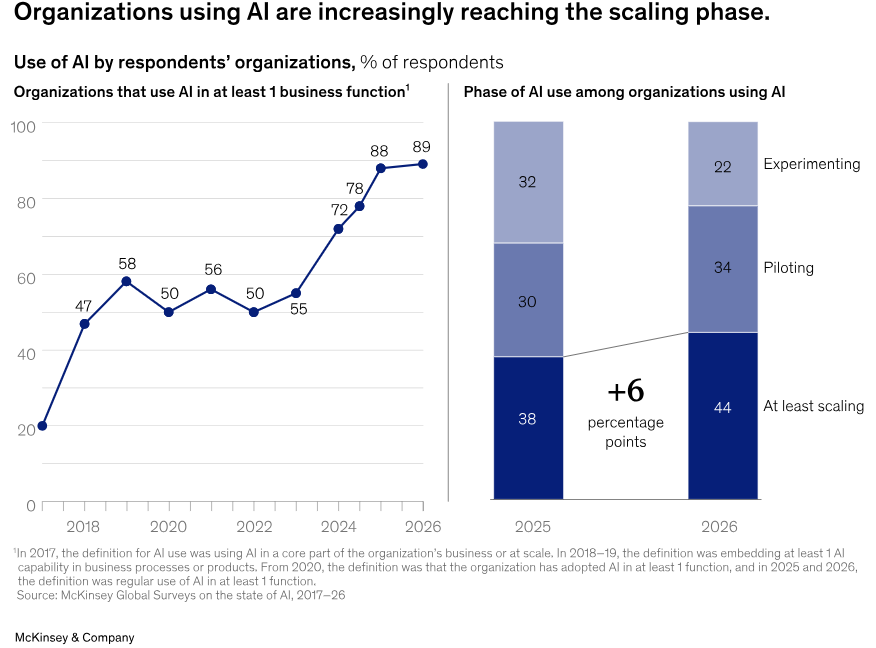
McKinsey’s 2026 survey found that while 44% of respondents report scaling AI across their enterprise, only about 6% meet its high-performer criteria, which include attributing at least 5% of earnings before interest and tax to AI. Those figures show a gap between adoption and impact. The problem includes unreliable data, skills, costs, and workflow design.
Let’s delve a bit into the data problem that predates today’s agents.
Our healthcare data analysis described siloed records in 2024. More recently, Quantexa’s Dan Onions explained how decades of inconsistent records undermine trust. Last month, I wrote about how AI-ready ERP analysis showed how outdated assumptions become confident operational advice.
What enterprise AI must prove
Precisely’s 6 October announcements offer a useful view of how vendors intend to tackle this debt. Its proposed platform brings integration, quality and governance onto shared metadata and business definitions. The aim is to manage data across SAP, mainframes and clouds while keeping it where it lives.
Crucially, the platform is in preview.
General availability is planned for early 2027. AI Studio, available now, supplies reusable agents, apps, skills and prompts. New servers using the Model Context Protocol let compatible assistants call existing Precisely capabilities, including record cleansing and SAP workflows. Access depends on selected subscriptions, while Syncsort support will follow in the coming months.
Together, these tools could make AI easier to build and connect across systems. The harder question is whether the data they use is reliable enough for the decisions businesses want those systems to make.
IDC’s Stewart Bond, quoted in the announcement, points to “fragmented data environments, inconsistent governance, and limited visibility”. Bringing those functions together could help, though buyers still need to establish how the platform’s scoring translates into evidence for their particular business decisions before committing to deployment.
Making data trust work in practice
Precisely’s proposed quality and governance scores could give businesses a clearer way to assess whether their data is fit for an AI task. Their value lies in connecting that assessment to the records, definitions, and rules behind it.
Take a customer record, for instance.
A verified address helps with delivery, while a marketing workflow may also depend on consent and account status. Bringing quality checks and governance into the same foundation could make those different requirements easier to manage.
For buyers, the practical next step is to trace one real workflow through that foundation, from the original record to the agent’s action. This shows where checks happen, how exceptions are handled, and whether a shared business rule is applied consistently across systems.
That is the opportunity in Precisely’s approach: making trust an ongoing part of operations as data changes and AI moves into more consequential workflows. Businesses would gain a clearer basis for deciding where automation belongs across their organisation.
Building that foundation would help enterprise AI move from experiments to dependable operations.
About The Author

Kihara Kimachia
NEXT UP