Trending Topics

 Trending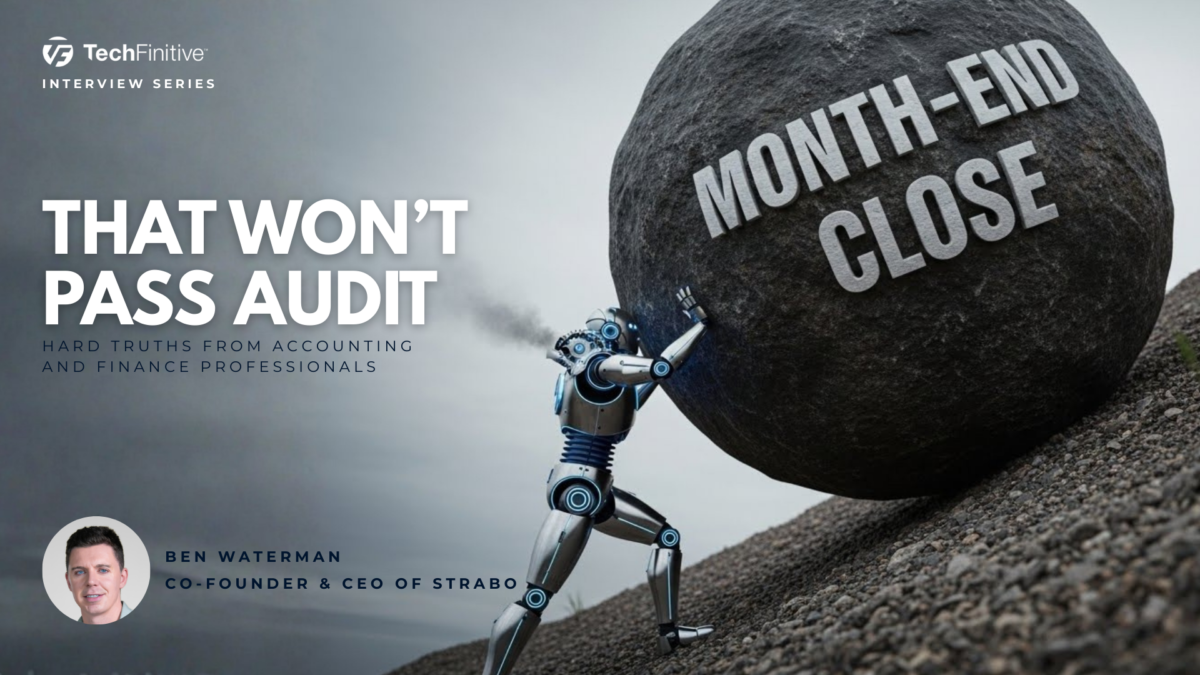
Ben Waterman, Co-Founder and CEO of Strabo: “Data and analytics are being used to support key operational and commercial decisions in a way never seen before”

We suspect that Ben Waterman is the only person we will interview in our finance series, That Won’t Pass Audit, who has run 800m in under two minutes. To be precise, 1:50.31, according to the World Athletics site. He’s almost certainly the only former professional athlete we’ll ever speak to who switched from the track to co-found a wealth management company.
That company is Strabo, a UK-based wealth management platform for consumers and financial advisers. From one dashboard, it allows you to track bank accounts, investment accounts, crypto, pensions, real estate and more – even your wine collection. Ben describes it as a technology-first company, so it’s no surprise that Strabo is embracing tech to help it work more efficiently.
“Forget bookkeeping for a second,” said Ben when we asked bout how Strabo is using data and analytics. “[We’ve] moved from static, periodic reports to more dynamic analysis – scenario models both internal and external are updated in real-time and rolling forecasts are becoming the norm.”
The company has also invested in AI-augmented tools. “Many of these technology investments have second order effects which we are still discovering,” said Ben. “Improved processes, even marginally, mean better data, which supports better decision making and then stronger outcomes and more fruitful relationships with the rest of the business. These things compound!”
As did our interest throughout this interview – which is well worth you investing five minutes of your time to read.
How has the role of the finance function changed in the last three to five years, and what do you think most organisations still underestimate about that shift?
The last three to five years, and those leading up to it, have marked an era of not just economic growth but also unprecedented volatility, data availability and technological progress, even notwithstanding the leaps in AI capabilities. The impact of this on all business functions has been significant; finance, once sclerotic and slow moving, is now growing from a backward-looking compliance-driven operation to a decision-support function in its own right.
So what does this mean? Well, in practice it is now expected to provide insights, scenario analysis and commercial guidance in real-time rather than simply closing the books accurately and on time.
I think what many organisations underestimate is how dramatic that shift actually is. There is a common misconception that progress in this field means more dashboards or faster reporting cycles, but this isn’t the case at all. Most finance functions are built around period-end processes and yet what the business expects, and requires, is real-time continuous insight. The challenge is that this needs to be met with cultural changes and improvements in behaviour – translating data into decisions remains a human skill.
Hopefully what this precipitates is a closer relationship between finance and the rest of the business.
How are you currently using data and analytics to support decision-making beyond compliance and reporting?
Forget bookkeeping for a second – data and analytics are being used to support key operational and commercial decisions in a way never seen before. If finance teams have much more comprehensive access to data and analytics, they are able to analyse customer behaviour, pricing, cost drivers and working capital which means that they can inform decisions well outside their remit.
In our case, we’ve moved from static, periodic reports to more dynamic analysis – scenario models both internal and external are updated in real-time and rolling forecasts are becoming the norm. If finance data is immediately relayed to sales and ops, we can course-correct much earlier. Instead of explaining what happened last month, we’re focusing on why it happened and what is likely to happen next.
What impact has AI had on your finance or accounting workflows so far and where do you see the most realistic near-term value?
I hope that this dynamic forecasting we’ve just been talking about is the future – what AI is particularly good at is pattern recognition at scale. Up until now, the main use case of AI has been for practical tasks – in the finance department, this is things like invoice processing, transaction matching, anomaly detection and reconciliation. Essentially replacing manual efforts to free up resources for higher value work.
This, as with most companies, is exactly what we’ve been doing – most capable accounting software platforms can do this for you without too much effort. They might identify unusual transactions or flag potential errors earlier, or remove duplicates.
As the technology improves, I hope that we move gradually towards some scenario where for example, AI would be able to highlight emerging trends in large datasets instantly, and then use these to explore different business cases immediately, and without human intervention. The better this gets, the more likely it will be able to be done with limited data. Doing less with more.
What skills do modern accountants and finance professionals need today that weren’t essential five or ten years ago?
The truth is that the role has changed. The technical aspect of the function remains important but is no longer sufficient. Accountants and finance professionals have needed to get up to speed with modern technology but the extra time and energy this has afforded them now need to be redirected into extracting analytical insights as we discussed earlier, and then communicating these to the rest of the business.
While this has always been a bonus, it’s now vital. Finance professionals are expected to explain complex financial concepts to non-financial stakeholders and as we discussed, influence key business decisions. For this to become the norm, they need to be comfortable with being part of the decision making process rather than just presenting numbers.
To be honest I think this is a very good thing – it’s a chance for finance departments to shrug off accusations of being stuffy and overbearing and engage more closely with the rest of the business.
How is finance collaborating with other parts of the business – such as IT, operations and marketing – and where does friction still exist?
This is a gap that’s shrinking, both in our business and indeed in many technology-first businesses. We’ve talked a little about how the finance function is more embedded in decision making and strategy. It’s probably much closer to IT and operations, where sharing of both source data and infrastructure mean that other functions can take advantage of data that would have previously lived with the finance team alone.
It’s pretty straightforward to see where this crossover can happen, but what is interesting to me is where the friction still lies. There are two core areas that stand out.
Firstly, the behavioural shift to accommodate the above: other functions might view finance as overly cautious or slow, while finance could see teams as optimistic or not sufficiently data driven. As this gap shrinks, perceptions will be a lagging indicator. It will require a shift in mindset to correct this.
Secondly, data ownership. As finance data becomes more relevant to the rest of the business, this cross-pollination of data will spawn questions around who owns which data, which are the “official” numbers and how insights should be interpreted. Finance teams that invest in the softer aspects of this collaboration will see more success.
What’s one finance or accounting technology investment that delivered unexpected value, and why?
I will endeavour to avoid naming a specific tool, but I will say that the unexpected value often comes not from the most advanced tools, but rather those that improve visibility and consistency. We started using an AI-augmented accounting tool that not only did automatic reconciliation but actually looked into the crossover between software tools we were using and plans we were on, which meant that we could cut spend and merge some line items without losing any functionality.
The other point to note here is that many of these technology investments have second order effects which we are still discovering. Improved processes, even marginally, mean better data, which supports better decision making and then stronger outcomes and more fruitful relationships with the rest of the business. These things compound!
The challenge is that they can often be difficult to quantify upfront, but they very often pay for themselves many times over. I look forward to sharing many such successes in future.
More interviews
- Chris Petzoldt, Founder and Partner at Pretian Squared: “Knowledge is power and data the new moats”
- Sean Nappo, Executive Vice President, Americas, at Aptean: “Looking ahead five to ten years, an ERP will no longer be a back‑office system”
- IBM Apptio explained: why Fortune 500 companies love this product, according to a VP who’s been working there for more than six years
- Ben Cicchetti, SVP, Marketing and Communications at InfoSum: “Personalisation starts and ends with data”
- Claire Carter, Director of Access ERP at The Access Group: “Any improvements we make internally have a direct impact on our customer experience”
About The Author

Tim Danton
NEXT UP


