Trending Topics

 Trending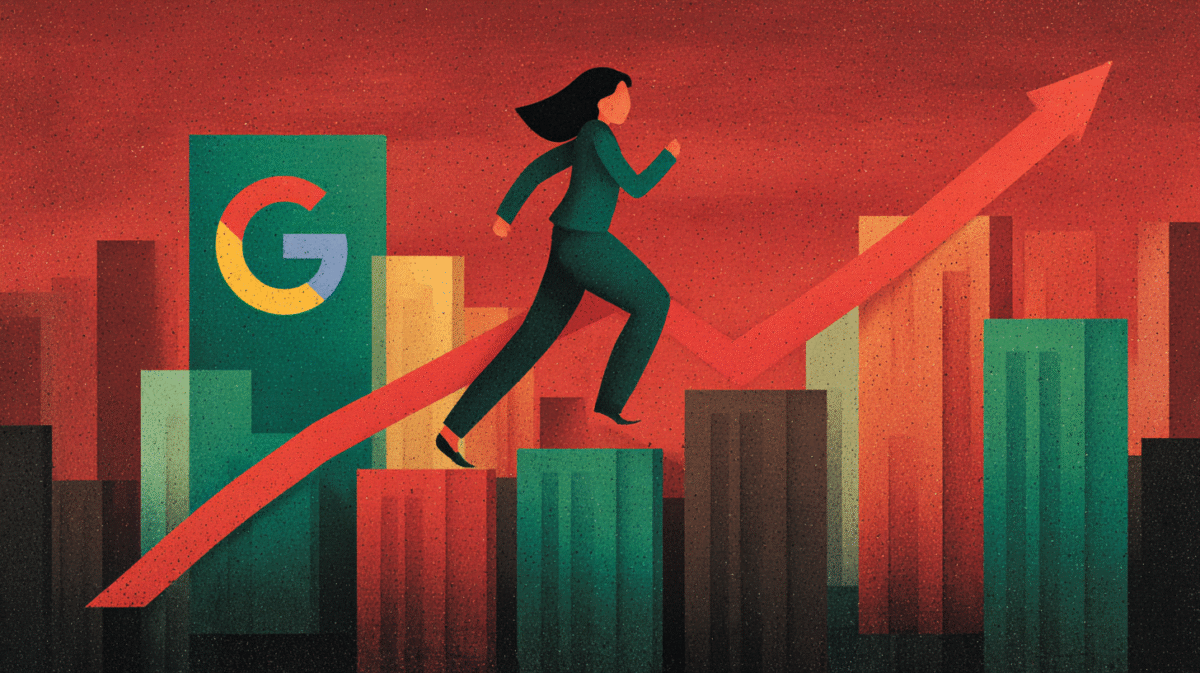
How Google quietly became the AI king

Google’s unexpected rise to the peak of the AI industry sent Nvidia’s share price tumbling this week.
It’s all a long way from the much-mocked Bard, Google’s rushed response to the emergence of ChatGPT, which was so error-strewn that many wondered if there was an extra R in the product’s name.
Now, with a fleet of excellent AI tools, a Nobel-prize winning Brit leading its AI push, and its own hardware to power all of this, Google’s looking in great shape. Here’s how it quietly ascended to the top of the AI pile.
Google’s AI history
It would be deeply misleading to suggest that all of Google’s progress in AI has been achieved from a standing start when ChatGPT launched in 2022. Google has ploughed serious investment into AI for over a decade.
Indeed, the 2014 acquisition of the British company DeepMind could be regarded as a turning point for Google’s AI ambitions. It was the neural Turing machines developed by DeepMind that led to AI breakthroughs such as AlphaGo, the software that taught itself how to play the board game Go and eventually beat the world champion over a five-game match. (The AlphaGo documentary brilliantly captures how this was achieved.)
DeepMind’s technology has been fed into core Google products, such as search and cloud computing, helping to cut data centre cooling costs, for example. DeepMind has also created products that are serving different branches of industry, such as the recently announced WeatherNext 2 model that’s using AI to improve the accuracy and range of weather forecasts.
Demis Hassabis, the DeepMind founder who now heads Google’s AI development, won the Nobel Prize in Chemistry in 2024 for his work on AlphaFold2. This can reliably predict the 3D structure of proteins, a world first, which is accelerating research into drug discovery and antibiotic resistance.
Gemini and beyond
Despite Google’s long history in serious AI projects, there’s no doubt it was caught cold by the launch of ChatGPT in 2022. The rushed Bard was little short of an embarrassment when it arrived in early 2023, making factual blunders in the promotional video that Google put out for its launch and feeling like a knock-off ChatGPT.
It was swiftly rebranded to Gemini, but still struggled to shake off a reputation for terrible errors, such as when the company had to temporarily withdraw image generation because it was creating images of black Founding Fathers and Nazi soldiers with dark skin.
Steadily, however, Gemini has improved beyond recognition. Last week’s launch of the Gemini 3 model was seen as a significant leap in the AI’s ability, with Gemini 3 Pro now holding a clear lead at the top of the Humanity’s Last Exam benchmark, for example, significantly ahead of OpenAI’s GPT-5 Pro.
Google’s range of AI tools is also expanding. Last week it unveiled its Antigravity IDE, an AI-driven rival to Microsoft’s Visual Code Studio, which shows off Gemini’s excellent coding skills and ability to generate apps with clean, attractive user interfaces.
Notebook LM, Google’s AI-powered research tool, is another gem, able to combine information from a range of sources and present it in a variety of ways, including audio podcasts, PowerPoint-like slide decks or mind maps.
Eating its own AI dogfood
Google has also been injecting AI into its core products. Opinions are mixed on whether AI summaries at the top of search results are a good thing or not, but features such as AI summaries of long email chains in Gmail or the ability to ask questions about long documents stored in Google Docs are definitely wins.
Meanwhile, that once-mocked Gemini image generation is now being embedded into industry-leading third-party software, such as Adobe Photoshop.
Even better, Google gets to run many of these AI processes on its own hardware, known as Tensor Processing Units (or TPUs), specialised processors designed to run neural-network maths. This means it isn’t as reliant on Nvidia as many of its rivals.
Perhaps not surprising, then, that Nvidia’s runaway share price has taken a little wobble.
Related Google news
About The Author