Trending Topics

 Trending
The hidden dangers of QR codes – and how Unitag keeps you safe


QR codes are a brilliant way to share links and information. They’re contactless, universally understood and completely static – so once you’ve created and tested your code, there’s literally nothing that can go wrong, right?
As in any area of business, however, there are risks you need to be aware of. The first thing to think about is trust and brand safety: while there are dozens of free QR-code generators out there, different engines can produce slightly different designs and layouts. If your codes don’t look consistent, that erodes confidence – an important point we’ll come back to later.
Conversely, if your codes always appear in the same style and with the same dimensions, that reassures visitors and gives an instant uplift to your image – putting your communications on an equal footing with Fortune 500 companies and global marketing campaigns.
When you work with a dedicated QR-code partner such as Unitag, you can be confident that all of your QR media will be produced to a high, consistent standard, using business-grade tools. That means you can present a unified image not only across multiple campaigns and media, but across multiple departments and teams, to ensure your brand conveys a professional impression.
Where are your visitors ending up?
Once a QR code has been created, its destination can’t be changed – it’s indelibly baked into the specific pattern of that code. So if a visitor scans an outdated QR code, they may unwittingly be accessing inaccurate, obsolete content – or they could land on an error page. Either way, it’s bad news for your business and your image.
Worse, if an attacker gets control of the site that the QR code links to, they could serve up malicious content. “Code security is exactly the same as internet security,” explains Jean-Charles Passepont, CEO of QR specialist Unitag. “A link can lead you to anything. It could be a porn website, it could be something that will hack your bank account – or whatever.”
What’s more, you might not even realise it’s happening.
You can protect your reputation by working with a professional QR partner. Specialists like Unitag create codes that link to their own secure servers, and let you redirect visitors to wherever you like. Content can be easily updated at any time: “You might have a code that comes out with a certain product, which links to a promotion page that would evolve five months down the line to another page,” explains Marko Pavuna, chief marketing officer at Unitag.
Keeping these servers functional and protected is the core of Unitag’s business – so once you’ve shared a Unitag QR code you can be confident that it will continue to work, and continue to link to your desired destination, for as long as you need.
Best practice to avoid dangerous QR codes
As well as generating reliable, high-quality codes, a good QR partner can help you share and publish your codes in ways that inspire confidence. Unitag gives practical advice such as including the destination URL in the design of the QR code, and providing a description of what visitors can expect to see when they scan the code. Along with providing consistent QR imagery, this is an important step in building and maintaining trust. “Always tell the user what to expect when they are scanning,” advises Passepont. “That is very important.”
Unitag keeps up with the latest QR-related scams too, and can give advice on how to defeat them. “A person can print their own QR code on a transparent sheet and put it on top of a QR code you’ve printed,” warns Passepont. “The user won’t notice anything, but when they scan it they won’t be going to your destination.” Unitag’s recommendations include using a digital display rather than a physical print, and periodically shifting the location of the QR code, to expose QR phishing (“quishing”) attempts.
No matter what your situation, there are experts on hand to help you provide a safe, worry-free experience for your QR visitors.
QR code analytics and alerts
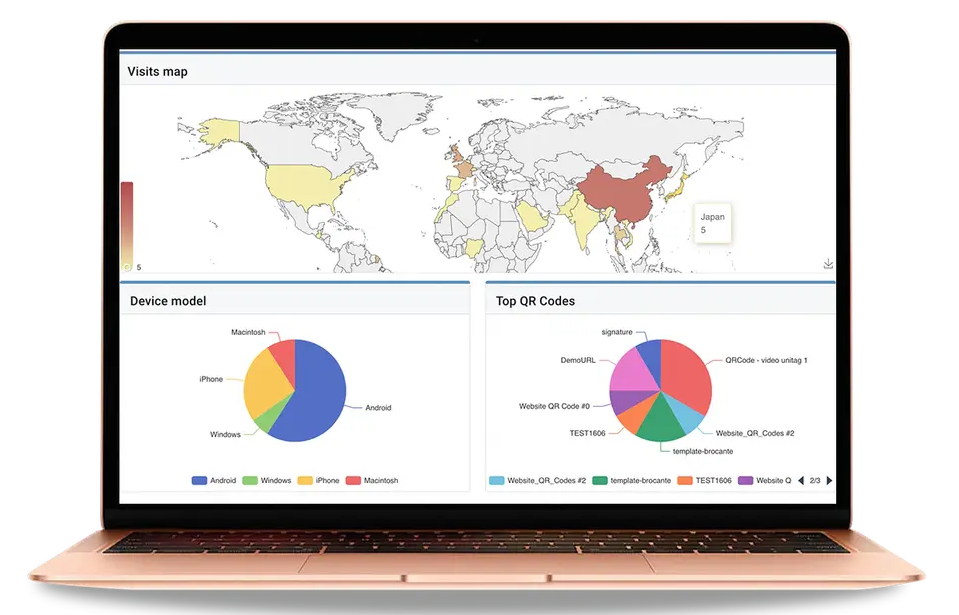
There’s one final way in which specialist QR services help to protect your brand and your customers. As well as ensuring your codes will always work, a hosted redirection service allows you to access detailed analytics, to track who’s scanning which codes when, and even to capture information about the devices they’re using to do it.
As part of this service, Unitag lets you set up proactive alerts. These can automatically notify you if the traffic from a particular suddenly rockets upwards – or if it abruptly drops to zero. If that happens, it’s a good indication that your QR code has been covered up, torn down or otherwise taken “offline”.
That’s your opportunity to immediately check the site of the code, and replace it if it’s missing or defaced. By acting quickly you can keep downtime to a minimum, and remove fake codes before they can do serious harm to your customers and your business.
It’s your best defence against mishaps and scammers – but without a professional partner actively monitoring your QR traffic, you might never get that warning.
Related articles
About The Author

Darien Graham-Smith
NEXT UP