Trending Topics

 Trending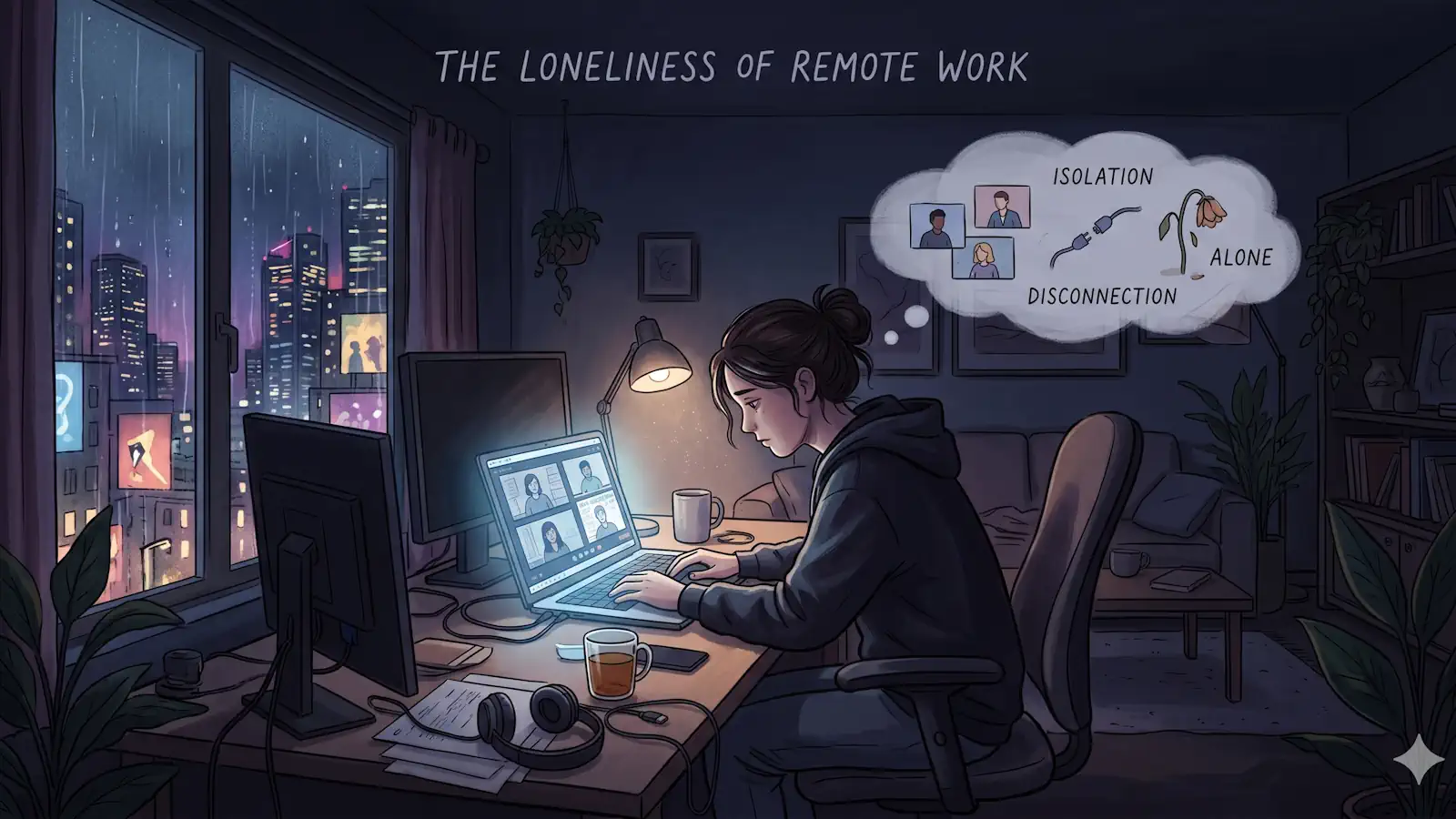
Remote work is bad for us – but that’s because we’re doing it wrong

Working from home might not be good for us – but that’s because we’re doing it wrong.
Research published in Science suggests that remote working leads to more time spent alone, and in turn that’s leading to mental health concerns.
The researchers – Natalia Emanuel from the research department at the Federal Bank of New York, Emma Harrington from the University of Virginia, and Amanda Pallais from Harvard University – found that workers in remote jobs spent a whole extra hour alone per workday after the pandemic, with “no idle chitchat with a barista, no hello from a coworker, no smile from a passerby at the grocery store”. Naturally, they also lost out on after-work socialising.
That led to an increase in a specific mental distress score, with the results doubly bad for those living alone versus those with family. “Alternative measures of mental distress – such as the frequency of depression, mental health care utilisation, and antidepressant prescriptions – show similar trends,” the paper added.
Why do we want to work from home so much?
That may come as a surprise given so many surveys suggest we’re still pretty keen on working from home – and no wonder, given we get to ditch the costs and the commute in favour of flexibility. You know, dropping children off at school, keeping atop laundry piles, and being there to accept deliveries.
“Although a large body of research finds that workers want to work remotely, our findings suggest that workers may not realize the costs of remote work for their well-being, which may take time to accumulate,” the researchers found. “Understanding remote work’s impact on mental health is important for workers deciding where to work and for firms and governments setting remote-work policies.”
The results are less pronounced for hybrid work, but those working some of the time in the office are still seeing less human contact. This comes with negative impacts on their mental health for the days they’re working from home, the research noted.
Is remote work really that bad?
None of this means we should roll back remote work to the pre Covid era. Instead, it highlights how dominant work has become in our lives: without it, we lack basic human connection.
Indeed, working from home shouldn’t mean you’re glued to your desk – be it a real desk, the sofa or kitchen table – all day without reprieve. Instead, the time you would have spent commuting could be used at the local cafe to get a flat white or at the shop stocking up on fresh food for your lunch. Your meetings could be held on the phone while out for a walk. Lunch could be spent with a friend or neighbour, or even at the gym. Because you haven’t wasted time and energy commuting, your evenings are yours to spend time socialising with whomever you choose. And so on.
The researchers point to concerns around the loneliness epidemic, saying that adults were most likely to form friendships at work. That’s what needs to change: keep your workplace acquaintances by all means, but find other ways to get people in your life, too. Otherwise a redundancy or retirement can leave us bereft, according to other studies.
Remote work lessons for managers
Managers with staff who work remotely need to take this into consideration too, the researchers noted, suggesting that companies try techniques to make remote work less isolating by planning in-office socialising or other informal interactions.
In short, the research doesn’t mean remote work is bad for us. Looked at another way, it reveals how domainant work has become in our lives, so much so that we rely on it for friends and socialising. Remote work makes this clear, in a depressing and sad way, but it could also give us the means to rebalance our lives and find local connections in our own communities.
We need work-life balance, and that’s not just about location. If you’re working from home, take a break from your desk, go outside and talk to someone. Otherwise, the office might well be better for you.
More on remote working
About The Author