Trending Topics

 Trending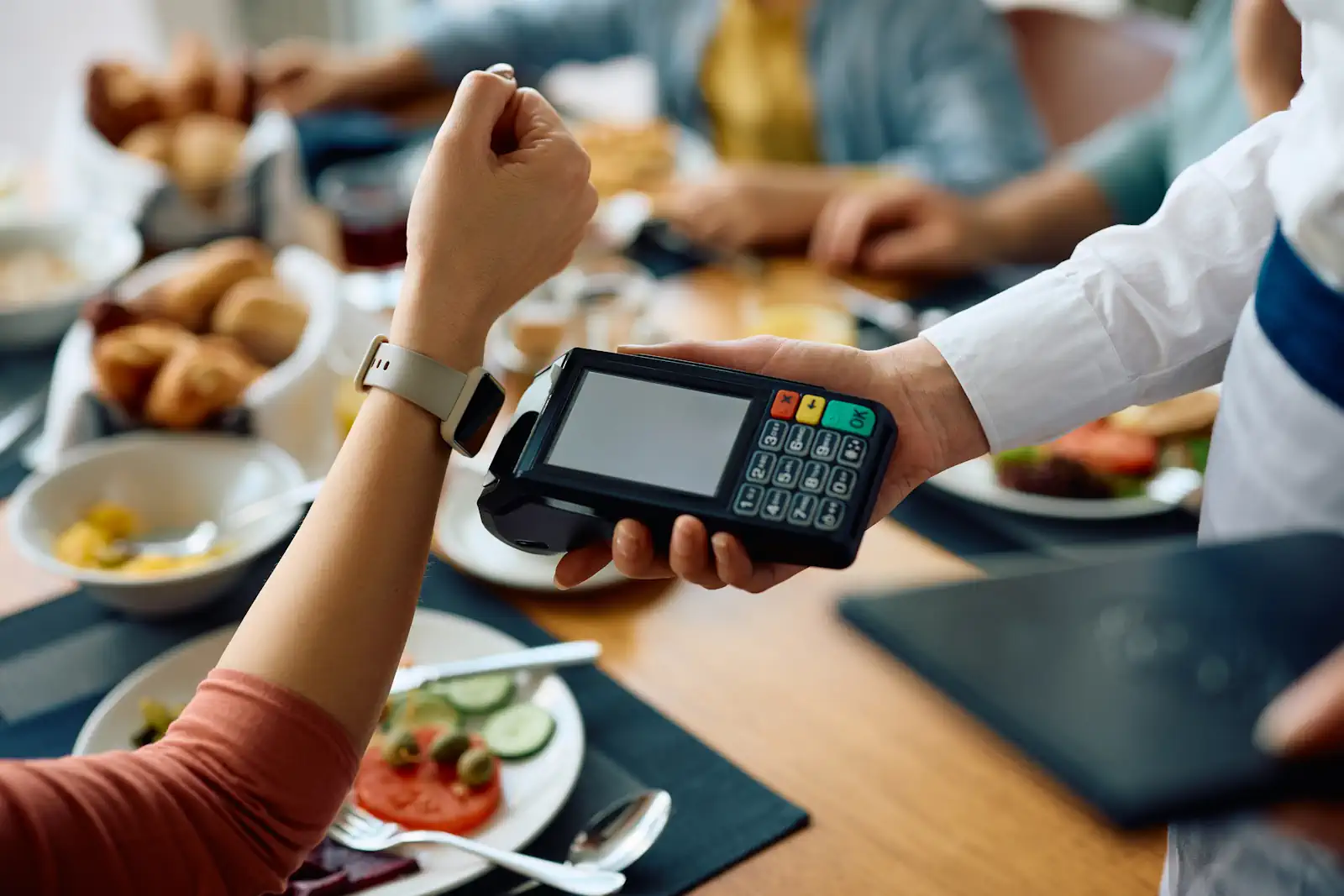
Why the future of digital banking is decided on the road

This article is part of our Opinions section, where we invite industry professionals to share their views on the most pressing technology questions of our time. Here, Ivan Dovica, CEO of Tapix (Dateio), explores how better data can transform the banking experience abroad.
While modern digital banking gives the impression of a borderless financial ecosystem, international travel quickly exposes its underlying friction points. Even tech-savvy consumers frequently fall victim to predatory fee structures during their very first transaction in a foreign country.
The friction usually begins the moment they land. Stepping off the plane in a bustling foreign capital, travellers face an immediate need for local currency. You approach the nearest ATM in a high-traffic tourist zone. Unknown to you, you have walked into a highly concentrated area where a single ATM operator controls up to 80% of the terminals in prime historic centres. You insert a card, and the screen presents you with a typical psychological trap: the Dynamic Currency Conversion (DCC). Prompted to settle the transaction in your home currency rather than the local one, you agree, thinking it’s safer. In reality, you are hit with wild exchange rates that silently inflate the withdrawal cost by over 15%.
Later that evening, after a meal at a local bistro, you want to split the bill with your friend and pay for the dinner with your card. In your banking app, however, instead of a clean merchant name and logo, you only see an unreadable string of alphanumeric metadata. The local financial data engine back home has no context for this foreign merchant. The transaction is categorised as “Other,” and the rest of the metadata is hidden in text strings.
A minor user-experience inconvenience? It is a moment of acute customer vulnerability, and it represents the exact point where traditional banking apps break down.
Travel is a data problem
Banks once treated travel features as low-priority perks. That view is now outdated. International travel is a normal expectation, and cross-border use has become the real stress test for a banking app.
Legacy banking apps thrive on predictable, localised data sets. At home, the transaction feed relies heavily on the Pareto principle: roughly 20% of merchants account for 80% of transactions, making domestic recognition straightforward. But international travel forces the engine to process messy, unstructured foreign data in real time. When the app’s backend fails to decode this data, transactions slip through the cracks and create instant visual confusion in the user’s budget management.
To maintain a true overview of personal finances, vacation spending must be separated from day-to-day living expenses to prevent erratic travel costs from disrupting the carefully structured budget trackers users have spent the entire year building. As such, achieving genuine cost transparency requires a consolidated view that automatically captures what the entire trip cost from start to finish, grouping spending by place and time, breaking the trip down by country, and showing daily averages and exact trip duration, all without anyone needing to build a manual spreadsheet.
The features that follow
Once the data foundation is sorted, a set of features becomes possible. These are the ones a product team should prioritise, because each one maps to activation, retention, or support load.
Start with the feature travellers ask for.
1. Foreign Transactions
The clearest difference between banking apps shows up on the screen, specifically in whether the app can understand a payment made abroad. A colleague ran a simple test. He paid at the same café chain in Dubai with two different cards and opened both banking apps side by side.
The first app, from a local bank in the region, left the payment in its raw form. It displayed only a rough descriptor and a placeholder category; it was barely usable, as you could not tell where you shopped.
The second app, from a European bank, recognised the merchant on the spot. It showed a clean name, the correct logo, and the right category: a Middle Eastern chain, read correctly by a CEE bank, at the point of sale.
The same purchase, two different apps. One answered the question, “What did I just pay for?” while the other did not. That is the whole product decision, rendered on a phone. A bank that reads foreign transactions this cleanly does more than fix travel. It reads its own customers’ foreign spending better than the local player does, which reduces confusion and disputes.
2. Trip Summary
A trip summary groups spending automatically by place and time. It breaks the trip down by country, lets the user drill into a category or a single merchant, and shows daily averages and how long the trip lasted. It captures the total cost of the trip from start to finish, without anyone building a spreadsheet. Travel spend stays separate from day-to-day spend, so a few weeks abroad do not distort the budget the customer has tracked all year.
However, this only works on clean data. With home-only recognition, foreign merchant recognition goes blank, and the summary becomes worthless.
3. ATM Search Engine
In countries where card acceptance is low, finding cash is one of the first needs upon landing. The harder part is finding an ATM the traveller can trust in an unfamiliar place.
An in-app map of nearby machines solves this. Filters for 24/7 access and fee-free withdrawals let the bank point the customer to a safe machine at the exact moment of need. Revolut built an airport campaign around this across 14 European airports under the slogan “Arrive relaxed.” That is the lesson for a product team: a feature most banks bury in a settings menu becomes the first useful thing the app does on a trip, creating a powerful acquisition moment.
4. eSIMs Are the Way
A clear 2026 trend is the travel eSIM built into the banking app. The global eSIM market is worth around $1.75 billion this year, with strong growth projected. The GSMA estimates that by 2030, 76% of mobile connections will run on eSIMs.
Neobanks already offer embedded data plans across more than 100 countries. Non-telecom brands are entering as well, such as FC Barcelona with its Barça Mobile plan. For a bank, the appeal is twofold. It keeps the customer in the app during a trip, establishing a habit, and signalling early that the customer is in travel mode. That signal is worth having before the first foreign transaction lands, not after. Some apps send notifications such as “Welcome to XYZ.” The customer feels seen.
Clean Data, Clear Advantage
I run a company that works with payment data, so I see this problem every day. The lesson for a product lead, a CTO, or a head of digital is simple. Travel features are not just a cost summary. They show whether you understand how your customers live now.
When the app fails abroad (through an unreadable feed, a costly withdrawal experience, or a card frozen by a fraud system that never learned to expect travel), the customer does not blame the foreign merchant. They lose faith in the bank. And switching has never been easier. The customers who leave tend to move to the app that handled these moments well.
Build data capability in-house, buy it, or neglect it and watch the travel segment drift to an app that got it right. Excellence is not how well the app works in the safety of the home market. It is how much confidence it inspires in a customer standing in front of a foreign ATM, a long way from home.
Related articles from our Opinions section
About The Author