Trending Topics

 Trending
Here’s how we’re using AI – and how we’re not

AI is a lot of things: expensive, overhyped and a potential security nightmare. But is it useful?
Google and OpenAI have each released reports detailing how we make use of their AI products. And, even more intriguingly, how we don’t.
They reveal we’re still using AI to search for information and come up with ideas, but less so to automate tasks. That it’s most widely used for personal tasks, more so than our paid work, and that it’s helping us tackle challenges that sit beyond our remit.
Using Gemini to Google
Google’s ATLAS study (Activity, Task, Landscape, and Adoption Study) examined 15 million human-AI “interactions” across Gemini apps and APIs. It found that workplace AI adoption is high, at 68%, but not comprehensive. For example, we only use it for bits and pieces of work, only 21% of tasks.
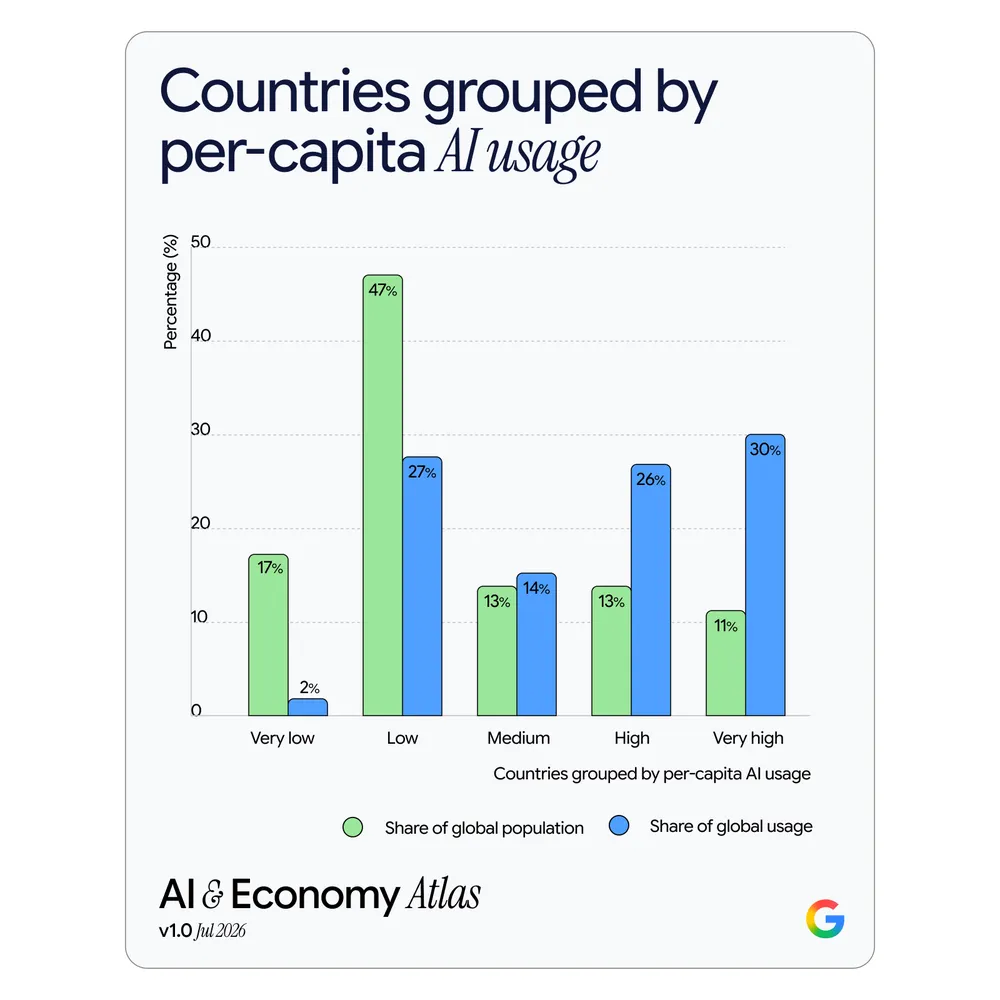
The research also suggests that AI usage by country reflects GDP, “raising concerns about a persisting digital divide”.
When we do use AI, it’s for coming up with ideas, gathering information and learning. But there’s one big absentee from that list: automation. This is the key selling point of AI in the enterprise, so it will be interesting to see if that changes if Google repeats the study next year.
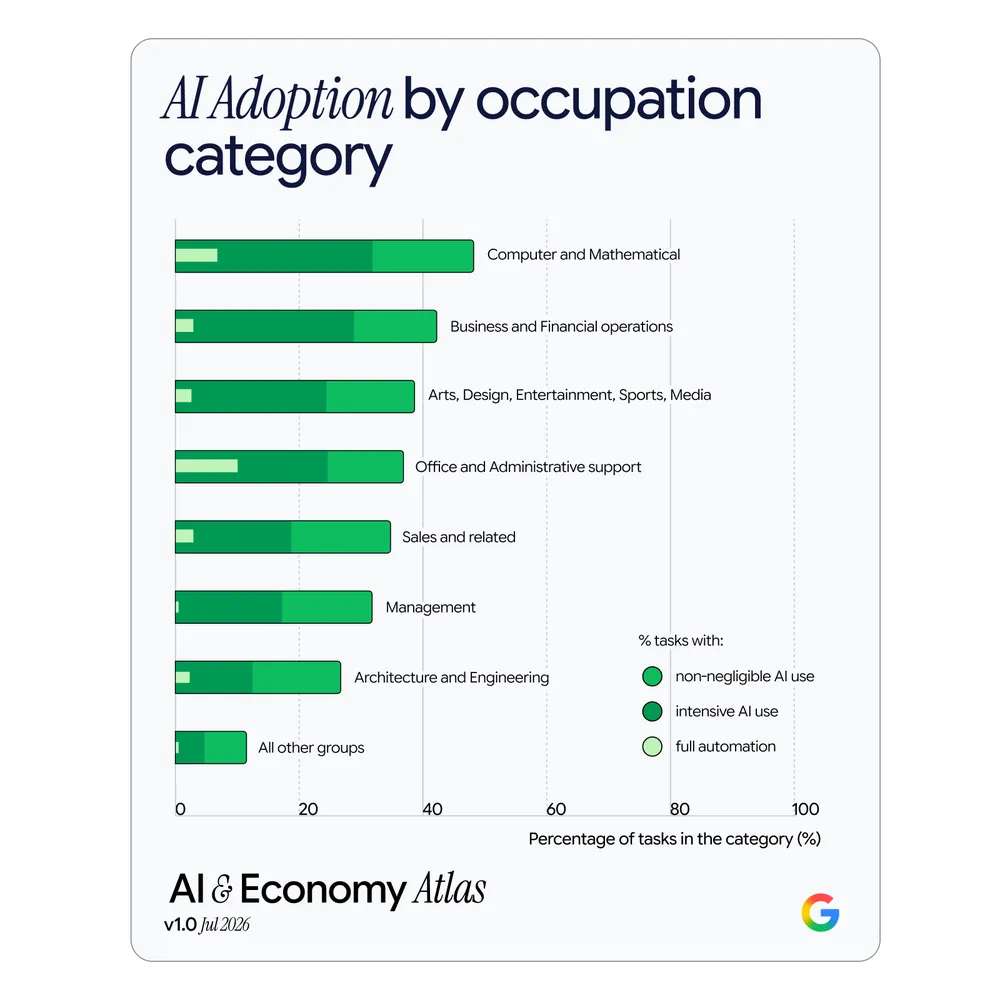
AI adoption is highest among computer and mathematical roles – no surprise there – followed by finance, arts/design/media/sport, and then office and admin.
Computing and admin saw the highest rates of full automation, but it was still low. Indeed, none of the categories in the Google-provided chart were anywhere near that 21% mark mentioned earlier.
How AI is helping workers in manual jobs
Google also flagged that AI use isn’t purely the remit of so-called white-collar workers. It’s also helping workers in manual jobs with “adjacent tasks”.
While the company noted that this was “not as prevalent”, it said such workers used AI for diagnostics, learning and to create images and video – the latter at twice the rate of other workplace AI users.
“For example, automotive technicians and industrial mechanics use AI to interpret complex test results, debug electrical wiring, and inspect machinery for wear,” the Google blog post noted. Although perhaps more of us would like to know further details about whether or not our mechanics are using chatbots to understand how our cars work.
One final note. The vast majority of Gemini interactions – some 86% – happen outside work.
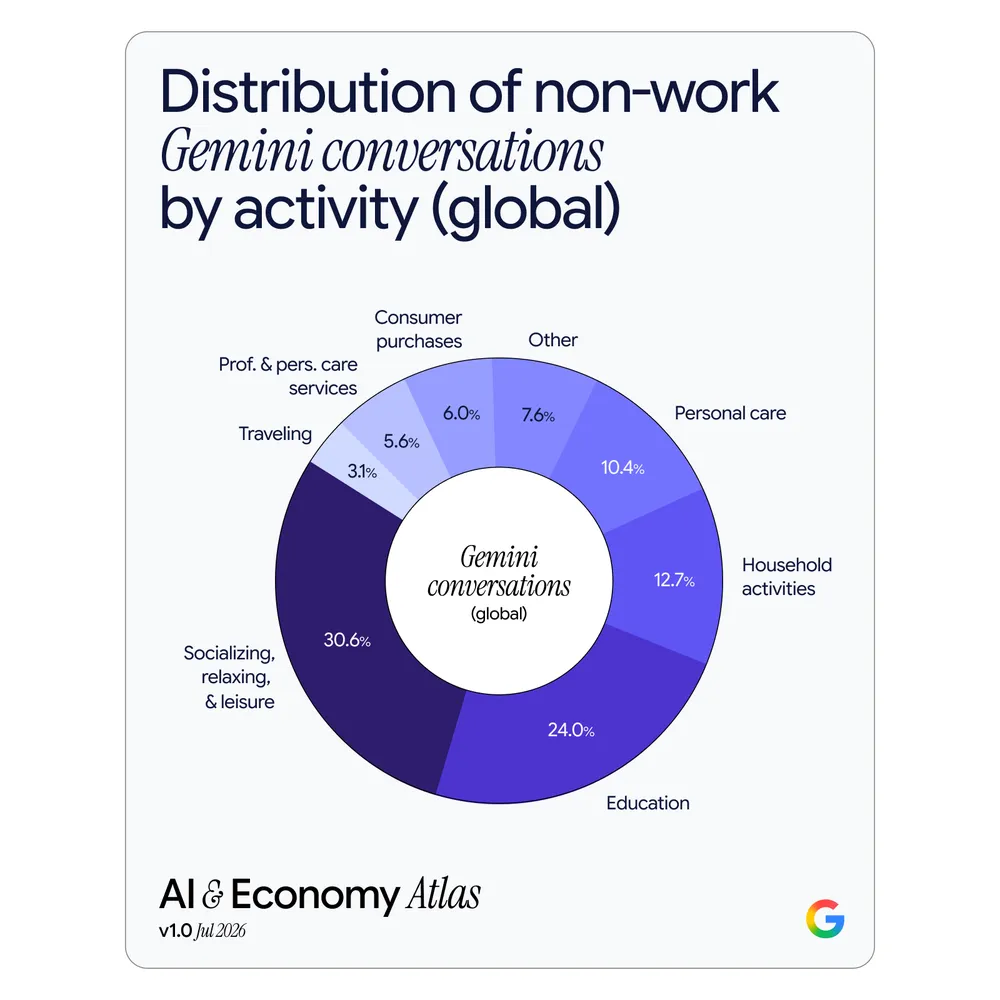
In other words, this is a personal tool more than for work. So far, at least. And we’re using it to decide what appliance to buy and to figure out how to pay our taxes. The most common “non work” use of Gemini was “socialising, relaxing and leisure” at 31%, followed by education at 24% and household activities at 13%.
OpenAI
Over at OpenAI, researchers studied 800,000 messages from American users of ChatGPT; that means the results reflect the chatbot alone rather than other direct applications.
OpenAI noted that the analysis reveals a new pattern of “task crossover” in which 17% of work-related messages are about tasks associated with another role or job.

“A small-business owner can independently draft copy, review a contract, or perform basic financial analysis,” an OpenAI blog post noted. “A salesperson can use AI to explore a customer dataset that might once have gone to an analyst. A marketer can troubleshoot a website without waiting for a developer. In each case, AI changes not just how work gets done, but who does what.”
Of course, most messages are still related to the user’s own role, or generic, the company noted in the report, but a higher rate of “boundary crossing” was spotted in smaller teams.

How smaller organisations use AI
“One possible interpretation is that occasional or moderate users in small organisations turn to AI when they encounter tasks that would otherwise require help from another worker,” the report noted.
“A worker in a small business may use AI intermittently to draft marketing copy, troubleshoot software, review a contract, or perform basic analysis because there is no specialist to delegate to. In larger organisations, the same worker may be more likely to rely on an established team, workflow, or internal service.”
In short, we use AI when we have no one else to help us.
But small teams are hardly new, so the question remains how we solved these quandaries before chatbots. The answer is likely by extensive Googling. We just didn’t bother to track how workers addressed problems – such as being under-resourced or lacking support staff – before someone had an expensive technology to sell.
Related articles
About The Author