Trending Topics

 Trending
Stratos and Microsoft: A green dream or a PR disaster in the making?

Table Of Contents−
- What is Stratos?
- Does Microsoft own Stratos?
- How much did Stratos cost?
- Shifting The Railroad Commission of Texas
- Will Stratos be used to extract oil?
- Why are there objections to Stratos?
- Living next door to Stratos
- Water scarcity in Texas
- The abandoned oil wells of Ector County
- What are Class 6 wells?
- Why does Class 6 drilling matter to Microsoft?
- Why doesn’t the EPA grant the RRC primacy for Class 6 wells?
- The future of Stratos
- How Texas uses “dispatchable” energy to favour fossil fuels over renewables
- The 47th President of the United States of America
- The Environmental Strategy of Stratos
- Is CCS a safe technology?
- The Archer-Daniel-Midland incident
- Did the Archer-Daniels-Midland incident undermine confidence in CCS safety?
- Should Microsoft abandon its Stratos strategy?
- Buy now: Sustainability-as-a-Service
- More on sustainability
Microsoft’s ambitious climate plan faces uncertainty.
In July 2024, the tech behemoth made waves with a record-breaking purchase of Direct Air Capture carbon credits from Stratos, a Texas-based vacuum that will suck CO2 from the air and store it underground. The six-year deal promised to erase 500,000 metric tons of Microsoft’s carbon footprint, propelling the company towards its 2030 carbon-negative goal.
But there’s a hitch in the plan.
Stratos has stalled. Regulatory hurdles and public controversy surround the facility, which developers still plan to launch in mid-2025. Drilling permits are missing in action, and public opposition is mounting. At a heated October meeting, locals blasted the project, citing safety concerns about Stratos’ governance.
Meanwhile, Microsoft’s real-world emissions continue to soar, fuelled by its voracious AI and cloud operations.
This deep-dive investigation into Stratos, features testimony from Texas-based experts, unravelling the complex web of challenges facing the project. In a twist that adds another layer of intrigue, the 47th President of the USA, Donald Trump, may yet play a role in this unfolding drama.
The burning question: Did Microsoft bet big on a carbon pipe dream, or will its Stratos gambit prove to be more than just hot air in the Lone Star State?
What is Stratos?
In a non-technical nutshell, Stratos is an enormous machine that uses large fans to suck CO2 from the air before storing it away from the atmosphere. Engineers call this complex process Carbon Capture and Storage (CCS) using Direct Air Capture (DAC).
Thankfully we have an expert to explain. Dr Katherine Romanak is a Research Professor from the Bureau of Economic Geology based at the Jackson School of Geosciences in the University of Texas At Austin.
“CCS takes CO2 out of the active carbon cycle on earth, putting it back into the earth where it cannot do damage to the climate,” she told TechFinitive.
“CCS can be used in two ways to mitigate global climate change. One, we can use it to reduce the amount carbon dioxide being emitted into the atmosphere from large industrial sources (emissions reduction through CCS) or, CCS can take CO2 out of the air using large fans (Such as the Stratos project) through Direct Air Capture (DAC). This is called an emissions removal through CCS.
“As we’re not stopping emissions fast enough, we need to take out the CO2 that is already there using DAC. Captured CO2 is compressed into a liquid and injected deep into the Earth – more than 800 meters deep for permanent disposal. The CO2 is trapped between the grains of the rock and eventually dissolves into the salty water that resides down there and mineralises. It is extremely ‘sticky’ in the subsurface but also extremely secure and permanent storage.”
Does Microsoft own Stratos?
No. Stratos is being built by 1Point5, a company that describes itself as:
A carbon capture and storage company focused on reducing the amount of carbon dioxide in the atmosphere.
1Point5’s vision states it intends to ‘turn CO2 into a valuable resource’, which gives an insight into the motives behind the project. Stratos is about making lots of money by removing CO2 from the atmosphere.
The company behind 1Point5 is Oxy Low Carbon Ventures a subsidiary of Occidental Petroleum (Oxy), one of the largest oil and gas companies in the USA.
It is no coincidence that Stratos is being built right in the heartland of the USA’s oil industry, Texas. Stratos sits upon a 1,600-acre estate known as the Shoe Bar Ranch in the Permian Basic of Ector County. The valuable natural resources hidden in the geology mean there has been at least one oil well on site since 1993.
If you’re thinking, “has Microsoft given money to an oil company so it can appear to be greener?”, then the short answer is yes, but as you’ll read, it’s much more complicated than that.
How much did Stratos cost?
As Stratos is still under construction, the final tally remains unknown. In 2022, 1PointFive stated that the cost of Stratos would be between $800 million and $1 billion but reports in late 2023 suggest the costs have risen to $1.3 billion.
As Dr Romanak told TechFinitive, “a project like Stratos is a world leading technology development” and certainly one which comes at a high price. Microsoft’s much-heralded agreement to purchase 500,000 metric tons of carbon dioxide removal (CDR) credits from Stratos has been touted as the largest single purchase of CDR via DACs to date.
The agreed price of Microsoft’s CDR credits remains unknown but reports put comparable credits at around $1,000 per metric ton. We can’t confirm that Microsoft has blown $500 million on CDR credits, but this shows the scale of the financial returns that Stratos can give to its owners.
Shifting The Railroad Commission of Texas
In order to understand the intricacies of Stratos, we need to look at several elements. We’ll begin with the Texan landscape. Literally.
Virginia Palacios is the Executive Director of Commission Shift, an organisation whose mission is to hold the Texan oil and gas regulator accountable within a shifting energy landscape. I began by asking her why Stratos was a Texan project. “Ector County is in the heart of the Permian Basin, the largest oil producing field in the state of Texas. The concept with DAC technology is it needs to be in a place where there’s a lot of CO2 emissions, to achieve greater efficiency in capturing directly from the air.
“There’s a lot of oil and gas development and flaring (burning) from oil wells in Ector County. They saw this region as being a good place to potentially capture a higher amount of CO2 emissions in the ambient air than you might find in other places.”
Commission Shift specifically focuses on increasing transparency and improving governance of The Railroad Commission of Texas (RRC). The RRC’s is the Texas state agency responsible for regulating the oil and gas industry, gas utilities, pipeline safety, liquefied petroleum gas industry and surface coal and uranium mining operations in Texas. Therefore, the RRC is the regulatory body in charge of Stratos.
The RRC is another element we need to consider when looking at Stratos.
Virginia’s expertise of not only the Texas landscape, but its laws and regulations, gives her a critical perspective. She also knows an awful lot about oil wells.
Will Stratos be used to extract oil?
The purpose of Stratos is to capture and store CO2. Virginia notes that injecting CO2 back into the Permian Basin isn’t a new concept. “The Permian Basin already has a lot of Class 2 CO2 injection wells used for Enhanced Oil Recovery (EOR). This is a technology used to flush more oil and gas from the formation and produce a little bit more from that well.”
EOR is a distinct caveat of Microsoft’s agreement with Stratos.
Microsoft’s original press release announcing its purchase of CDR credits specifically stated:
Under the terms of the agreement with Microsoft, which has committed to becoming carbon negative by 2030, the captured carbon dioxide (CO2) underlying the credits will be securely stored through subsurface saline sequestration and will not be used to produce oil and gas.
This statement is important. It clarifies that Microsoft’s CDR credits will not be levied against oil and gas production but against captured CO2 stored underground.
This deliberate wording suggests that Microsoft wishes to make it clear that it’s not directly funding oil and gas production by buying CDR credits via Stratos.
Yet the clarity of indirect funding is unclear. In a financial application submitted in 2021, Oxy declared why Stratos was being built:
The Project would also represent the first significant application for the coupling of DAC technology and EOR operations in the United States.
Adding:
…the realisation of an economically viable model for significant anthropogenic CO2 sequestration through EOR operations.
Despite the press release’s wording, Microsoft cannot refute that Stratos will contribute to fossil fuel production.
Why are there objections to Stratos?
On paper, a device which can suck CO2 from the air and store it safely underground sounds like a must-have for an overheating planet. As with most forms of pioneering technology, contrasting opinions over costs, goals and impact demonstrate the complexity of the problem and the solution.

Dr Romanak is a powerful advocate for the use of CCS alongside other measures to reduce levels of CO2. “CCS is crucial for addressing the climate emergency, but it’s not the only solution. It’s part of a broader portfolio of solutions needed to reduce CO2 emissions.
“According to the Intergovernmental Panel on Climate Change (IPCC), CO2 storage must account for at least 9% of emissions from energy sources and another 3 to 5% from other industries. An IPCC assessment shows that limiting any mitigation technology, including wind, solar, nuclear or CCS, significantly increases costs and reduces our ability to meet climate targets. Limiting CCS, in particular, can increase costs up to 100% more than limiting other technologies.”
Dr Romanak is clear about one advantage of storing CO2 underground. “Permanence. While storing CO2 in plants and soil can last about 100 years, CO2 storage in geological formations can last thousands to hundreds of thousands of years. This makes CCS a vital component of emissions reduction strategies.”
Living next door to Stratos
Few would argue with Dr Romanak’s conviction for the benefits of CCS. However, for the citizens of Ector County, there are legitimate uncertainties regarding the impact Stratos will have on their lives. Many of these related to the efficacy of the RRC and its stewardship of Texas oil fields. Virginia Palacios explains some concerns.
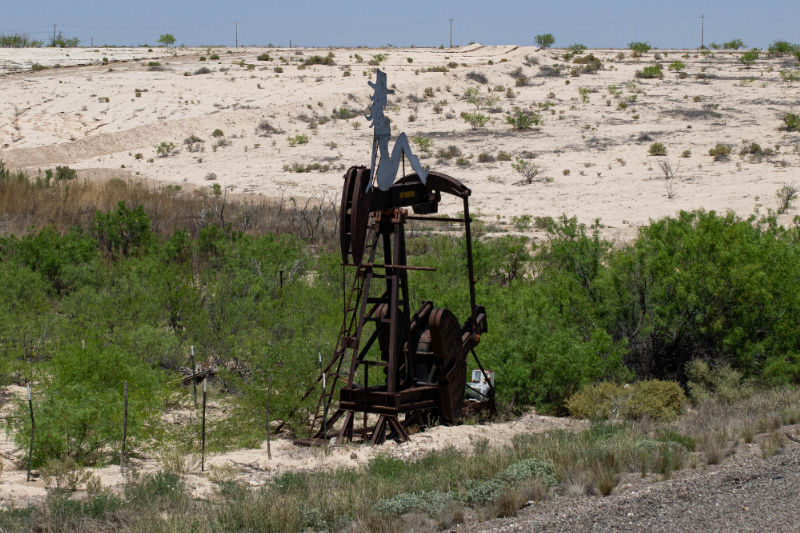
“Ector County is an area that is potentially risky when it comes to groundwater contamination. There has been such a large amount of oil and gas development at the Permian Basin for such a long period of time that there are tens of thousands of holes in the ground in this area. We are seeing leaks from unplugged oil and gas wells and geyser-like well blowouts, sinkholes and surface uplift.”
Virginia refers to abandoned oil wells as the holes in the ground. This situation stems from the drill-use-abandon business model that was common in the fossil fuel industry.
The RRC is responsible for addressing orphaned oil wells in Texas, but its scope and responsibilities are not absolute for every well. It is estimated that there are at least 150,000 orphaned oil wells in Texas.
Additionally, geologists worry that underground injection of CO2 could induce earthquakes, adding to the existing concerns.


Virginia Palacios pointed me towards the data. “The TexNet website documents all the seismic activity in Texas related to underground injection. There have been a number of repeated magnitude four or greater earthquakes in this part of Texas because of the underground injection and this risks the groundwater resources in the area.”
Water scarcity in Texas
A disruption to the availability of groundwater is a serious issue anywhere but particularly in Texas where droughts are becoming more frequent and severe. Virginia has witnessed the effects of Texas droughts firsthand.
“In 2011, my Dad had to sell all the cattle on the family ranch because there was just not enough grass to eat,” she said.
“We had such an extreme drought that year and the past three years. Climate scientists are linking the intensity of these droughts to climate change, so when you combine the impacts of climate change with this prospective technology that’s potentially going to contaminate groundwater, we’re even more at risk.”
The abandoned oil wells of Ector County
Other residents of the area have aired concerns about thousands of abandoned wells and their potential impact on groundwater.
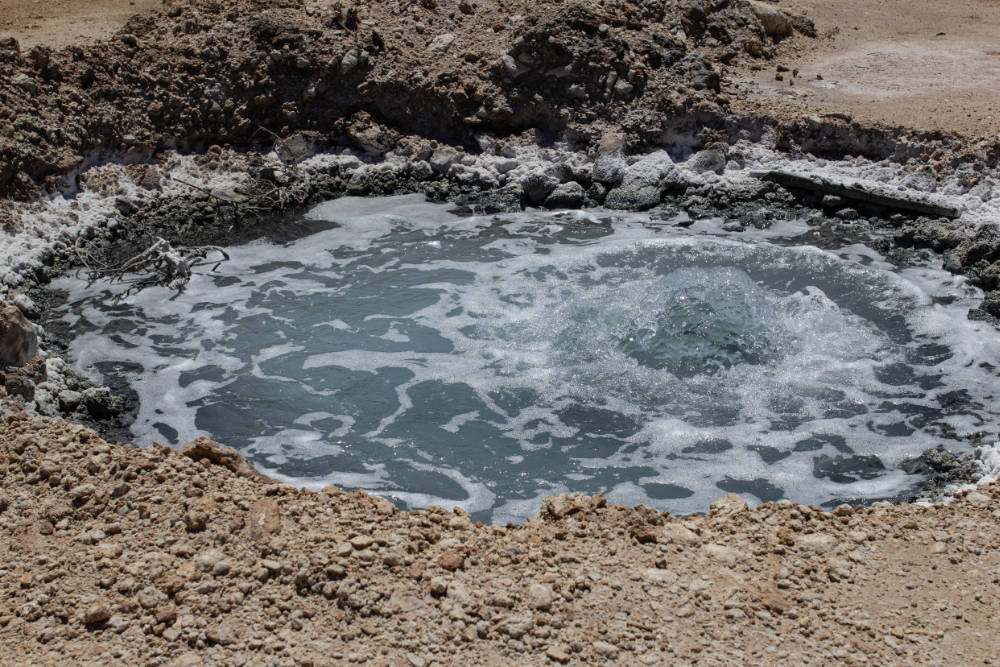
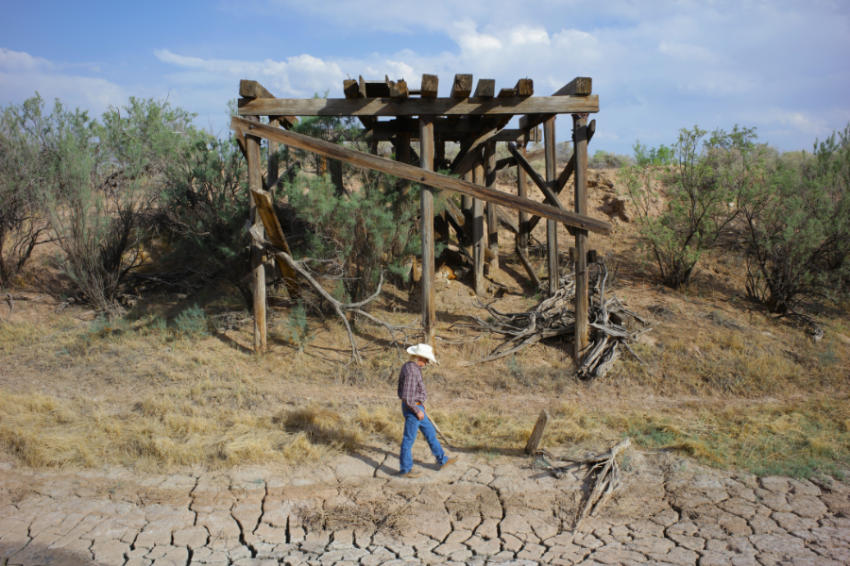
Goldsmith Rancher Schuyler Wight is one of many who have submitted comments to state legislators about the problems with living with orphaned oil wells:
My ranch has over 100 orphan wells on it. The RRC does not plug one until it starts to flow to surface. By that time, the damage is done. Also on my ranch, there are approximately 30 wells that the RRC does not have in their GIS database. One of them has been leaking salt water to surface for over a decade. The RRC refuses to plug this well because it ain’t in their database.
Additionally, a 2022 report states that the geo-location data of orphan wells is weak. This bolsters Schuyler Wights testimony that there are wells on his ranch that do not appear in RRC records and raises questions about stewardship.
Between 2016 and 2021, the RRC plugged around 1,600 wells annually. At this rate, and assuming no discovery of additional forgotten wells, clearing the backlog will take at least a century.
For Oxy to build Stratos in Texas, it required the co-operation and authorisation of the RRC. Unfortunately, there is one fundamental aspect to Stratos’ purpose which the RRC does not have the authority to grant and that is Class 6 drilling.
What are Class 6 wells?
Operators use Class 6 wells to inject CO2 into deep rock formations for long-term underground storage. To drill a Class 6 well requires a permit. The U.S. Environmental Protection Agency (EPA) grants Class 6 permits, but the RRC seeks primacy to grant and regulate Class 6 drilling themselves.
Virginia Palacios and her team at Commission Shift are concerned about giving the RRC primacy of Class 6 drilling. “We think the RRC’s performance in overseeing Class 2 injection wells has been so bad that they shouldn’t be allowed to have any additional authority over overseeing Class 6 injection wells.”
Commission Shift and Schuyler Wight are far from lone voices. At an EPA public meeting in September 2024, attendees voiced numerous concerns about CCS safety, the RRC’s regulatory effectiveness, and its ability to oversee Class 6 drilling.
Why does Class 6 drilling matter to Microsoft?
Oxy only has permits to drill Class 2 wells which can be used for extracting oil (via EOR) but are unsuitable for pushing CO2 underground for long-term storage.
If Oxy completed Stratos today, it could capture CO2 can’t store it. This appears to nullify Microsoft’s commitment:
The captured carbon dioxide (CO2) underlying the credits will be securely stored through subsurface saline sequestration.
Oxy cannot deliver what Microsoft requires until the EPA grants it a Class 6 permit. If Stratos cannot delivery the CDR credits, then Microsoft’s carbon-accounting team will have a problem.
Why doesn’t the EPA grant the RRC primacy for Class 6 wells?
Commission Shift has protested the RRC’s primacy of Class 6 wells by asking the EPA to revoke the primacy for Class 2 wells. Virginia Palacios explained: “We submitted a petition to the EPA in March 2024 asking the EPA to consider withdrawing the RRC’s Class 2 primacy.
“Those are the wells that we think are causing all the blowouts, the leaks we see from unplugged wells, sinkholes, surface uplift and earthquakes. We documented the incidents and sent this to the EPA. In June, the EPA said that our letter warranted further legal and technical review and raised substantial concerns.”
We don’t yet know what the results of the EPA’s review. Will they allow Oxy to drill Class 6 wells? Will they give Class 6 primacy to the RRC give the ‘substantial concerns’ raised?
TechFinitive asked the EPA when it would make a decision:
We do not currently have an estimated timeframe for a final decision.
Although the RRC is not without its critics, there is an urgent need to build projects like Stratos to remove CO2 from the atmosphere.
The RRC is the appropriate regulator for CO2 storage technology. CO2 storage is similar to oil and gas development, and they have extensive experience with oil and gas operators and permitting similar activities. In contrast, the Texas Commission on Environmental Quality (TCEQ) has less experience in the type of regulatory oversight required.
“While some criticisms of the RRC are valid, they are being actively addressed,” said Dr Katherine Romanak. “Despite any shortcomings, the RRC is working on these issues, making it the appropriate regulator for CO2 storage.”
The future of Stratos
Until the EPA make a decision to either grant Oxy a Class 6 permit of grant primacy to the RRC to do the same, then Stratos will be unable store CO2 in the ground.

This may not be a disaster to Oxy as they can continue to use Stratos to capture CO2 from the air and use their Class 2 permits to pipe CO2 for sale or pump it below ground to release more oil via EOR.
Microsoft will need to decide whether it continues to purchase CDR credits from Stratos or if it needs to source carbon credits from another source.
How Texas uses “dispatchable” energy to favour fossil fuels over renewables
There is another element to the Stratos story. Proponents herald the facility as an environmental triumph, touting it as the pinnacle of green technology that will help prevent the planet from overheating.
For a project that will be used to extract oil, this mixed-messaging could sound a little like greenwashing. I asked Virginia to explain what green-energy looks like in Texas, a state synonymous with oil and gas.
“Texas is also the clean energy capital of the United States,” she said. “We also have a tremendous amount of wind and solar already up and running, but also a tremendous potential for both of those energies.”
Despite this positivity, Virginia explained the barriers to establishing green-energy in Texas.
“Texas legislature has an extreme preference for oil and gas. We typically see legislators proposing bills that undercut renewables to support or bolster oil and gas development. We see a lot of tax cuts for oil and gas companies and then see imposed taxes or an exclusion from tax abatement programs for clean energy.”
Researchers have documented that Stratos, like many clean energy projects Virginia mentioned, benefits from Chapter 313 tax breaks. The Texas legislature closed Chapter 313 in 2022 but introduced Chapter 403 as replacement legislation.
Chapter 403 continues to offer similar tax breaks with one small exemption. Hidden in section 403.602, paragraph 8, sub-paragraph A, sub-sub-paragraph i, sub-sub-sub paragraph b is this clause about projects which are eligible for 403 tax breaks:
a facility related to the provision of utility services, including an electric generation facility that is considered to be dispatchable because the facility’s output can be controlled primarily by forces under human control;
Dispatchable energy is an uncommon phrase but its inclusion has vast significance as Virginia Palacios explains. “It means wind and solar projects were specifically excluded and it’s primarily intended for liquefied natural gas projects, other oil- and gas-related projects.”
This is catastrophic news for green-industry and clean energy in Texas.
Sadly, it seems there may be more bad news coming soon.
The 47th President of the United States of America
Let me throw another unknown into this complicated story and his name is Donald Trump. Virginia Palacios has experience of working with the sitting tenant of 1600 Pennsylvania Avenue.

“Donald Trump has been transparent that he doesn’t believe in human-caused climate change, so it’s hard to say how this will go in the Trump administration,” she said.
“I’m part of a task force through The White House Council on Environmental Quality and The Department of Energy to examine carbon capture utilisation and sequestration technologies on non-federal lands in the United States.
“Those task forces were authorised as a part of the USE IT Act, which was passed during the Trump administration.”
Congress passed the Utilising Significant Emissions with Innovative Technologies (USE IT) Act in 2020. This legislation aims to support the development and deployment of carbon capture, utilisation and sequestration technologies. The Act also provides incentives and regulatory streamlining to accelerate CCUS adoption across industries. The legislation should reflect a growing recognition of CCUS as a critical tool in addressing climate change and reducing greenhouse gas emissions.
This revelation that Donald Trump said that climate change is a hoax, whilst passing an act to promote CCUS may not be a shock to you. Saying one thing and doing another is a well-thumbed political playbook that Virginia knows well.
“The RRC commissioners all voted to pursue primacy from the EPA to regulate the Class 6 injection wells, but all three have either derided federal climate policy or have said publicly that they don’t believe that climate change is human-caused.
“There’s a lot of irony and the kinds of decisions that we see our elected officials making versus what they say they believe publicly.”
The Environmental Strategy of Stratos
Through her work with Commission First, The White House Council on Environmental Quality and The Department of Energy, Virginia Palacios has an acute belief as to why Texas has sabotaged the financial incentives for green-energy. “The purpose of these bills was framed as a way to hasten the ability to use CCS so that we could market gas to European countries but the whole purpose was to be able to sell more gas, not to stop climate change or mitigate emissions.”
1Point5 designs its business model for high profits while promoting environmentally friendly messaging. Hidden amongst the 40-page financial application submitted in 2021, Oxy made clear its long-term strategy for Stratos:
With countries, industries, and companies continuously looking to offset their CO2 emissions, it is expected that by 2050 the carbon removal industry will be as large as the oil & gas industry is today.
In short, Stratos’ purpose has always been to facilitate others to “reduce” their CO2 emissions by buying carbon-credits, rather than actually reducing their carbon emissions.
Virginia has an important message for TechFinitive readers to take into the boardroom. “It’s important for investors, and especially tech companies, to understand that CCS is not a legitimate emission mitigation technology. It’s primarily a technology that seems plausible enough for companies to be able to market to you as a climate solution, but when you look at peer-reviewed science or you do the maths on how it works, there’s no possible way for these technologies to lead to net zero emissions.”
Is CCS a safe technology?
Despite the questions about the environmental motivations of the companies involved in developing Stratos, Dr Katherine Romanak is eager to highlight the maturity, and safety, of CCS technology.
“The assurance of carbon capture and storage (CCS) technology doesn’t come from a single project but from decades of research and development since the 1990s,” she said.
“Throughout this time, we have stored more the 200 million tons of CO2 and we’ve had no negative impacts on groundwater, the environment or any CO2 release back into the atmosphere. Currently, we store about 50 million tons of CO2 per year and this is being upscaled.
“Rigorous global regulations for the safe and secure storage of CO2 have been in place since the early 2000s. The United States initiated the Regional Carbon Sequestration Partnership Program around that time, dividing the country and parts of Canada into seven regions to identify potential CO2 storage formations.
“This program progressed from white paper studies to demonstration projects, where CO2 was injected and monitored in the subsurface, reaching up to 1 million tons per year in research projects. Eventually, this led to commercial deployment at a site injecting 1.6 million metric tons per year fully monitored and safely stored.
“Over two decades of research across these seven regions have provided empirical evidence of the safety and efficacy of CCS technology. Now, the United States is developing 50 million sites to manage large emissions. The public may not be fully aware of the extensive work and proven track record of this technology.”
The Archer-Daniel-Midland incident
To highlight the contentiousness of CCS solutions, particularly with safety, we need to look to another part of the USA. The Archer-Daniels-Midland (ADM) facility in Decatur, Illinois, is an agricultural site that has implemented Carbon Capture and Storage (CCS) technology.
The facility captures CO2 from its corn processing operations and injects it over 5,500 feet underground for permanent storage. Since implementing CCS, ADM has sequestered approximately 4.5 million metric tons of CO2, equivalent to removing over one million cars from the road for a year.
However, the project has faced challenges, with actual carbon storage falling short of initial projections. Despite these setbacks, ADM’s CCS project remains one of the largest and most closely studied in the world, providing valuable data for future carbon sequestration efforts.
In September 2024, ADM detected a leak.
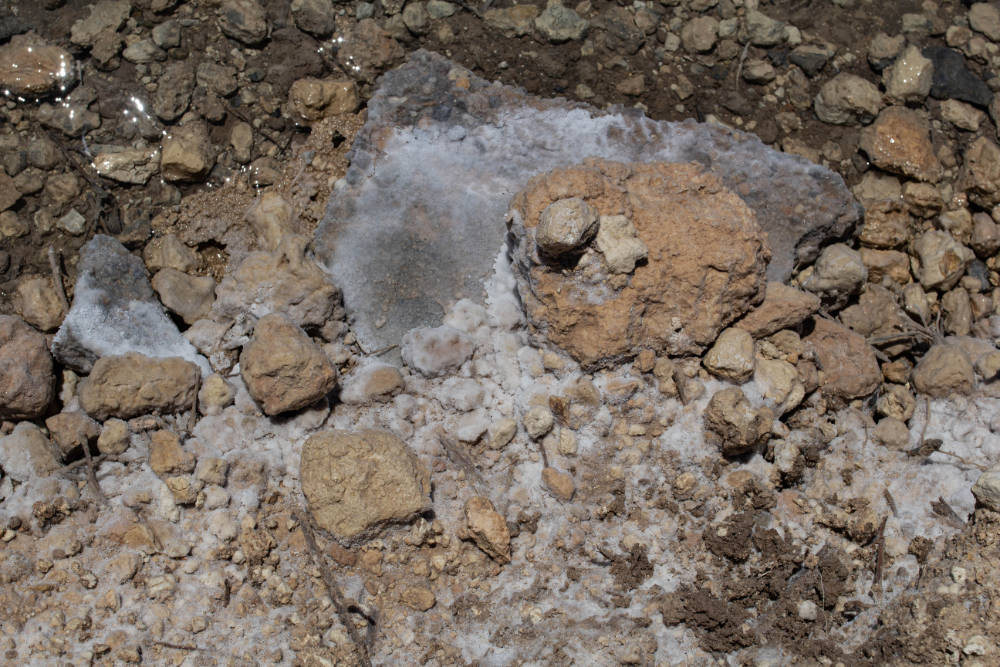
Virginia Palacios explained what happened. “This is the facility in the United States that’s been operating a class 6 injection well and two monitoring wells. The facility detected corrosion and that CO2 had leaked from its intended residue.
“One of the ways that they build these reservoirs is they look for a Cap rock that will prevent fluid from escaping. At the ADM facility in Illinois, the monitoring wells detected corrosion at a level that the CO2 never should have reached. It indicated that the Cap rock has failed.
“If you end up with corrosive water in places where it’s not supposed to be, like a water well or an existing oil and gas well, you could end up with corrosion in those well bores. That could result in acidified water leaching into groundwater.
“This is dangerous technology.”
Did the Archer-Daniels-Midland incident undermine confidence in CCS safety?
Katherine Romanak believes that the incident at ADM bolsters the safety credentials of CCS storage. “The ADM outcome gives us important learnings. First, the monitoring system in the well worked. It gave a clear indication that something was not right in plenty of time to ensure no environmental damage to groundwater and no return of the CO2 to atmosphere.
“Second, this well was repurposed from a research well into a deep monitoring well during the project’s second phase. In our experience, geochemical monitoring wells within the CO2 plume are unnecessary. They provide limited valuable information and can pose a risk of unintended migration.
“All in all the project has kept more than 3.5 million tones of CO2 out of the atmosphere- and that’s a good thing!”
It’s a tale as old as time, the struggle between risk-free science and risk-blind science. If the Wright Brothers hadn’t pushed the boundaries, they’d have never of made it into the air. Likewise, The Titanic would have survived the iceberg if engineers had designed it better
Irrespective of which version of risk you prefer, we all share an urgency as we’re running out of time. CO2 levels in the atmosphere are continuing to rise.
If only there was something Microsoft could do about that.
Should Microsoft abandon its Stratos strategy?
When Microsoft announced its partnership with Stratos, it was heralded as a move to turn Redmond carbon-negative by 2030.
As we’ve discussed, Stratos is a contentious project. Engineers cannot currently finish the project and it still carries the negative reputation associated with the fossil-fuel industry. The regulator has faced widespread criticism, and sources indicate that the EPA is investigating them. Meanwhile, seismic data in Ector County shows concerning trends.
In any market there are always good products and bad products. Microsoft, as far as anyone understands, has no direct involvement with the building, management or regulation of Stratos. The relationship is purely transactional. Microsoft has paid the owners of Stratos a lot money in order to put a carbon-negative figure in its next ESG report.
Microsoft chose the Stratos option, and critics may argue that the company has backed the wrong horse unless regulators implement changes soon.
Buy now: Sustainability-as-a-Service
Then again, Microsoft could avoid backing any horse if it committed to reducing its actual emissions instead of purchasing offsets.
Some of the other firms who have also signed up for Stratos CDR credits, Airbus, Amazon and the Boston Consulting Group, should also consider the implications of looking green, rather than being green.
In its current form, Stratos is a poster-child for the disinformation of carbon-credits and carbon-accounting. Corporations are currently signing big cheques to buy sustainability-as-a-service from anyone who’ll send them a PDF which knocks a few million tonnes of CO2e from their Scope numbers.
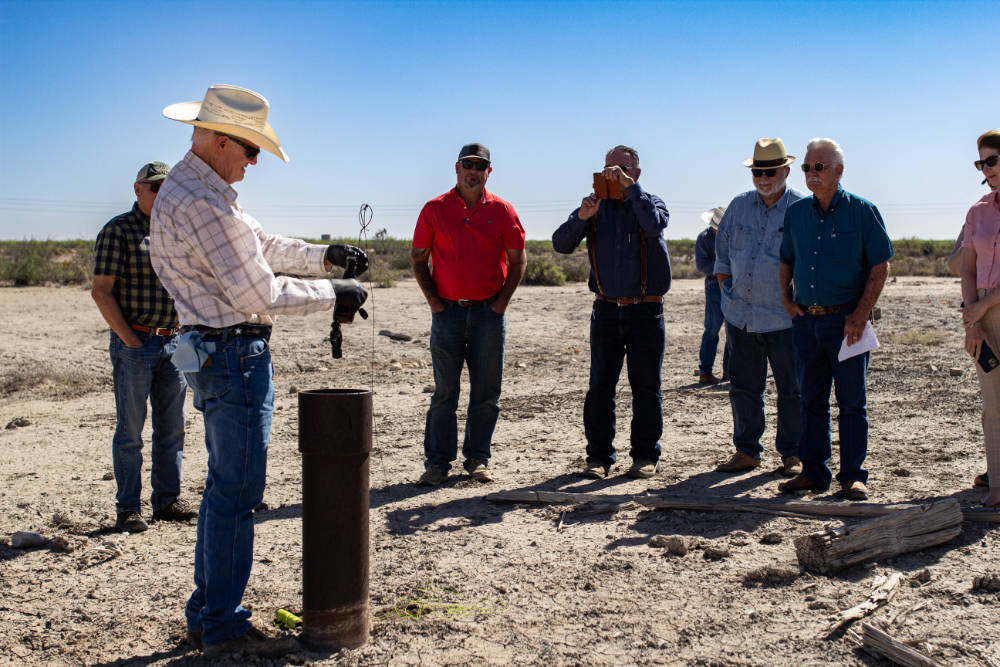
Virginia Palacios thinks firms need to look much harder at who is providing their CCS solutions. “You can look at CCS as kind of a silver bullet to mitigating emissions. You might solve climate change but if you’ve made all the water unsafe to drink, have you really made the world a better place? We do need people to be looking at these technologies and solutions holistically and not just trusting the oil and gas companies on this stuff.”
Whilst there are undoubted concerns about some operators of CCS projects, Dr Romanak emphasises the urgency for action. “The International Energy Agency (IEA) and the Intergovernmental Panel on Climate change emphasises that no single solution can address the problem alone.
“If people truly grasped the scale and urgency of our climate challenge, they wouldn’t nit-pick technologies. We need every solution, and we need them now.”
More on sustainability
About The Author

Lee Grant
NEXT UP


