Trending Topics

 Trending
Apple’s new carbon neutral Mac mini: Game-changer or greenwashing for business buyers?

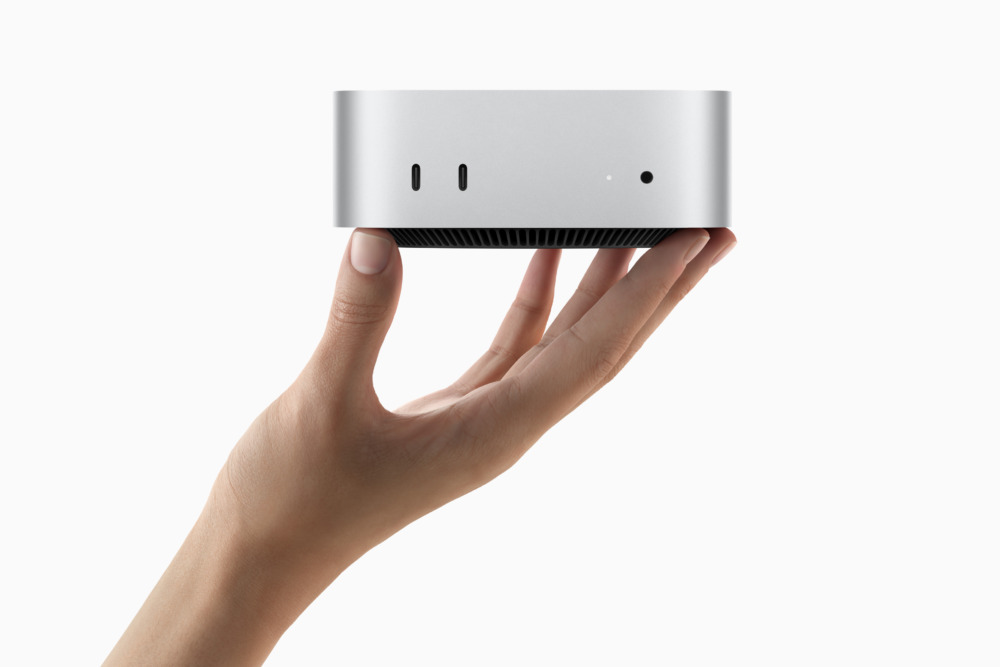
I have to admit, Apple’s all-new Mac mini is an intriguing product.
It’s not the phenomenally powerful M4 chip squeezed into a 12.7cm case. Give me a new iPad Pro and a hammer and I could probably bash you something similar, though not at such a competitive price.
Nor is it the front-facing USB ports. Although these are a very welcome addition, it’s hardly the defining feature of the century, is it?
What’s getting my juices flowing is that Apple has declared that the new mini is its first carbon neutral Mac. For a product which will sell a squillion units, this is an impressive statement.
I’m going to dive into Apple’s carbon neutral claims so you can work out whether the all-new Mac mini should be at the heart of your next refresh.
What is carbon neutral about the Mac mini?
Creating a genuine carbon neutral product is almost impossible. The World Economic Forum defines a carbon neutral product as:
Products whose production, use and disposal does not result in any extra carbon being added to the atmosphere.
By that definition, no technological product can ever be truly carbon neutral, so how can Apple claim carbon neutrality on the Mac mini?
It’s a heady mix of clever carbon accounting, vast amounts of offsets and some genuinely brilliant product lifecycle stewarding. Apple claim that 50% of the Mac mini is from recycled content. That’s huge for a top-tier product that will sell in Apple volumes. Additionally, the manufacturing lines that build the Mac mini run on 100% renewable energy and suppliers along Apple’s supply chain have committed to Apple’s Supplier Clean Energy Program
Once the Mac minis are built, at least 50% of them will ship to regional distribution hubs via non-air transit modes like rail or boat.
As far as eco-tech goes, there is a lot to love about the Mac mini.
The environmental magic of the Mac mini
To reduce carbon emissions, Apple is trying to increase the volume of recycled content inside the Mac mini.
The device’s metal enclosure is made from 100% recycled aluminium, as is the thermal module, but the clever part is that the forging process uses less aluminium than previous methods.
Besides prioritising the use of recycled aluminium, Apple has shifted to low-carbon suppliers. Elysis aluminium is smelted without producing any direct greenhouse gas emissions and Apple used this aluminium in its iPhone SE devices in 2022.
Elysis is a joint venture between Apple, aluminium companies, and the governments of Canada and Quebec. The aim of the project is to commercialise a patented technology that eliminates direct greenhouse gas emissions from the traditional aluminium smelting process.
This process can greatly increase the use of recycled aluminium, reducing the need to mine new aluminium. Apple’s stated priority is to recover its own high-quality scrap aluminium (from old products) before sourcing from other post-industrial and post-consumer sources for high-quality recycled aluminium.
Aside from aluminium, Apple has dramatically increased the recycled metals inside the Mac mini. The circuit boards use 100% recycled copper, gold and tin, while all the magnets contain 100% reclaimed rare earth elements.
Removing poison from the Apple
In alignment with Apple’s regulated substances specification, the Mac mini is free from brominated flame retardants, PVC, mercury and phthalates. An important remedial step in making Apple products less harmful at the end of the product lifecycle.
Apple is clearly making some important decisions to change the constituent parts of the Mac mini to be less harmful to the environment. These are important considerations and should certainly put the Mac mini higher up your shopping list than devices made by many of Apple’s competitors.
Although many of these innovations are classified as low carbon, they’re not ‘no carbon’. To claim that the Mac mini is carbon neutral, Apple is relying on carbon offsets.
The Mac mini’s footprint is much larger than it looks
Briefly, a carbon offset is a theoretical trade to help industries decarbonise.
For example, a company emits 100 tonnes of CO2 but plants trees that absorb 100 tonnes of CO2. That company can now be classed as carbon neutral.
As offsets can be bought and traded, many companies, including Apple, compensate for carbon emissions by funding an equivalent carbon dioxide saving elsewhere. In other words, Apple pays someone else to plant the trees.
To claim carbon neutrality, Apple has completed a detailed life cycle assessment (LCA) of the Mac mini in accordance with ISO standards. From this information, it has calculated that the Mac mini has a carbon footprint of between 32kg CO2e and 121kg CO2e (depending on device specification… turns out the amount of unified memory and storage makes a big difference). This enables to Apple to make a simple calculation of how much carbon will enter the atmosphere for each device that they sell.
High-quality carbon offsets vs low-quality carbon offsets
In the Mac mini’s product environmental report, Apple makes a significant noise about high-quality offsets. None of your cheap offsets for Tim Cook… this is the good stuff.
Why high quality? The carbon offset market is under increasing scrutiny. As offsets have been commoditised, they’re being used for commercial and investment purposes. Like any financial product, there are good ones and bad ones.
The good ones have transparent oversight, third-party verification with measured and verified metrics. More importantly, the projects are additional, meaning that it would not have happened if the investment fund from the offset hadn’t arrived. “Additionality” is the watchword of offsetting projects.
Bad offsets are cheap (naturally attractive to CFOs) but, at best, make no dent in the CO2 debt. They disrupt the ecosystem, local communities and provide no accountability to ensure that the same carbon credits aren’t being resold to multiple buyers.
If companies are intent on using offsetting to greenwash and boost PR, they need to be wary of activists and environmentalists. Greenpeace’s exposé of Volkswagen’s carbon neutrality claim concluded:
VW will probably not save any CO2 through compensation projects. Its alleged CO2 neutrality is staged, a huge sham.
The possible problem with Apple’s offsets
Page 15 of the Mac mini product environmental report specifically mentions two specific projects, both tree-planting projects in South America. These projects form part of Apple’s Carbon Removal Strategy which, if it pulls it off, will see Apple’s entire value chain be classified as carbon neutral by 2030.
The offset projects are both regulated by Verra, a non-profit that develops and manages standards for certifying carbon reduction projects. Verra’s Verified Carbon Standard (VCS) is the scheme of choice promoted by many firms involved in the offsetting business.
Sadly, there are many academic reports that concur with an article from The Guardian: this claimed that 90% of Verra certified offsets were worthless and may worsen global heating.
A 2021 report by Oxfam questioned the reliance of land-based carbon projects, such as tree planting, by suggesting:
Oxfam has calculated that the total amount of land required for planned carbon removal could potentially be five times the size of India, or the equivalent of all the farmland on the planet
As I said at the beginning, it is currently impossible for Apple, or indeed any other company, to be truly carbon neutral. We don’t yet have the technology to pull CO2 from the biosphere (via DAC) and store it safely in the geosphere. So, whilst we can all applaud Apple for wanting to regrow its orchards, we must take the carbon neutral claims with a pinch of salt.
Putting CO2 to one side, let me give you another example of clever carbon accounting.
Thinking inside the Apple box
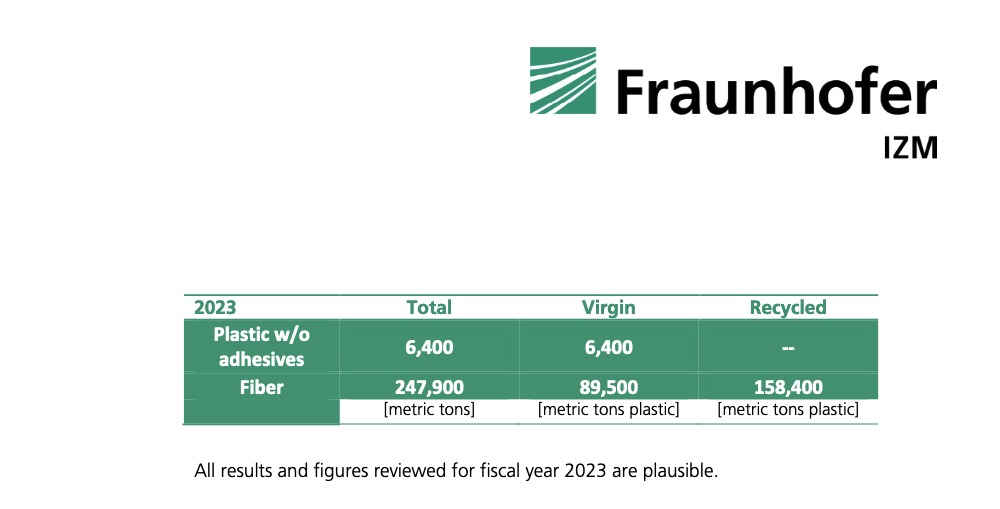
Apple is continuing to use 100% fibre-based packaging created from recycled or responsibly sourced wood (RSW) fibre. Interestingly, Apple’s latest Environmental Progress Report hides the volumes of plastics, recycled fibre and RSW in an appendix rather than in a main-body infographic as in recent years. I can’t be sure why this is, but let’s tabulate the data from 2015 (Apple’s declared baseline year), 2021, 2022 and 2023:
| 2015 | 2021 | 2022 | 2023 | |
| Plastics | 21% | 4% | 4% | 2% |
| RSW | 31% | 33% | 40% | 34% |
| Recycled | 48% | 63% | 66% | 64% |
| Tonnes | 172,000 | 257,000 | 276,000 | 247,900 |
Since 2015, Apple has reduced the plastic in its packaging from 21% to 2%. At the same time, it has increased the percentage of recycled fibre, whilst RSW has stayed (except for a spike in 2022) broadly the same. Another figure which has stalled is the split between RSW and recycled in Apple’s packaging.
Behind the percentages
The reason I’m drilling into packaging figures is that these are a great example of how percentages can look attractive in a report whilst differing in reality. The bottom line of the table, tonnes, is the volume of packaging Apple reported year on years.
| 2015 | 2021 | 2022 | 2023 | |
| Plastics | 36,120 | 10,280 | 11,040 | 4958 |
| RSW | 53,320 | 84,810 | 110,400 | 84,286 |
| Recycled | 82,560 | 161,910 | 182,160 | 158,656 |
| Tonnes | 172,000 | 257,000 | 276,000 | 247,900 |
If we re-tabulate and turn the percentages into weight volumes, the data reveals that the actual tonnage of plastic in Apple’s packaging has significantly reduced. Well done Apple.
However, Apple’s RSW use since 2015 is now 30,000 tonnes higher, whereas its recycled fibre has also increased by 76,000 tonnes.
Clearly the increased in packaging tonnage is driven by the increase in Apple’s sales (more products mean more boxes) but environmentally, we need to remember that there is a cost.
There is an irony that Apple is paying a fortune in reforestation offset schemes whilst simultaneously pulping an increased number of trees to make its boxes.
Is the Mac mini Apple’s first carbon neutral product?
No. The Apple Watch 10, Apple Watch Ultra 2 and Apple Watch SE were all listed as carbon neutral, but the Mac mini is the first Apple computer to be carbon neutral. The Mac mini should have a lower carbon footprint than Apple watches as it doesn’t include a screen, battery and it won’t move around with the owner. A product’s LCA must account for these factors.
Should I buy the Mac mini?
I own an M1 Mac mini. Will I be upgrading to the new one? No. At least, not yet.
There is no doubt that Apple has pushed a few boundaries with the new Mac mini, but the carbon neutrality claim is no more than a nice sticker on the box. It is foolish to buy a Mac mini believing it will have any effect on the carbon budget of your organisation.
Although Apple has meticulously detailed the LCA of the Mac mini, it remains as unrepairable and un-upgradable as its predecessors. As we’ve discussed elsewhere on TechFinitive, Apple has a congenital aversion to repair. This matters because the best way to reduce the carbon cost of a product is to keep it in use for as long as possible.
In environmental terms, the greenest product that you have is probably one that you already own. If you’re in the market for a new product, and you want to be green, then buy refurbished. This is no longer a ‘buyer beware’ gamble thanks to a maturing market from quality vendors like Back Market, Currys or your local independent retailer. Many refurb vendors offer trade in too. If you have Apple products which are end of life, make sure you return them directly.
The new Mac mini is a good product and is still the cheapest way to stay within Apple’s ecosystem.
Apple’s efforts in recycling aluminum and rare earth elements deserve commendation, and I hope it will continue to apply these practices to other products in its range.
However, for Apple to hit its 2030 whole-range carbon neutrality target, is going to take an impossible number of trees on a landmass that our planet doesn’t have.
Your move, Apple.
About The Author

Lee Grant
NEXT UP


