Trending Topics

 Trending
Microsoft’s head of AI says office workers will be obsolete by 2026… we’re not so sure

Do AI creators actually know anything about the jobs they’re replacing?
You’d think a Microsoft employee would understand the world of work, but the company’s AI head is hardly the average worker – after all, Mustafa Suleyman is the Co-Founder of British AI startup DeepMind.
In a chat with the Financial Times, he suggested that AI will imminently achieve “human-level performance” on most or even all professional tasks, replacing white-collar workers’ tasks in the next year or so.
“I think we’re going to have a human-level performance on most if not all professional tasks,” Suleyman said. “So white-collar work where you’re sitting down at a computer, either being a lawyer or an accountant or a project manager or a marketing person, most of those tasks will be fully automated by an AI in the next 12 to 18 months.”
And we can see this in software engineering, he argues, with some software engineers using AI agents for some or even most of their code, leaving the human coders to oversee the process via debugging, architecting, and putting things into production.
Now, it’s worth noting that those tasks are actually pretty major aspects of software engineering. Even if AI agents can handle most of the coding work, Suleyman’s own example suggests humans are still needed for all the other tasks.
In other words, AI will be able to do parts of professional work, but not all of it.
Roles are at risk
Consider the other roles named by Suleyman. Automating some legal paperwork is surely welcome, but AI isn’t going to be standing up in court or negotiating major M&A deals.
Project management involves plenty of data shuffling, but also managing people by talking to them in person and understanding where bottlenecks and other challenges might occur.
And so on. It may well be that he knows a lot about AI and not so much about what the rest of us do.
Suleyman is obviously not the first to see AI disrupting office work. Anthropic CEO Dario Amodei said last year that half of entry-level jobs will disappear thanks to AI, but that’s half of entry-level roles, not all professional jobs, and it’s not for another five years. (Plenty of time to retrain as a yoga instructor or gardener.)
Humans in the loop so office workers not totally obsolete
Suleyman said this would be a “professional-grade AGI” rather than superintelligence or artificial general intelligence. Teams of PGAGI, as I’m now calling it, would be managed by “organisational AGI” – so don’t worry, middle-managers will be out of work, too.
“I think that’s coming into view in the next two or three years’ time,” he told the FT, referencing a network of AI models that could run a company or institution.
That said, humans will still be needed in the loop, with Suleyman saying such AI agents would be capable of making decisions but would “seek input from humans”.
Overall, he predicted “millions of digital minds” that are as easy to create as making a podcast or writing a blog post. “It is going to be possible to design an AI that suits your requirements for every institution, organisation and person on the planet,” he said.
Timeless predictions about AI’s impact on work
We’ll have to wait and see if Suleyman’s prediction is correct or not – don’t worry, I’ve set up a calendar reminder to check – but other forecasts have come and gone by now in AI, despite how new it all is.
Last March, Amodei said AI would write 90% of software code in the subsequent six months, and all of it within a year. That milestone looks unlikely to be met in the next month or so.
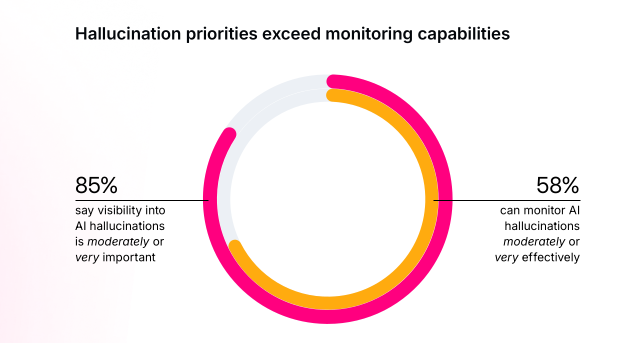
Even Suleyman said back in 2023 that hallucinations – the constant errors that these systems continue to throw up, as they have no sense of truth – would be largely solved by last year. Asked about that by the FT, he said: “I would stand by the statement that they’ve been largely eliminated.” He added: there are still errors, there’s no question about that. But the rate of improvement is unbelievable.”
Suleyman suggested that hallucinations are no longer an issue for most people – most people may disagree – but OpenAI has admitted they remain an inevitable part of these systems.
Making predictions is fraught at the best of times, but perhaps AI forecasters would benefit from spending a day in the marketing or accounting team before assuming they know what those roles really mean.
More Microsoft & AI stories
About The Author