Trending Topics

 Trending
Unexpected AI bills and rising telemetry costs challenge enterprises, Cisco study finds

More than half of enterprises are struggling to control AI costs, with unexpected billing spikes creating greater operational strain than high baseline expenses, according to new research from Cisco.
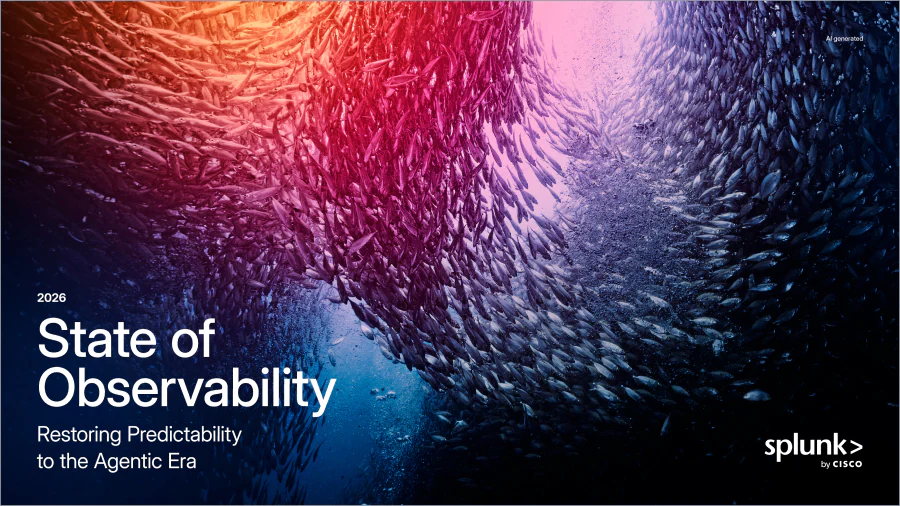
The Splunk State of Observability 2026 report found that 60% of respondents said unexpected billing spikes caused more operational strain than baseline costs, while 55% said they were unable to control AI spending as usage increased and became harder to predict.
Rising AI costs and telemetry pressures
Telemetry costs are also putting pressure on IT budgets, with 57% of respondents saying the cost of collecting and processing monitoring data had eclipsed the cost of the infrastructure being monitored.
“For today’s enterprises, the excitement of AI is clashing with the reality of the bill,” Splunk at Cisco SVP and GM Kamal Hathi said.
Hathi advised that observability could help organisations bring greater predictability to AI spending.
“By providing the necessary guardrails and incorporating observability into an AI tokenomics framework, leaders can transform AI from an unpredictable expense into a measurable and strategic long-term business investment,” he said.
While 87% of respondents said monitoring AI was a priority for their organisation, 54% did not have clear business outcomes tied to that monitoring.
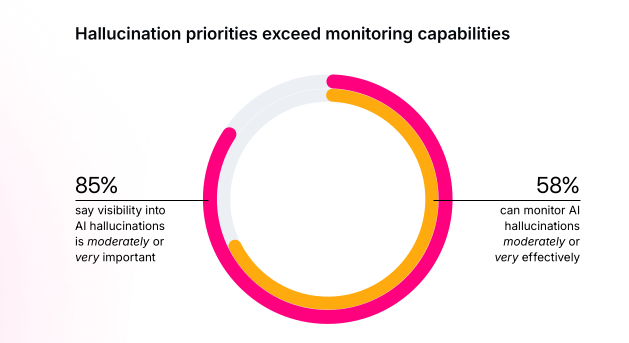
Meanwhile, 56% said they were unable to measure AI workload metrics such as large language model response quality, while 85% considered visibility into AI hallucinations important. However, only 58% said they were effective at monitoring them.
Bridging observability and security
The research also found that 81% of respondents said monitoring AI workloads had increased collaboration between observability and security teams. Meanwhile, 77% said observability teams were troubleshooting with security teams, up from 62% in 2025.
“Managing agents at scale requires reimagining both security and observability,” Cisco president and chief product officer Jeetu Patel said.
“Have our agents been compromised? Are they doing their job well? In the world of agentic AI, these questions are inseparable, and they’re moving at machine speed.
“This report shows that observability and security data are converging, and that teams need to collaborate more than ever. Common data platforms that help us detect and respond to issues in real-time are the key to deploying agents we can trust at scale.”
More Cisco coverage
About The Author

Aimee Chanthadavong
NEXT UP