Trending Topics

 Trending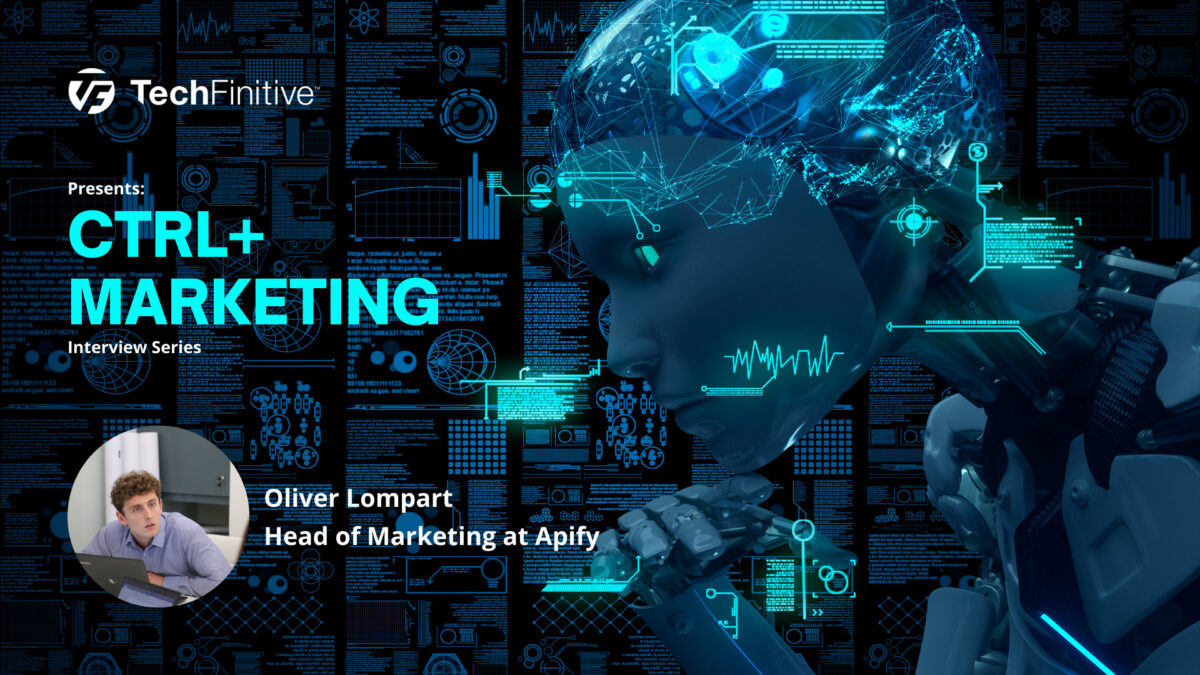
Oliver Lompart, Head of Marketing at Apify: “I think we are unprepared for what’s coming”

Oliver Lompart has spent his career proving that marketing is just as much about strategy as it is about compelling storytelling. With over a decade of international experience across Europe and Asia, Oliver now leads global marketing at Apify, where he’s putting his experience to work using AI as a strategic tool rather than a shortcut for results.
For Oliver, the rise of AI in marketing has meant rethinking how his team approaches every project. “We’ve always been focused on automation,” he explains, “as it’s in Apify’s DNA, but AI has made it the default starting point for everything.” Instead of diving straight into execution, his team now begins by asking what parts of the process AI can handle, ensuring their energy is spent where it can make the greatest difference.
This strategic shift is one that goes beyond campaigns and workflows: it’s also reshaping how Apify’s marketing teams are built. According to Oliver, the introduction of AI has meant no new role is created until a hiring manager can prove that AI automated processes can’t handle the work on their own. While this may sound like AI taking human jobs, Oliver sees it a different way. To him, it means “making sure we hire people for what they are best at: complex problem-solving, creativity and strategy”.
That same strategy drives how Oliver thinks about campaign personalisation. For him, it’s not about simply dropping a first name into an email but about exploiting AI’s strengths to use raw data in a meaningful way. Or as Oliver puts it: “AI is the engine that can process that context and deliver a relevant experience, but its output is only as good as the data you feed it”.
With strategy, hiring and personalisation all being actively reshaped by AI, Oliver’s way of thinking seems to have evolved at every level. Which raises the obvious first question for us: how has AI changed the way he approaches digital marketing?
How has AI changed the way you approach digital marketing over the past few years?
For us, the biggest change is how we think before we act. We’ve always been focused on automation as it’s in Apify’s DNA, but AI has made it the default starting point for everything. Previously, we’d ask, “What’s the most efficient way to do this?” Now, everyone on the team is required to ask, “Which parts of this process can AI handle for me?” before any project gets off the ground. It’s a subtle shift, but it forces everyone to map out our workflows and decide where a person’s time is best spent versus where a machine can do the heavy lifting.
This applies to everything from market research, where we can spin up an Apify Actor to gather data instead of doing it manually, to content production, where AI can help with initial drafts or summarising technical documents. It’s less about a single-use tool and more about a new layer in our operational stack.
This has also changed how our team grows. We now have a straightforward rule for hiring: a hiring manager needs to justify that AI or an automated workflow can’t do the job before they can open a new position. This isn’t about cutting headcount; it’s about making sure we hire people for what they are best at: complex problem-solving, creativity and strategy. This ensures we build a team of smart marketers who know how to think critically and who are enabled to do more work using AI, not enslaved by it.
What are the most exciting AI tools or technologies you’re currently using in your marketing campaigns?
For us, the big one is the Model Context Protocol (MCP). We’re investing heavily in this area because it’s a massive unlock for building truly autonomous marketing workflows. In simple terms, MCP is like a universal connector for AI. It allows an AI model to find and use “tools” to get jobs done without needing a custom integration for each one. This is where it gets really interesting for us, because the “tools” concept in MCP is a perfect match for the army of 5,000+ “Actors” we have on the Apify platform.
Let’s take monitoring competitors as a practical example. In the past, I had our social media Actors set up to regularly scrape our closest competitors. The process worked, but it would send a large chunk of raw data to me once a week on Slack, and I still had to manually sift through it to find what mattered.
Now, with MCP, the process is different. I can just type my request like if I was asking a colleague to do something over Slack. MCP will find the right Actor on Apify Store to scrape this information, run it for me in the background, process the data to pull out the important bits, and send a clean summary wherever I tell it to. The key is that I don’t have to juggle a bunch of different tools or parse data anymore. The entire workflow, from finding the tool to delivering the final, processed information, is handled by MCP.
Personalisation has become a key marketing trend. How has AI helped you deliver more personalised experiences at scale?
Meaningful personalisation isn’t just about using a person’s first name in an email anymore. It’s about understanding their intent and context. AI is the engine that can process that context and deliver a relevant experience, but its output is only as good as the data you feed it. An AI model without deep, real-time context is just guessing. This is where we see the most significant impact. For us, AI’s primary role in personalisation is to make sense of the vast amount of public web data that our Actors can collect, turning that raw data into a specific, helpful and scalable customer interaction.
We’ve put this into practice with an Actor we developed internally that serves as our “AI advisor”. When a potential customer or user sends us an inbound inquiry, this Actor immediately gets to work before anyone on our team has even seen the message. It doesn’t just analyse the text of the request itself. It uses that initial query as a starting point to gather a much richer context.
The Actor instantly checks a few sources: First, it looks at the user’s request and scans Apify Store for existing Actors that might solve their problem. Second, it searches our documentation and blog content for relevant guides or tutorials. Third, it cross-references the person’s email with our CRM to see their history with us. Finally, it can scrape publicly available information from the web to better understand their company and role. The AI then synthesises all this information to provide a detailed, genuinely helpful and personalised response to the user. This often solves the user’s problem immediately, and it means that when our human team members do get involved, they already have a full picture and can skip the basic questions.
How can AI-enhanced marketing create a connection that feels authentic to the humans who receive the communications? What does “authentic marketing” mean to you in an era of AI-generated content? Is true authenticity still possible at scale?
Authentic marketing in the AI era means being relentlessly committed to your brand’s core principles, even when technology offers an apparent shortcut. And yes, authenticity is absolutely still possible at scale, but it requires discipline. The temptation with AI is to delegate everything – the thinking, the writing, the strategy. That’s a trap.
Our audience at Apify is developers, and they can smell nonsense from miles away. Generic, soulless, AI-generated content won’t just be ignored; it will actively damage our reputation. Authenticity for us means every piece of communication, whether it’s a blog post, documentation, or a simple email, must be filtered through our core principles. It has to be technically accurate, genuinely helpful and speak to the real-world problems developers face. AI can help us get a first draft or analyse data to understand what those problems are, but the final message must have a clear human fingerprint and a strong point of view.
Scaling authenticity isn’t about having AI write 1,000 “personalised” emails. It’s about using technology to understand our users so deeply that the one email we do send is really relevant to our audience. Like our “AI advisor” Actor that I mentioned, it uses AI and data to provide a genuinely helpful answer, fast. That’s an authentic interaction. The authenticity comes from the value delivered, not from pretending a robot is a human. It’s a commitment to being useful and true to who you are, and if you use AI to serve that commitment instead of replacing it, you can be more authentic at scale than ever before.
Which AI trends or developments do you believe will have the biggest impact on digital marketing in the next 3-5 years?
I see two major trends that I think will define the next era of digital marketing, though they impact it in very different ways. One is a massive operational shift toward autonomous systems, and the other is a content revolution that is both exciting and, frankly, quite scary.
The first trend is the maturation of technologies like the Model Context Protocol (MCP). We’ve discussed it already, but its long-term impact is huge. In the next couple years, it will become even more autonomous. Think of an AI that doesn’t just schedule a social media post, but independently identifies a trending topic, finds the right Apify Actor to gather real-time data on it, pays for it and generates a multi-channel campaign around its findings, analyses the results and then refines its own strategy for the next campaign. This is the positive side of the coin: AI handling complex operations will free up human marketers to focus entirely on high-level strategy and creativity.
The second, and more dramatic, trend is generative AI video. The potential is obvious as it gives the ability to create highly customised video ads, explainers and social content at a scale and cost that is currently unimaginable. However, there’s a deeply concerning side to this, as I think we are unprepared for what’s coming. Today’s algorithms optimise human-made content, which is an imperfect process. Soon, AI will be able to generate infinite content and optimise it directly against user engagement. As marketers, this will present a serious ethical crossroads. The ability to create perfectly addictive content will be in our hands, and we will have to decide how, and if, we should use that power.
More interviews
- Sharon Yates Harrison, CMO of Gravyty: “AI is forcing us to redefine what personalisation actually means”
- Ada Mockute Jaime, CMO at Nordcurrent: “Do not be scared or sleep on the opportunities AI presents”
- Deema Tamimi, VP of Marketing at Creatopy: “The real magic happens when you treat AI like a creative partner, not just a productivity hack”
- Rachel Fairley, Marketer: “Please don’t outsource your thinking”
- Milind Pathak, CMO at Proximus Global: “AI isn’t always the right tool for the job”
About The Author

Rowan Campbell
NEXT UP