Trending Topics

 Trending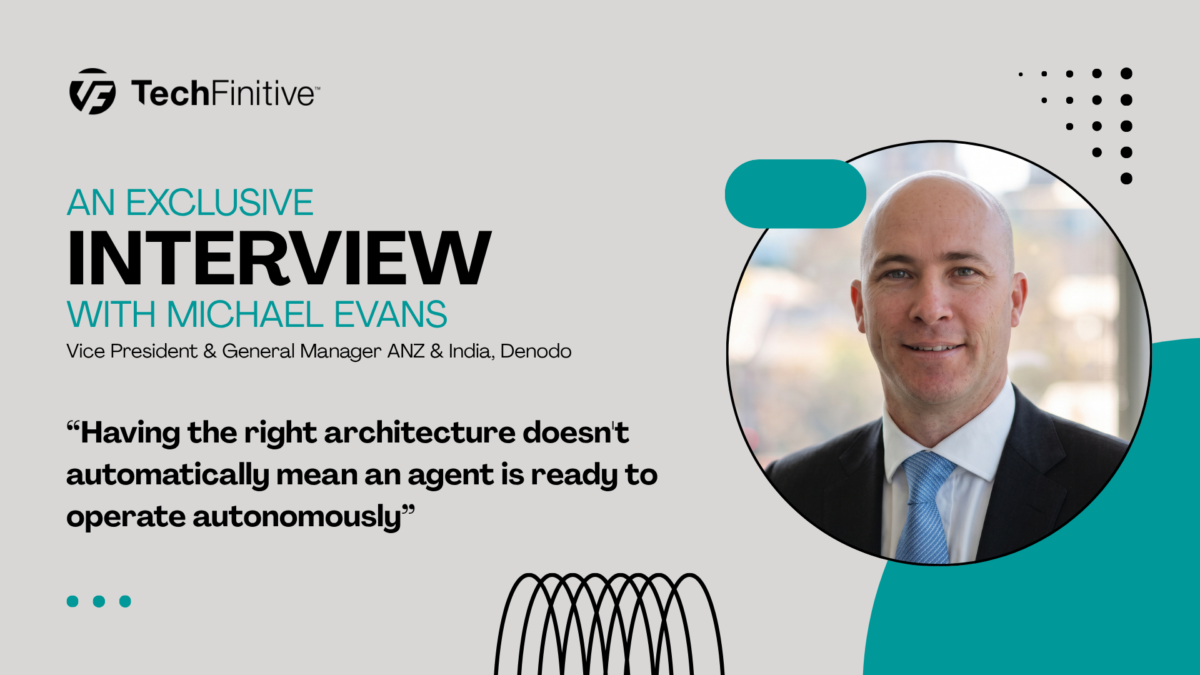
Michael Evans, VP & GM, ANZ & India, Denodo: “Having the right architecture doesn’t automatically mean an agent is ready to operate autonomously”

Australian businesses are embracing AI, but many are still struggling to get their data ready for it.
Michael Evans, VP and GM for ANZ and India at Denodo, argues that access to accurate information is only part of the challenge: AI systems also need the business context to make reliable decisions. As organisations move from AI assistants to autonomous agents, that means connecting data across existing systems, enforcing governance at the point of action, and ensuring employees have the skills and confidence to use the technology.
We spoke to Evans about why data readiness is lagging behind AI adoption, what Denodo calls “Active Context”, and the foundations businesses need before trusting AI agents with operational decisions.
Australian businesses are adopting AI rapidly, but the ABS figures suggest far fewer are actively collecting or analysing data to inform decisions. Why do you think AI adoption is moving faster than organisations’ underlying data readiness?
AI adoption and data readiness are moving at different speeds because they involve fundamentally different challenges. A business can introduce AI tools to its employees relatively quickly. But making AI useful for business decisions requires access to trusted enterprise data, with the right context and governance. That takes considerably more work.
For years, organisations have built data environments primarily around reporting and analytics, where people interpret information, reconcile inconsistencies and apply their business knowledge. AI introduces different requirements, particularly when it moves beyond assisting employees to making recommendations or taking actions. Data must not only be accessible, but also understandable, accurate and current enough for the decision being made.
Business leaders are under growing pressure to demonstrate AI progress, often before their underlying data foundations are fully ready. AI is no longer just a technology priority; it has become a measure of leadership performance and, increasingly, career success. Boards expect progress, executives are concerned about falling behind competitors, and organisations are looking for ways to translate AI investment into business results. This urgency is driving experimentation and adoption, even as longstanding challenges around data access, quality and governance remain unresolved.
Businesses shouldn’t delay AI adoption until every data problem is solved. They should start with clear business use cases, address the data challenges those use cases expose, and strengthen their foundations as they scale.
Competitive advantage won’t come simply from using the same AI models as everyone else. It will come from how effectively businesses put their own data and knowledge to work.
An AI model can produce a plausible answer while still lacking the business context needed to make that answer useful. What kinds of context are organisations most often failing to provide to their AI systems, and why is simply improving data quality not enough?
One of the biggest gaps is the business knowledge that sits behind the data. Organisations have spent years collecting and managing information, but much of the context needed to interpret it still resides in people’s experience, business processes and decisions.
This includes how different departments define the same information, how customers, products and transactions relate to one another, which business rules and exceptions apply, and whether the information is current enough for a particular decision. For example, an AI system might recommend a supplier based on accurate pricing and delivery data, without understanding contractual commitments, quality requirements or the consequences of a production delay. The data itself may be entirely accurate, but without the broader business context, the recommendation could end up costing the company far more than it saves.
That’s why improving data quality alone isn’t enough. Clean data doesn’t necessarily tell AI what information means, how it should be interpreted, or which business rules apply in a particular situation. Humans have traditionally filled these gaps through experience and judgement. AI systems cannot be expected to reliably reproduce that understanding simply by being given more accurate data.
Organisations need to bring business and data teams together to make this knowledge explicit through consistent definitions, relationships, rules and exceptions that AI systems can interpret and apply.
Accurate information is the starting point. Understanding what that information means in the context of a business decision is what makes it useful.
The risks change considerably when organisations move from AI that answers questions to agentic AI that can take action. What new data and governance requirements emerge when an AI agent is allowed to act on behalf of a business?
The risks change fundamentally when AI moves from recommending an action to executing it. An incorrect answer can be reviewed and challenged by a person, but an AI agent acting autonomously can create immediate financial, operational or regulatory consequences.
The first requirement is access to trusted, current business context. Agents need to understand not only the underlying data, but also the applicable contracts, business rules, exceptions and decisions already made. An action that was appropriate yesterday may no longer be appropriate today because a contract has changed, an approval has expired or a transaction limit has been reached. This is where the concept of ‘Active Context’ becomes important: giving AI access to relevant, trusted information and business meaning that reflects the situation at the time a decision is made.
The second is distinguishing between what an agent can technically do and what it is authorised to do. For example, an agent permitted to issue customer credits of up to $500 per case might issue $300 and then another $250 against the same case. Each transaction falls below the individual limit, but together they exceed the authority delegated to the agent. This becomes even more complex when multiple agents participate in the same business process.
Governance must therefore extend beyond controlling data access to enforcing business policies and decision boundaries at the point of action. Organisations need controls that can evaluate the current business context, enforce permissions and transaction limits, escalate higher-risk decisions for human approval, and maintain an auditable record of what happened and why.
The challenge is to establish safeguards that allow agents to operate autonomously within clearly defined boundaries, without requiring human approval for every routine action. Businesses must be able to explain not only what an agent did, but why it was authorised to do it.
You describe “Active Context” as giving AI secure access to relevant, trusted and current business information when it needs it. How does that differ from simply moving an organisation’s data into a central repository or feeding more data into an AI model?
Moving data into a central repository and making that data useful to AI are two different challenges. Data warehouses and lakehouses play an important role in analytics, reporting and AI development. But bringing information together doesn’t automatically establish what it means, how different pieces of information relate to one another, or which business rules apply to a particular decision.
Similarly, feeding more data into an AI model doesn’t necessarily produce a better answer. It can introduce conflicting definitions, outdated information and irrelevant details. What AI needs is the right information, with the right business meaning and governance, at the moment it is needed.
Consider an AI agent responding to a customer about whether an order can be delivered tomorrow. It needs more than historical sales and inventory data. It must understand current stock availability, existing order commitments, warehouse capacity and the customer’s delivery terms. Each piece of information may reside in a different system, and the situation can change throughout the day. Having all that information stored somewhere is not the same as bringing the right information together to make a reliable commitment.
This is where Active Context makes a difference. Denodo’s AI Data Layer connects information across existing enterprise systems, applies consistent business definitions and governance, and delivers relevant, current information when AI needs it. It does this without requiring organisations to move or duplicate all their data into another central repository.
This approach complements existing data platforms rather than replacing them. It allows businesses to build on their current investments while providing AI with a consistent, governed view of enterprise information that reflects the business situation at the time it is needed.
Australia’s National AI Plan is encouraging businesses to use AI to drive productivity, while responsible AI guidance is placing greater emphasis on issues such as data quality and provenance. What should organisations be doing now to make sure their AI deployments can scale beyond individual pilots without creating new risks?
One of the biggest mistakes organisations can make is treating AI adoption purely as a technology rollout. You can have the most advanced AI tools and a well-designed data infrastructure, but if employees don’t trust the technology, lack the skills to use it or fear what it means for their jobs, adoption will struggle.
Business leaders need to invest as much in people as they do in technology. That means building AI literacy across the workforce, providing role-specific training, encouraging experimentation and helping employees see how AI can improve their everyday work. Simply giving people access to AI tools doesn’t guarantee adoption or productivity gains. Organisations also need to retain and develop the skills and institutional knowledge required to sustain progress beyond individual pilots.
The other critical challenge is striking the right balance between governance and innovation. Organisations need to address data privacy, sovereignty, security, accountability and AI risk, but overly restrictive approval processes can discourage experimentation or drive employees towards unapproved AI tools.Recent incidents involving AI agents accessing Australian government systems serve a timely reminder that AI safeguards must work in practice and not simply exist as policies.
Governance should be proportionate to the risk, with automated controls for routine activities and stronger human oversight where AI decisions could affect customers, finances or regulatory obligations. Employees also need to understand these risks and the boundaries within which they can safely experiment.
That organisational readiness also needs a trusted data foundation that can scale with adoption. Rather than building separate data integrations and governance processes for every pilot, businesses need reusable capabilities that make reliable information available securely across different AI applications, with consistent business definitions and controls.
Giving employees access to AI is relatively easy. Getting them to use it confidently, responsibly and productively requires sustained investment in skills, trust and organisational change. That’s where business leaders need to focus if Australia is to turn its AI ambitions into real productivity gains.
If a business wants to move from experimenting with AI to having agents embedded in everyday operations, what does the underlying data environment need to look like before it should trust those systems to make or execute decisions?
An AI agent embedded in everyday operations cannot depend on manually prepared data or the one-off integrations that might have been sufficient for a pilot. It needs an environment that can consistently deliver trusted information and business context as conditions change across the organisation.
That means secure access to current information across operational systems, cloud platforms and legacy applications, supported by consistent business definitions, clear data provenance and established ownership. Agents need to understand where information comes from, how it relates to other information, and whether it is sufficiently current and reliable for the decision being made.
The architectural challenge is making these capabilities available consistently across multiple AI applications. If every new agent requires its own data pipelines, integrations, business definitions and security controls, organisations risk recreating the same fragmentation they have spent years trying to overcome. A common, governed data layer can connect information across existing systems, preserve consistent business meaning and deliver relevant information when it is needed, without requiring another major round of data consolidation.
But having the right architecture doesn’t automatically mean an agent is ready to operate autonomously. Businesses need to test how agents perform when information is incomplete, systems are unavailable, circumstances change or business rules conflict. Access controls must work consistently, decisions must be traceable, and agents should escalate situations where reliable decisions cannot be made. Controls over the actions agents can execute must also be enforced within the relevant business systems and workflows.
Before expanding autonomy, organisations should be confident that agents can consistently access and interpret the right information, operate within established boundaries and respond safely when something goes wrong. That confidence needs to be demonstrated through real-world testing, continuous monitoring and appropriate human oversight, not assumed because an initial pilot was successful.
About The Author