Trending Topics

 Trending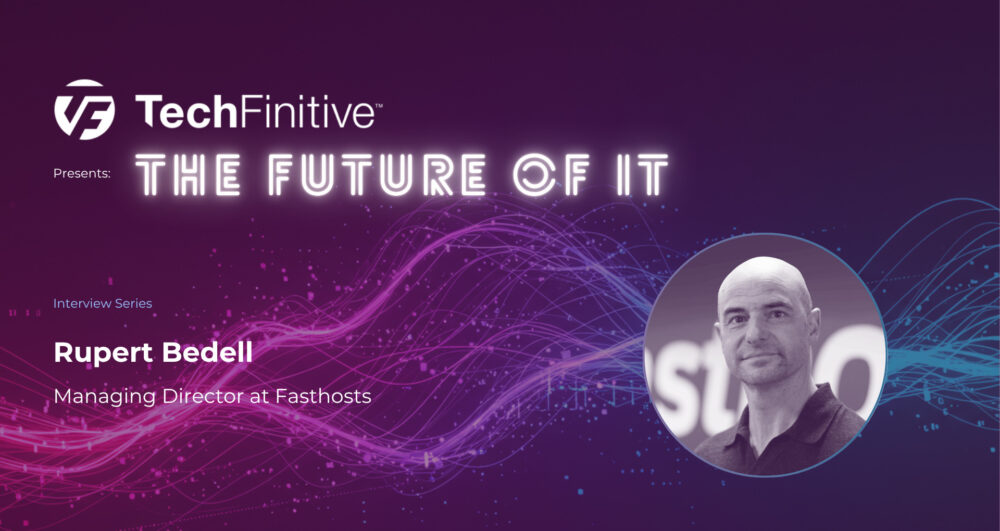
Rupert Bedell, Managing Director at Fasthosts: “IT teams will need to adopt a more customer-centric mindset”

With over 25 years of experience across global companies including American Express and HSBC, Rupert Bedell is used to thinking big. Now Managing Director at Fasthosts, he’s putting his wealth of experience into practice by preparing the company for the radical changes that are the future of IT.
For Rupert, the biggest shift is already underway. AI is taking over “grunt work,” and he sees the traditional role of IT in its firing line. But don’t fear: he predicts that this means IT will “no longer be a back-office function” but instead “a critical enabler of business strategy”.
And we’ll be able to do more. He expects an influx of intuitive and tailored tools that will “lower the barriers for entry” for businesses to “turn ideas into reality”.
For IT professionals, adapting successfully will require a fundamental shift in how they work. Rupert sees their future as radically different from what it is today, shifting from “behind-the-scenes problem solvers” to instead having “a seat at the table”.
With this role change comes the need for new softer skills, with Rupert predicting that the ability to “build trust, communicate effectively and collaborate” will soon become essential. “The professionals who succeed will be those who approach challenges with curiosity and resilience, ready to adapt to the changing industry.”
Keep reading to discover Rupert’s other predictions for IT professionals. That includes combatting the climate crisis by designing systems that use AI to cut our emissions. “The choices we make now,” he says, “will determine whether this industry leads in building a sustainable future or contributes to a worsening climate crisis.”
So let’s tackle the short-term first…
What do you think will be the most significant changes in the IT industry over the next 5-10 years?
It’s hard to think about the future of the IT industry without seeing AI leading the charge. Its ability to take over the ‘grunt work’ and simplify operations is already changing industries and this trend will only grow. For many businesses, this is an opportunity to focus resources on innovation and growth as teams are freed up to focus on more strategic, creative, and customer-focused activities.
As AI and automation tools become more accessible, IT will no longer be a back-office function but a critical enabler of business strategy. For example, AI tools will allow businesses to go beyond simply analysing data to making smarter, faster decisions, such as predicting customer demand with great accuracy. IT teams will play a vital role in setting up these tools and helping the business act on the findings.
At the same time, the IT industry itself will need to adapt to meet growing demand for tools that are intuitive, scalable, and tailored to diverse business needs. Low-code platforms and cloud-based solutions will play a pivotal role, enabling businesses to innovate quickly without needing extensive technical expertise.
The next decade will likely see the IT industry driving more businesses to turn ideas into reality. As new technologies lower the barriers to entry, more businesses will be able to innovate and compete in new ways.
How do you envision the role of IT professionals evolving in the future?
In the future, the role of IT professionals will be radically different from what it is today. IT teams will shift from being behind-the-scenes problem solvers to taking a seat at the table, working closely with leadership to influence strategy and decision-making. They’ll act as enablers of innovation, helping organisations bring in new technologies that support broader business goals.
I believe this shift is already underway. Technology is taking over routine tasks, freeing IT professionals to focus on identifying where innovation can create real value. Whether it’s implementing AI tools to simplify processes or designing infrastructure that supports rapid business expansion, IT will be at the centre of these efforts.
Another area of evolution will be IT professionals acting as connectors within organisations. They’ll need to break down silos and collaborate across departments to ensure that technology fits smoothly into how the business operates and supports its goals without adding complexity. Their ability to bring technical possibilities into focus for non-technical stakeholders will be essential in helping businesses thrive.
Ultimately, the role of IT professionals will be about more than just managing technology. They’ll act as the architects of digital transformation, shaping the direction of organisations, helping them innovate and remain competitive in a rapidly changing world.
What skills do you think will be most valuable for IT professionals in the future?
As the industry evolves, IT professionals will need to bring more than just technical expertise to the table. Soft skills will be just as important as technical ones. The ability to build trust, communicate effectively, and collaborate across departments will allow IT professionals to bridge the gap between technical solutions and business goals. As technology enables them to step into more strategic roles, these skills will ensure they can bring value beyond their technical knowledge.
IT teams will also need to adopt a more customer-centric mindset, understanding not just the mechanics of technology but how it impacts user experiences and benefits the organisation. A fresh perspective and the ability to clearly articulate ideas will be critical. Taking a step back from a project can reveal new opportunities, and framing these insights in a compelling way will help IT professionals stand out, whether within their teams or when presenting to leadership.
For those starting out in IT, adaptability will be key. Education and early career development must focus on critical thinking, leadership, and managing emerging technologies like AI. Businesses, too, will have a role to play by nurturing a culture that encourages continuous learning and cross-functional collaboration.
Finally, confidence will be essential. Stepping outside of your comfort zone and embracing change isn’t easy, but it’s where growth happens. The professionals who succeed will be those who approach challenges with curiosity and resilience, ready to adapt to the changing industry.
What role do you foresee for edge computing and IoT in shaping IT infrastructure?
It’s clear that edge computing and IoT will play a transformative role in shaping the future of IT infrastructure. As businesses continue to rely on digital services, the need for faster, more localised data processing is growing. Edge computing meets this demand by processing data closer to where it’s generated, reducing latency, cutting bandwidth use, and allowing businesses to manage data within specific regions to meet local regulations.
This shift will make IT infrastructure more agile and responsive. Instead of relying solely on centralised data centres, businesses will adopt a more decentralised approach, using edge networks to power innovations like real-time analytics, smart cities, and autonomous systems. In response, we’ll likely see the data centre industry react by collaborating with edge providers or developing their own local facilities to deliver the low-latency, scalable services that customers now expect.
IoT is driving this evolution by increasing the volume of connected devices generating data. Managing this influx will require IT systems that can adapt and scale effectively. Private 5G networks are already helping businesses handle the bandwidth, security, and control needed to support IoT applications. At the same time, advances in power efficiency, such as batteries with longer lifespans, will ensure these devices remain operational and cost-effective over the long term.
Together, edge computing and IoT are moving IT infrastructure towards a model that is more distributed, flexible, and capable of meeting real-time demands.
What ethical considerations do you believe will become more critical as IT continues to advance?
One of the most critical ethical challenges we face as IT advances is managing its environmental impact. The computing power required for AI is doubling every 100 days and is projected to increase by more than a million times over the next five years. This kind of growth comes with an enormous demand for storage and computational power, making data centres central to the conversation. The choices we make now will determine whether this industry leads in building a sustainable future or contributes to a worsening climate crisis.
Energy use is at the heart of this issue. I believe the UK must lead in establishing robust standards for energy efficiency and renewable energy use in new data centres. IT professionals will be instrumental in designing and implementing sustainable tech solutions, optimising energy consumption and minimising waste.
Carbon offsets alone won’t solve this problem. We need to think bigger. Imagine data centres located in remote, naturally cold environments for air cooling or even satellites in orbit powered entirely by solar energy. We need radical solutions that could fundamentally change the industry’s environmental footprint.
One thing for certain today is, for AI to truly benefit our society, we must address its environmental footprint head-on. IT professionals will play a critical role in meeting net zero targets and ensuring that technological progress benefits society without compromising our planet’s future.
How will IT contribute to addressing global challenges like climate change or social inequality?
IT has a unique role to play in tackling the global challenges of our time, from addressing climate change to reducing social inequality. Technology offers the tools and capabilities to create meaningful solutions while empowering businesses, governments, and communities to act.
In the fight against climate change, IT can drive smarter resource management. For example, IoT systems in data centres can monitor energy use in real time, while AI analytics predict demand and optimise workloads to reduce consumption. Together, these technologies can help data centres meet growing demand sustainably, minimising environmental impact.dx
IT also has the potential to address social inequality by increasing access to digital resources. Initiatives that provide affordable technology and reliable internet connections can bridge the digital divide, giving underserved communities access to education, job opportunities, and essential services.
Another critical aspect is the lifecycle of technology. IT professionals can lead efforts to build circular economies for hardware, focusing on repair, refurbishment, and recycling to minimise waste. This can tie back to making technology more accessible to underserved communities.
In short, IT can be the foundation for a full systemic change. Whether by enabling smarter cities, creating opportunities for underserved communities, or helping us meet net zero goals, IT professionals are at the forefront of building a more sustainable and equitable future.
More interviews
- How Google’s Steven Nickel is revolutionizing device repairability
- James Gornall, Director of Data and AI, Qodea: “The rise of AI and machine learning presents significant challenges for IT professionals”
- Andrew Lister, Head of Technology at Greenhouse Software: “IT in companies will undergo significant changes in the next few years”
About The Author

Rowan Campbell
NEXT UP


