Trending Topics

 Trending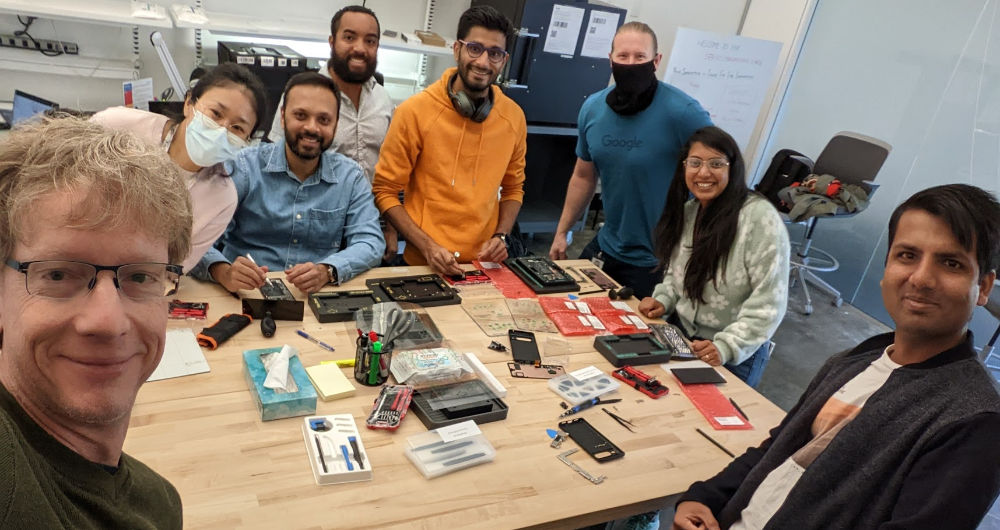
How Google’s Steven Nickel is revolutionizing device repairability

In an era where device longevity and sustainability are reshaping expectations, repairability is fast becoming a strategic differentiator for tech brands. Steven Nickel, Google’s Director of Consumer Hardware Operation and a veteran in global hardware repair, has been instrumental in transforming repair from an afterthought into a core business value.
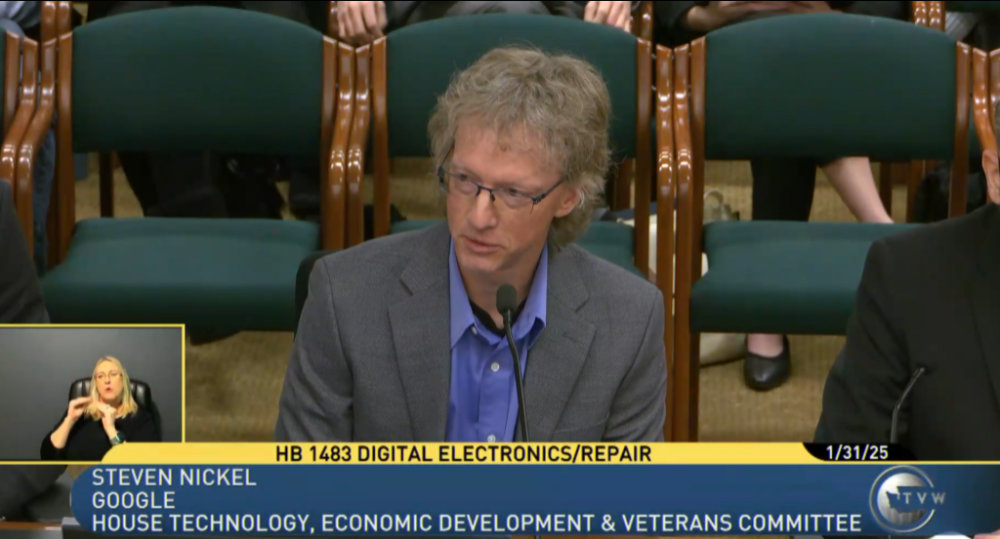
As enterprises and consumers seek to reduce costs, minimize e-waste and extend device lifespans, repairable technology is no longer a niche – it’s a necessity. With Google’s Pixel phones, Steven and his team are setting new standards: combining robust repair networks, genuine parts availability, and industry leading innovations to protect data during a repair process. Steven’s passion for the repair movement has been a powerful influence within US state legislatures, changing minds, and laws, in order to make fixing electronics easier for everyone.
Before Steven began his work with Google, he was VP for one of Sony’s most iconic brands, VAIO laptops, so I began by asking about his journey into repair with Sony.

Sony has a history of offering repair to their customers via various means such as Service Centres or service manual availability. Did you plan to bring this ethos to Google?
That’s a great point. It was interesting coming from such an advanced business, a mature consumer electronics firm. What I brought was the experience of this company that had done all those things. At Sony, we introduced the idea of a repairability scorecard.
We had a repair facility in San Diego. One day a technician said “we should keep these engineers honest as this can be challenging to repair”. So we put together a repairability report card that we gave to the engineers, and then we flew to Japan. Can you imagine us coming over, saying “Hey, we’re giving you a report card, we’re gonna grade you on the work that you’re doing”. We had a room full of people with arms crossed, but within two cycles, they were reporting it back. They were much stricter on their own grading than we were with them.
Coming to Google in 2013, there was no consumer electronics business and from my experiences with Sony, I realised this is a space that is very important. It’s very strategic, so I raised my hand to lead the efforts of it and over the years have built out the entire repair network and all the aspects of it.
Given the EU’s rollout of enhanced labelling for phones and tablets to increase buyer’s knowledge, could Google make their Repairability Scorecard public?
I think these are valuable tools, especially as a repairability evangelist. This is a great tool for us internally to drive design behaviours and principles that we want to see. When you can influence consumer behaviour at point of sale, that’s powerful, so to put this on a label heightens the focus and the attention within the organisation. Everyone from sales, design, to the engineers say “What do we need to do to improve in this area?” and we do that. We want to be competitive at point of sale. Europe is doing this and I’ve engaged a lot in India where they’re looking at a very similar type of approach. It highlights the importance of repairability and gives the opportunity to value it.
From starting the consumer product business to going out to bat to support Right to Repair, what were the challenges in shifting the mindsets of Google’s key decision makers?
It’s an evolution. Go back 12 years and it was common to do repairs with the expertise in a central location to ensure quality. The wonderful tailwind we had was the company’s mission on our side. Google has a very recognisable mission statement, to organise the world’s information and make it useful and accessible. Now, replace that word information with repairs.
If we were to make repair useful and accessible, we couldn’t do it from a single location. We had to get closer to the customer and that means we’re going to leverage walk-in centers and independent repairs. We’re going to leverage wherever we are selling, whatever market we’re selling in. We want to have a connection with customers where as many as possible can walk in and get same-day repair.
You need to make sure parts are available, that you have a global logistics capability to supply spare parts to these individual locations. That’s no small task and it’s incredibly difficult. Make sure that manuals are clear to understand. Make tools that are not cost prohibitive. We had discussions about this. To explain that one small independent repairer can’t afford all the equipment we have in the factory. We have to think creatively and innovatively to get the same level of quality and in the repair.
We designed tools for service that ended up being moved back to manufacturing because they were so effective. It became this evolution that started with a mission and a principle. Fast forward to a couple of years ago when right to repair started to get big and it’s for the same things that we’ve been building for the last eight years, so we had this great merging of these two aspects of repair.
A frequently used anti-repair argument is that third-party repairers are untrustworthy. Not only have you dispelled this myth during testimony in many Right to Repair hearings, but you’ve innovated a technical solution into Android 14 to reassure users that data is safe during a fix. Tell us more about Google’s Repair Mode.
That was years in the making and something we really pushed hard for. When repair strategy centres so much on third parties, in many locations, we had to have a very stringent policy. I think industry leading in terms of how careful we were around data security. With our authorized walk-in centres, we told them you have to wipe the device. There’s no choice of this. They gave us lots of feedback, saying that this is a burden on the customer who many times said, “please don’t do it”.
We recognized the customer challenge, but it was non-negotiable unless we could come up with a solution to safeguard the data. We worked internally with the software engineering teams, explaining that this is important for the industry. If we’re trying to drive repair, you’ve got to make sure that people feel comfortable.
The beauty of repair mode is it’s a wall in your phone. When I hand over my phone to a repair technician, I set my own passcode, but my data is behind closed doors. They can do all the work, all the verification. They have access to the diagnostics, all the tools that they need, but they can’t touch any of that data. Then they bring it back to you, you enter your code and boom, you’re back.
We’re really proud of that creation. We believe it’s such a critical piece. Consumers should be concerned about their data and really trust who’s safeguarding that data. We want to make that a good experience for customers so they don’t have to worry about it.
Google is making significant strides in repair, from championing Right to Repair legislation to partnering with iFixit to make genuine parts available and offering walk-in repair options. Cast your mind back 20 years: swapping a Nokia battery was a sub-10-second job. Why hasn’t the wider industry, Fairphone being a notable exception, managed to recapture that simplicity?
You’re always making design choices. If I talk with the design and the engineering team, they say, “look, you have a seat at the table. You’re part of the discussion of repairability. You’ll be in the argument.” We won’t win every argument, because when you look at all the constraints and all the decisions to be made, we’re all trying to optimize on this really tiny rectangle of the shape and optimize the feature set and the capabilities of what each phone can offer.
Certainly, modular is one end of the spectrum, but we also have to think about the feature sets that we’re trying to accommodate. That’s not to say that it isn’t something that we strive to resume with modularity and again, making that repairability simpler.
We’re trying to balance all design principles to make the best product that we can and put it forward, which we really believe is excellent.
From your perspective, what do you think the next critical steps are for the repair movement? How would you like to see Google lead that in trying to create a repair-friendly economy?
I’m really interested in how global it’s become. I’ve done work in the US testifying, but in India, I’ve worked with legislators, and I’ve helped be a voice in contributing to what they’re coming across with their repairability index. Most recently, in Thailand, we organized an event at a local university and sponsored a day-long event about right to repair. We had legislators repair out of kits, and they had thought little about right to repair. You could just see the beginnings of a movement and you could see the passion in the room from all sides. Legislators got very interested in it.

My learning from the experience has been, it’s not a one-size-fits-all solution. Each state, each country, and each region have different needs. There’s fundamental basics that should be around all parts of Right to Repair, accessibility, parts, tools, manuals and design principles, but you have to be respectful of where are you, what’s important to the people, what is important to the legislators, to the advocates and then help contribute your voice in nudging it in the direction that you believe is right. This is about more repairability, more repair for customers, and to show how this is also successful for businesses.
I think you’ll see the movement continue to grow. It’s amazing we have bills in all 50 states now and we’re seeing this pick up more and more globally. We’re still at the front end of this, and we’ll continue to support with our voice of what we think are important design principles and business and operational principles all around the idea of supporting repair and, again, making repair accessible.
Related articles
About The Author

Lee Grant
NEXT UP


