Trending Topics

 Trending
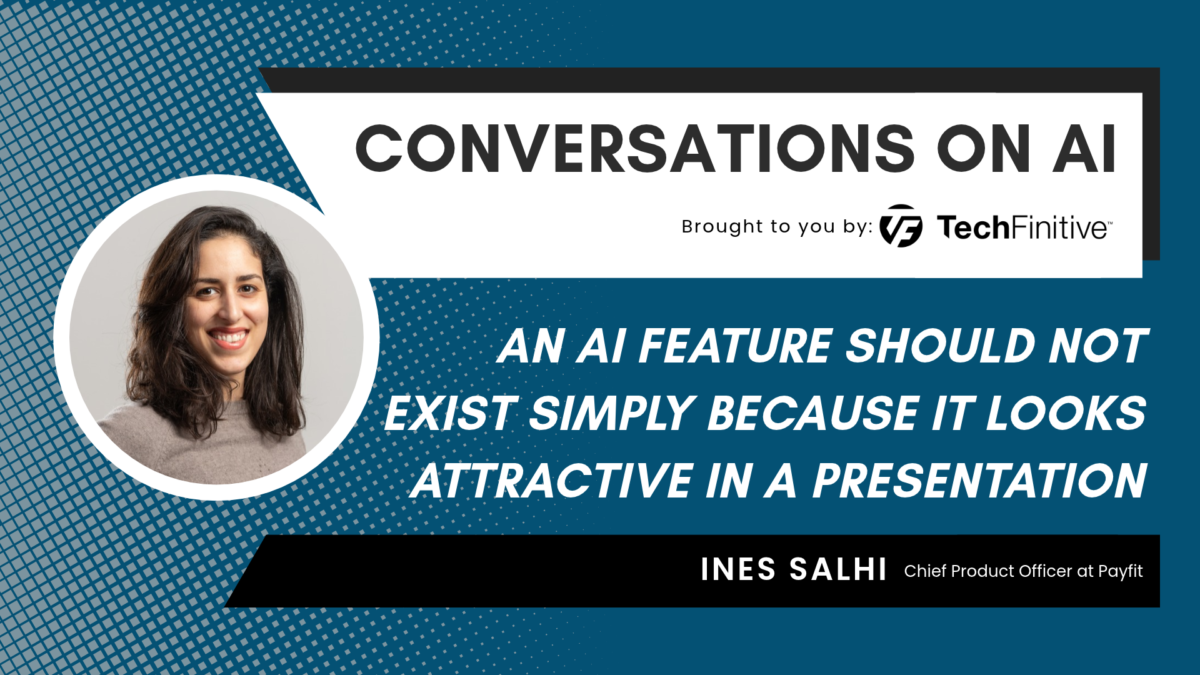
Ines Salhi, Chief Product Officer at Payfit: “An AI feature should not exist simply because it looks attractive in a presentation”
As Chief Product Officer at Payfit, Ines Salhi leads product management and design and so is ideally placed to comment on the role AI is having on the product lifecycle. While she agrees it will affect software development, she says the changes aren’t happening as fast as some are predicting.
“The vision we often read about…is one in which interconnected agents can handle large parts of the development cycle, from exploration and specification to implementation and testing. We know that this is where the industry is heading, but most companies are not operating that way at scale yet,” said Ines.
That said, AI has made a tangible difference to the product strategy at Payfit, which provides payroll and HR services. Notably, it is enhancing customer service through the delivery of a “new-generation AI agent”, building on Ines’s forte in working at the intersection of technology and customer experience.
The agent, she said, “includes stronger quality pipelines, evaluators and datasets, as well as access to more tools through APIs.” Renamed as Payfit AI, its objective is to “answer questions, guide customers and support them with a high degree of relevance.” She’s also putting AI to work discovering and fixing software bugs.
One of the tougher questions has been how to introduce AI that genuinely adds value. “The real challenge is connecting the AI agent to the technology, expertise and context that make your product distinctive,” said Ines.
Payfit’s answer has focused on delivering tailored information for its customers. “At Payfit, that means connecting the agent to our payroll engine, the customer’s specific situation, their payroll calculations, and the relevant legal context. That is what enables Payfit AI to provide answers that are precise, contextual and genuinely helpful.”
And she urges other SaaS executives to consider a similar approach to implementing AI. “Capturing its value requires commitment,” she said. “You need to experiment, invest time and make it a real strategic priority rather than adding isolated AI features to an existing roadmap.”
Everyone says AI is transforming software, but where do you believe the industry is still overestimating its impact, and where is it underestimating it?
I think the answer is more nuanced than it may initially appear. In some ways, the software industry is overestimating the impact AI has already had today, particularly on how software companies build their products internally.
There is no doubt that AI is transforming software development.
We can already see meaningful improvements in both quality and efficiency, and the potential gains are extremely significant. But transforming an entire product and engineering organisation takes time.
The vision we often read about, particularly on LinkedIn or in industry articles, is one in which interconnected agents can handle large parts of the development cycle, from exploration and specification to implementation and testing. We know that this is where the industry is heading, but most companies are not operating that way at scale yet. Getting there requires deep and structural work on tools, workflows, and organisations.
At the same time, I believe we are underestimating the longer-term impact of AI on the customer experience. In some types of software and certain industries, the experience will be completely reshaped. Customers will no longer simply navigate interfaces and execute each step themselves. Increasingly, agents will guide them, make recommendations and carry out tasks on their behalf.
So, the apparent contradiction is really about timing. We may be overestimating how mature the transformation is today while significantly underestimating how profound it will ultimately become. The direction is clear, but reaching that destination requires much more than adding an AI feature to an existing product.
How has AI changed your company’s product roadmap over the past 18 months? Were there projects you accelerated, delayed or abandoned altogether?
AI has changed Payfit’s product roadmap along two major dimensions. The first is the customer experience. We renamed our agent from Payfit Copilot to Payfit AI to make its nature and value clearer. This is intended to be a new-generation AI agent, not simply an assistant sitting on top of the product.
We have increased our investment in the foundations required to make that agent genuinely useful and reliable. This includes stronger quality pipelines, evaluators and datasets, as well as access to more tools through APIs. We have also expanded the context and knowledge available to the agent, combining information about the customer with relevant external and internal expertise. The objective is for Payfit AI to answer questions, guide customers and support them with a high degree of relevance.
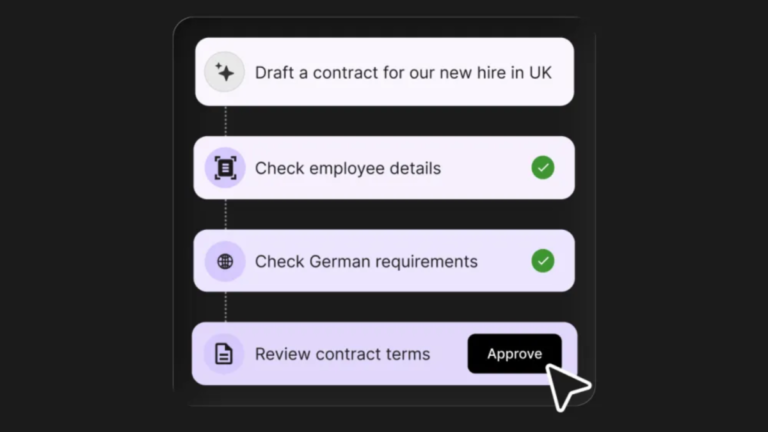
Over the past few months, we have particularly accelerated its ability to take action. Payroll includes tasks that are time-consuming, complex and potentially stressful. Payfit AI can increasingly guide customers through processes such as recording sick leave or handling import files that require manual reformatting. It can also identify inconsistencies that might otherwise lead to errors and request the customer’s approval before acting.
The second major change concerns how our product and engineering teams work. We are investing heavily in agents that can help explore and diagnose bugs, prepare specifications, implement solutions and test them.
The benefit is not only speed. What matters just as much is the improvement in quality, robustness and stability, and ultimately in customer satisfaction. The clearest change in our roadmap has therefore been the acceleration of these two areas: AI within the customer experience and AI throughout the product development lifecycle.
How is AI changing the role of your customers? Are you replacing repetitive work, augmenting decision-making, or fundamentally changing how people do their jobs?
For us, it is all three. First, AI removes repetitive and time-consuming work. Payfit AI can already perform tasks that would previously have required customers to move through conventional interfaces and carry out several manual steps.
Consider importing payroll information. A customer may upload an Excel, CSV or PDF file in a format that is not immediately compatible with the application. The agent can recognise the document, process the information and identify the specific rows where clarification is required. It asks the necessary questions and then handles the tedious work of adapting formats, checking calculations and preparing the data. This removes a great deal of friction.
Second, AI improves decision making. For example, Payfit AI may help a customer add an employee bonus, but its role is not limited to executing that action. It can explain the available options and clarify their respective implications. Different bonuses may create different costs and social contributions for the employer, while also delivering different value to the employee. By making those tradeoffs clear and contextual, the agent helps customers make better informed decisions about compensation, employee satisfaction and company budgets.
Finally, it changes how people work. Customers who adopt Payfit AI tell us that it quickly becomes part of their routine and that going back to the previous experience would be difficult. Our ambition is therefore for Payfit AI to be available not only inside Payfit, but progressively within the tools customers already use during their working day. This changes both how work is performed and where it happens. Instead of adapting their behaviour to the software, customers can increasingly access payroll and HR expertise from within their natural working environment.
What has been the hardest challenge in bringing AI capabilities into your products? Technology, data quality, customer trust, regulation, pricing or something else?
The hardest challenge is not necessarily the technology itself or even data quality. With today’s models, and with the speed at which they continue to improve, it is possible to obtain impressive results very quickly.
The more fundamental question is this: what differentiated value are we creating beyond what a customer could already obtain from a general-purpose model?
Of course, confidentiality and security are essential. Customers need to know that they remain in control of their data, that it is handled within a secure environment and that it will be used for the benefit of their company rather than for unrelated purposes. These requirements are particularly important in payroll and HR, where the information involved is highly sensitive.
But security alone does not create a valuable product. The real challenge is connecting the AI agent to the technology, expertise and context that make your product distinctive. At Payfit, that means connecting the agent to our payroll engine, the customer’s specific situation, their payroll calculations and the relevant legal context. That is what enables Payfit AI to provide answers that are precise, contextual and genuinely helpful in the customer’s decision-making.
We identified that direction relatively quickly, but I believe every software company needs to ask the same question. Why should customers use this AI capability rather than a general-purpose agent? An AI feature should not exist simply because it looks attractive in a presentation or allows a company to describe itself as powered by AI. It must solve a meaningful problem and deliver enough value that customers choose to incorporate it into their everyday work. That is the real threshold companies need to cross.
There is growing discussion around AI agents replacing traditional software workflows. Do you see the future as applications becoming collections of intelligent agents, or will conventional interfaces remain central?
I think it is still too early to give a definitive answer. More importantly, I am not sure we need to resolve this almost metaphysical question before we can move forward and improve our technology and services.
Human intelligence has many different facets, and people understand and interact with information in different ways depending on both the person and the situation. We are also visual beings. Sometimes, we need to see information rather than simply receive a conversational answer. Charts, dashboards and structured summaries can make patterns immediately understandable in a way that a purely agent-based interaction may not.
Based on what we currently observe at Payfit, customers need both agents and interfaces. Conventional interfaces will continue to play a role; however, acknowledging that interfaces will remain important should not become an excuse to slow down the development of AI agents.
The right question is not necessarily whether one will completely replace the other. It is where an agent can offer the best possible experience and where a visual or conventional interface remains the most effective way for a human being to understand, verify or control something. In payroll, for instance, an agent can collect information, interpret a request, detect a potential inconsistency and prepare an action. An interface can then help the customer visualise the impact and validate what will happen.
Agents and interfaces are therefore highly complementary. The objective should be to use each in the situations where it creates the greatest value, rather than forcing the entire experience into one model or the other.
If you could give one piece of advice to another SaaS executive planning their AI strategy today, what would it be?
My advice would be very simple: spend a significant amount of your own time on AI. It should be one of your company’s top three priorities. Personally, I believe it should be number one, but it must at least be at the very top of the leadership agenda.
AI is not a peripheral technology that can be delegated entirely to a specialist team and reviewed occasionally by executives. It is changing the customer experience, the way products are built and the way software companies operate internally. Leaders need to engage with it directly, understand what it makes possible and explore how it applies to their own product and organisation.
It is also an extraordinarily exciting transformation. AI opens doors that were previously closed, including some that we could not even imagine opening. It creates opportunities to remove tedious work, help customers make better decisions and design experiences that were not technically or economically possible before.
At Payfit, we view this as an extremely positive revolution for customers and for the software industry more broadly. But capturing its value requires commitment. You need to experiment, invest time and make it a real strategic priority rather than adding isolated AI features to an existing roadmap.
The impact is both external and internal. It changes what you can offer customers, but also how your teams explore problems, write specifications, build products, test them and improve quality. So, my advice is to engage personally, dedicate meaningful time to it and start moving now. This transformation changes everything.
You might also be interested
About The Author