Trending Topics

 Trending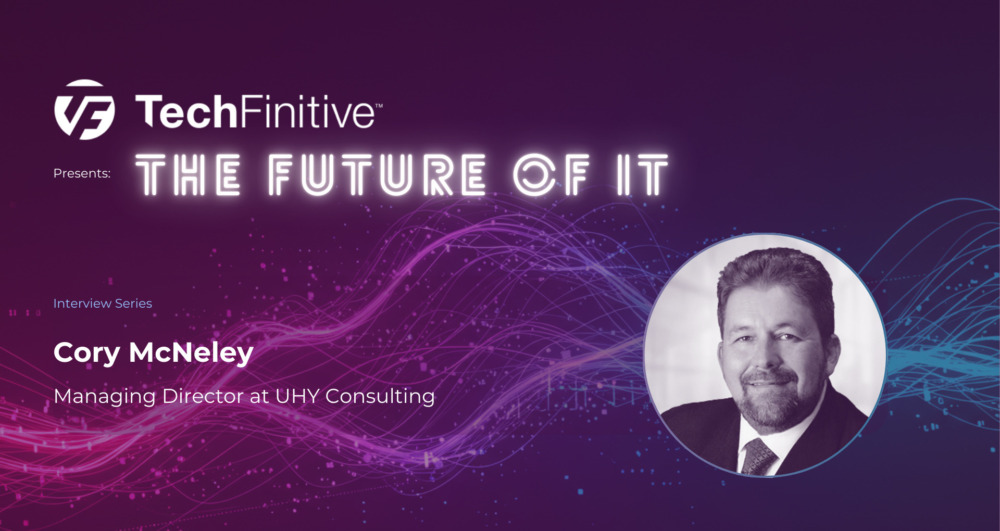
Cory McNeley, Managing Director at UHY Consulting: “IT will undergo transformative shifts driven by AI”

Table Of Contents−
If you’re a CFO, now is the time to take a seat and see a glimpse into the future. It comes courtesy of Cory McNeley, Managing Director at UHY Consulting, which exists to strengthen and transform the office of the Chief Financial Officer.
It does so by providing advice and insight on everything from digital strategy – including digital transformation – and the biggest technological factors shaping our world. And Cory isn’t merely thinking about AI, pointing out that data governance, for instance, is often overlooked.
“Advanced technologies rely heavily on high-quality data to function effectively,” he said. “Without strict data governance, the integrity of data may be compromised, resulting in flawed AI outputs and unreliable system performance.”
In an interview that covers a wide range of topics from the changing role of IT professionals – “now they are emerging as business leaders” – to the shape of future workplaces, Cory draws on over 20 years of experience.
With expertise that spans manufacturing, defence, aerospace, retail and government, it should be no surprise that he has an informed opinion to share on almost every sector that technology touches. Which is to say, everything!
General outlook
What do you think will be the most significant changes in the IT industry over the next 5-10 years?
Over the next 5–10 years, the IT industry will undergo transformative shifts driven by advancements in AI, machine learning and cloud computing. Historically, these technologies were cost-prohibitive for many organizations, but increased accessibility has levelled the playing field. The infusion of AI into technological platforms will usher in a renaissance centred on seamless system integration, user-friendly interfaces and enhanced data accessibility.
Advanced intelligent automation, IoT integration as well as ease of development will change the way technology organizations service customers. For example, In the realm of technology, the advent of artificial intelligence has the potential to assist IT operations employees by enabling preprogrammed AI chatbots to guide end users through a self-service portal for remedial help desk tickets or used to analyze large data sets to identify nefarious activity within one’s network.
How do you envision the role of IT professionals evolving in the future?
The role of IT professionals will evolve significantly, with a shift from manual, routine tasks towards more strategic, management-focused roles. As automation takes over repetitive tasks, IT professionals will likely focus more on overseeing AI and machine learning algorithms, enhancing cybersecurity measures, identifying areas of opportunity for automation and managing increasingly complex networks of IoT and edge devices.
The need for continuous learning and adaptation will become more critical as technology evolves rapidly and IT professionals will need to become more versed in continuous improvement and business operations. Gone are the days where IT professionals are seen only as tech geeks but now they are emerging as business leaders and individuals that can help influence the efficiency and profitability of business units.
Emerging technologies
Which emerging technologies do you think will have the biggest impact on IT in the coming decade?
AI, quantum computing and blockchain are expected to significantly change the IT landscape. Among these areas, I anticipate that AI and machine learning will have the most measurable impact. The evolution of these technologies are not only advancing rapidly but are also becoming increasingly more robust and integrated into other systems across almost every industries.
If you look back at similar disruptive technologies, the evolution of them took significantly longer than what we are seeing with AI. AI has been woven into the fabric of nearly every technological platform, enhancing capabilities in data analysis, automation, and computer aided decision-making processes. This integration has allowed organizations to operate with a higher level of efficiency while being able to tailor products and services for both internal and external stakeholders.
Based off the rapid development within AI, one can only assume that these technologies will only continue to become staples in our lives. From predictions on our buying habits to our language choices in emails and other communications. As these technologies continue to mature, they promise to deliver even more innovative solutions, making them central to the future of IT, coding and other technological development.
How do you think cloud computing will evolve over the next decade?
Cloud computing is set to undergo substantial advancements, emerging as more widespread, scalable and economical. The required processing speed associated with machine learning will drive new innovations that provide a wider array of services designed to meet the unique needs associated with AI. As technology progresses, hybrid and multi-cloud environments will become the standard operating model, which will result greater flexibility, reduced cost and multiple deployment options.
What role do you foresee for edge computing and IoT in shaping IT infrastructure?
Edge computing and IoT will revolutionize IT infrastructure by processing data closer to its source. This will reduce latency and conserves bandwidth which in the past has caused their own unique issues. For example, autonomous vehicles rely on immediate data processing to make split-second decisions, latency in systems of this nature could result in dire consequences.
Real-time data analytics will naturally benefit from edge computing. The ability to analyze data locally will empower organizations to respond to emerging threats without delay, marking a paradigm shift in how IT infrastructure supports critical processes.
Business and industry impact
How do you think IT will shape the future of work and remote collaboration?
Post Covid, businesses have struggled to redefine their work environments. The newer technologies are significantly fostering enhanced remote collaboration opportunities and capabilities. These tools range from sophisticated conferencing systems to immersive virtual reality (IVR) meetings, each designed to replicate the experience of an in person meeting. The digital workspace of the near will change into a integration of services across multiple platforms. This integration may blur the lines of in-person and virtual reality.
These technologies also contribute to smarter collaboration tools that can predict user requirements and needs. The ability to suggest documentation, citations or workflows will become integrated at a faster pace. The result is a smoother, more intuitive and productive user experience that leverages the full potential of digital technology to meet the dynamic needs of modern workforces. As these technologies continue to evolve, the way we work will increasingly become more connected, efficient and adaptable to remote setups.
In what ways do you think IT will transform industries like healthcare, education or finance?
Each area has its own unique transformation journey:
Healthcare:
The expansion of telemedicine, remote diagnostics and remotely completed surgeries using robotics will start to take a higher level of prevalence. The ability to diagnose problems with a specialist thousands of miles away will enhance patient care and lead to new innovations.
Education:
Education will witness a transformative shift towards more personalized learning experiences for students. Adaptive learning models will be focused on core needs of the individual student and will enable content to be delivered in multiple formats. Tailored approaches to struggling students will ultimately allow them to overcome various challenges. The one size fits all approach will be replaced gradually over time.
Finance:
In finance, blockchain technology is set to change the way transactions are conducted and recorded. Thus reducing potential fraud by enabling robust and transparent ledger systems that can be used in payroll or merchant services. The introduction of AI into the financial world will also aid in the mitigation of potential fraud by identifying patterns before a significant issue arises.
Skills and workforce
What skills do you think will be most valuable for IT professionals in the future?
In the rapidly evolving technological landscape, proficiency in AI and machine learning, cybersecurity, cloud and edge computing, and data analytics will be important. A balanced blend between understanding these technologies will allow for an IT professional to seamlessly work between products.
As the products are becoming much more intuitive the most important skill for an IT professional is to focus on balancing technical and soft skills. Many business users are tech savvy and do not require the same level of technical support as previous generations. IT professionals need to focus on becoming true business partners to support the growth of their organization. Technology is easily taught whereas soft skills, interpersonal relationships and the ability to navigate not only in the server room but the board room is a critical skill.
Challenges and opportunities
What are the biggest challenges IT professionals will face in the next decade?
Organizations face challenges with rapid technological advancements and their security implications. Complex, integrated systems increase the risk of significant failures and heighten the potential for security breaches, affecting data integrity and privacy.
Are there any underestimated opportunities in IT that you believe deserve more attention?
Data governance is arguably the most overlooked yet crucial component in the technology ecosystem. It forms the bedrock of effective data management, given that data is the lifeblood of all pivotal IT systems. The age-old adage, “garbage in, garbage out,” is particularly pertinent in the era of machine learning and artificial intelligence. Advanced technologies rely heavily on high-quality data to function effectively. Without strict data governance, the integrity of data may be compromised, resulting in flawed AI outputs and unreliable system performance. Therefore, robust data governance is necessary for any organization aiming to use data as a strategic asset.
Other interviews in this series
- Souvik Das, Chief Product & Technology Officer at Clearwater Analytics: “Today, AI is reimagining every industry, elevating the role of IT from the server room to the boardroom”
- Frank Bignone, VP & Global Director of Digital Transformation at FPT Software: “Collaboration will define the future of IT roles”
- Jan Čurn, Co-Founder and CEO of Apify: “Ethics in IT will become a central focus”
About The Author

Tim Danton
NEXT UP