Trending Topics

 Trending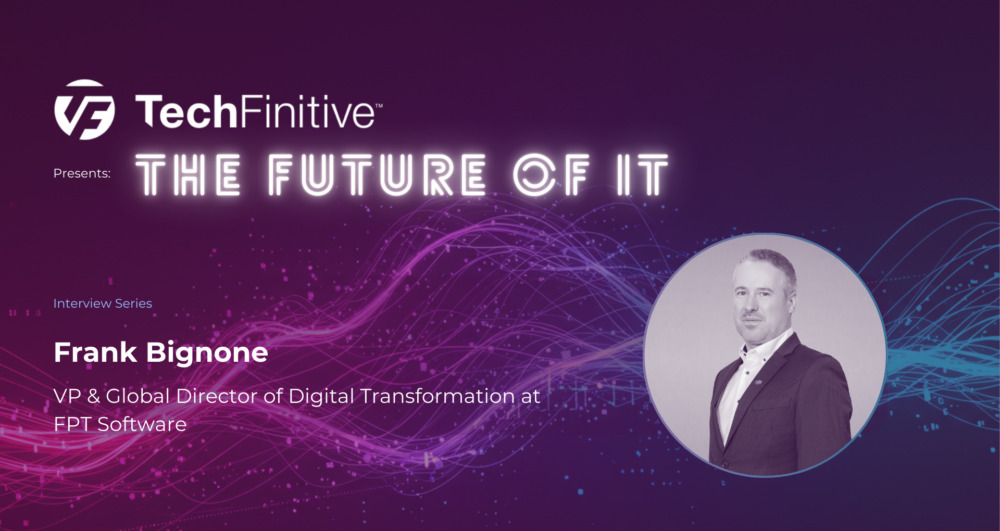
Frank Bignone, VP & Global Director of Digital Transformation at FPT Software: “Collaboration will define the future of IT roles”

Who better to share their vision for IT leaders than the Global Director of a company that’s at the cutting edge of digital transformation? Nobody, it turns out, as Frank Bignone, VP & Global Director of Digital Transformation at FPT Software, is able to share insights that others can only aspire to.
Take blockchain. “Although large-scale use cases have yet to fully materialise, blockchain is already being explored in niche areas such as secure data sharing, decentralised identity management and smart contracts,” Frank told us.
“One notable example is our collaboration with the European Union Aviation Safety Agency (EASA) on the VIRTUA project. This initiative explores the application of blockchain technology to enhance the transparency and traceability of Life Limited Parts (LLP) in aircraft.”
It’s no coincidence that before joining FPT in 2021, Bignone served as Airbus’s Vice President and Head of Digital Transformation for the APAC region and China. He has also held managerial positions at Airbus Defense and Space, Spot Image, Astrium Geo-Information Services, EADS Astrium and ISTAR. A master’s degree in Artificial Intelligence and Robotics just adds to his long list of achievements.
Our thanks to Frank for taking the time to answer these questions about how he sees the Future of IT.
What do you think will be the most significant changes in the IT industry over the next 5-10 years?
One of the most significant changes will be the widespread adoption of cloud-native architectures. IT models are shifting away from rigid, monolithic structures toward modular and flexible systems that support incremental evolution. Hybrid and multi-cloud environments will become the norm.
AI will play also a pivotal role in transforming business operations by automating repetitive tasks and driving strategic innovation. For example, AI-driven systems can generate actionable insights from vast data pools in real-time, enabling predictive analytics and informed decisions. Similarly, GenAI can create automated content for marketing or even code snippets for development, speeding up delivery cycles and fostering innovation in product and service offerings.
Automation is further accelerated by the fusion of Robotic Process Automation (RPA) and low-code platforms, combined with the maturity of data lake/data lakehouse architectures. These advancements enable organisations to automate complex workflows, from recruitment processes – such as screening and scheduling interviews – to DevOps pipelines, including automated testing, deployment and infrastructure management.
How do you envision the role of IT professionals evolving in the future?
The role of IT professionals is evolving beyond traditional system administration and solution implementation into that of strategic enablers of business innovation. They are becoming integral to shaping organisational strategy, and driving value by aligning technical expertise with broader business objectives.
FPT is dedicated to building a future-ready workforce to lead this evolution in IT. By embedding AI across our operations and equipping our teams with transformative, practical skills, we ensure they remain at the forefront of global innovation.
Our commitment extends to partnerships with global leaders, such as Nvidia’s strategic partner, SAP’s Regional Strategic Services Partner in APAC-Japan, or our role as a Regional Systems Integration (RSI) partner of Microsoft, reflect our commitment to driving impactful innovation and addressing complex industry challenges.
A compelling example is our collaboration with a leading North American airline, where we reimagined their aircraft maintenance procedures. By integrating Copilot and Microsoft’s infrastructure, we automated traditionally manual processes, enhanced operational visibility, and streamlined decision-making. The result was a significant boost in efficiency, reduced maintenance downtime, and a more agile response to operational demands.
We also work with AI pioneers such as Mila-Quebec AI Institute to drive innovation at every organisational level. Our AI-focused upskilling programs provide employees with cutting-edge knowledge, preparing them to navigate emerging challenges and opportunities in IT. Beyond our workforce, we are actively shaping the future of tech talent by integrating AI education into Vietnam’s curriculum, nurturing the next generation of innovators.
Which emerging technologies do you think will have the biggest impact on IT in the coming decade?
The momentum behind AI adoption is undeniable. In the APAC region alone, 65% of organisations now use generative AI in at least one business function, marking a substantial increase over the past year. This surge is mirrored by a growing demand for AI talent, with job postings related to AI skyrocketing since 2022 – a clear indication of the expertise needed to support these sweeping transformations.
While AI continues to mature, blockchain remains a technology with potential implications for IT, particularly in fostering transparency, security and decentralisation. Although large-scale use cases have yet to fully materialise, blockchain is already being explored in niche areas such as secure data sharing, decentralised identity management and smart contracts.
One notable example is our collaboration with the European Union Aviation Safety Agency (EASA) on the VIRTUA project. This initiative explores the application of blockchain technology to enhance the transparency and traceability of Life Limited Parts (LLP) in aircraft. By leveraging blockchain’s immutable ledger capabilities, the project aims to securely record the entire lifecycle of aircraft components, from manufacturing and certification to maintenance and replacement. This approach not only ensures compliance with stringent aviation safety standards but also streamlines processes by reducing manual checks and paperwork. The successful implementation of this project could lead to regulatory evolutions, setting new benchmarks for safety and efficiency in the aviation industry.
The convergence of AI and blockchain will further amplify their potential. For instance, blockchain can provide the trust and transparency frameworks necessary for AI-driven systems, ensuring data integrity and compliance in industries with stringent regulations. The next decade will belong to organisations that not only adopt these technologies but also find synergies between them to create transformative value.
What ethical considerations do you believe will become more critical as IT continues to advance?
As IT continues to advance, ethical considerations will become increasingly critical, particularly around privacy, data governance and AI regulation. In highly regulated sectors like healthcare, finance and manufacturing, the challenge lies in balancing innovation with compliance. Navigating frameworks such as the EU’s AI Act or the U.S. Blueprint for an AI Bill of Rights demands meticulous audits, documentation, and transparency – factors that may slow adoption but are vital for responsible AI use.
Data governance is at the heart of these concerns. With businesses relying on data to drive innovation, the risks of breaches, non-compliance or misuse have never been higher. Robust governance frameworks ensure data is accurate, secure, and responsibly managed, enabling informed decisions and enhancing customer trust. Companies that prioritise comprehensive governance will not only mitigate risks but also unlock the full value of their data.
Global collaboration and regulation are essential to ensure AI benefits humanity equitably. Initiatives like AI Alliance by Meta and IBM, Singapore’s model AI governance framework, and Vietnam’s Ethical AI Committee exemplify the growing focus on fairness and trust in AI systems. These efforts reflect a shared commitment to fostering innovation while addressing critical ethical concerns.
Successfully navigating these challenges hinges on selecting the right partner with expertise in AI, data management, and regulatory compliance. By collaborating with an experienced partner, companies can overcome the complexities of AI adoption and minimise risks while ensuring that their AI initiatives deliver real, measurable value.
Can you share a project or innovation you’re currently working on that you believe has the potential to influence the future of IT?
FPT is leading the charge in transforming customer service operations through next-gen technologies like AI and intelligent automation. One project that exemplifies the transformative power of AI in IT is our work with a leading airline to reimagine customer claims management, addressing long-standing inefficiencies in a critical customer-facing operation.
At the core of our approach was automation. We eliminated duplicate records, streamlined claim categorisation, and integrated data from various systems, ensuring agents could access accurate, real-time information. Leveraging AI, we introduced precise, context-aware compensation recommendations, enabling faster and fairer resolutions. Generative AI-enhanced customer communication, delivering consistent, clear, and timely responses that elevated the overall experience.
The impact was striking: claim resolution times dropped by 32%, operational costs decreased by 30%, and agents were empowered to focus on more value-added tasks. Beyond these metrics, the project demonstrated the strategic role AI can play in elevating customer experience and operational agility simultaneously.
Beyond technical success, this project is a blueprint for how IT can drive innovation at the intersection of business needs and technological potential. It underscores the future of IT as a catalyst for efficiency, scalability, and enhanced customer trust, offering lessons that resonate far beyond a single industry.
What skills do you think will be most valuable for IT professionals in the future?
Understanding how to develop, deploy and optimise AI/ML models will be crucial. Similarly, data analytics skills will remain in high demand, as businesses increasingly rely on insights derived from big data to make informed decisions. Cloud computing expertise is another cornerstone, given the shift to hybrid and multi-cloud environments, while cybersecurity proficiency will become non-negotiable as digital threats grow in sophistication.
However, technical skills alone won’t suffice. IT professionals will need a continuous learning mindset, as the rapid pace of technological change demands constant skill refreshment. Adaptability will be critical to navigating new innovations. Collaboration and communication skills will also gain importance as IT teams increasingly work across functions to align technology initiatives with business goals.
A strong foundation in ethics and governance will also be essential, particularly with the proliferation of AI and data-centric solutions. IT professionals must understand how to build and manage systems responsibly, ensuring fairness, transparency and accountability.
More interviews
- James O’Sullivan, CEO and Founder of Nuke from Orbit: “We should all aspire to do more than just what’s required”
- Marcel Červený, CEO of BiQ Group: “IT should be prioritized alongside languages and mathematics in school curriculums”
- “Now is our time”: Why AMD’s commercial PC boss believes this is the year it will take its rightful share of business laptop sales
- Jan Čurn, Co-Founder and CEO of Apify: “Ethics in IT will become a central focus”
About The Author

Tim Danton
NEXT UP


